



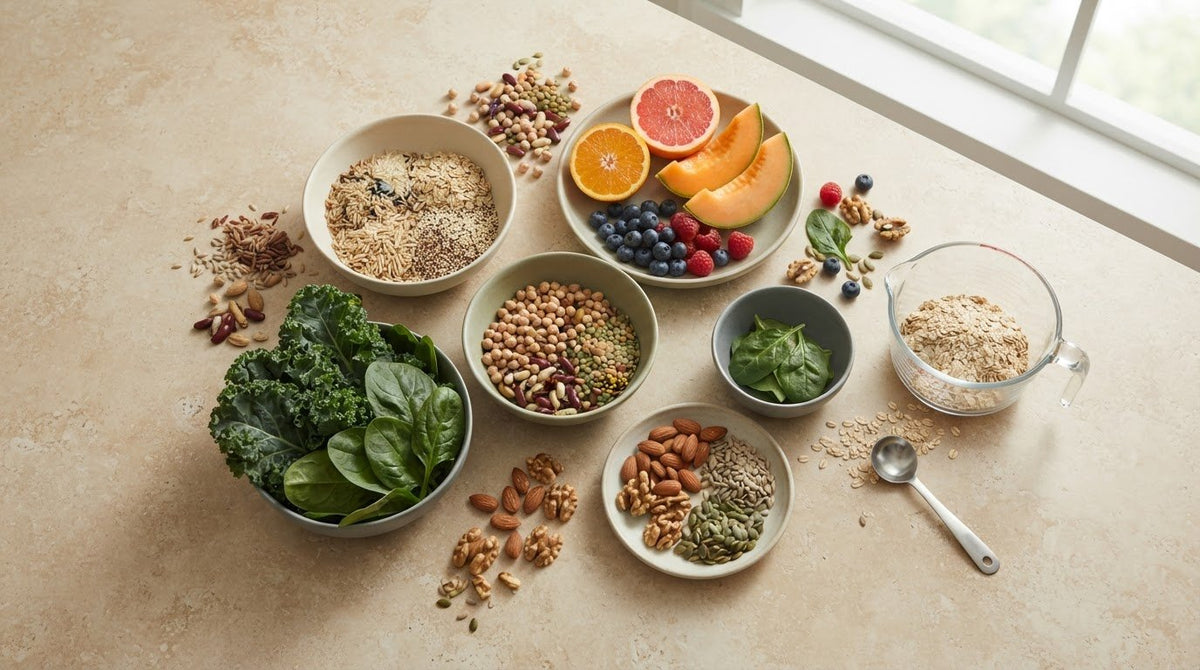
If you’re asking what foods are high in myo-inositol, whole grains, beans, fruits, nuts, and seeds are among the food groups to consider. But a food’s reported inositol content doesn’t always show how much free myo-inositol it provides. Some figures include inositol bound in phytate, so food lists may not be directly comparable.
To assess a claim, check what form was measured, the serving basis, and how the food was prepared. Values can vary with food variety and processing, too. This guide explains which food groups contain inositol, how to read commonly cited figures, including data from Clements and Darnell’s 1980 study, and what to keep in mind about soaking, sprouting, and fermentation. It also distinguishes food choices from supplements, which are a separate option, not a necessary replacement for a balanced diet.
Key Takeaways
- Learn which food groups contain inositol and how to assess claims about their myo-inositol content.
- Build variety into familiar meals rather than relying on a single food ranking.
- Check whether a figure describes free myo-inositol or a broader form before comparing foods.
- Consider foods and supplements as distinct options, without assuming either is universally necessary.
What foods are high in myo-inositol, and what does that mean?
Fruits, legumes, whole grains, nuts, seeds, and vegetables are food groups that can contain inositol. The amount reported depends on the specific food and how it was measured. There is no universal ranking of what foods are high in myo-inositol: comparisons are meaningful only when the serving basis, food preparation, and measurement method are comparable.
Myo-inositol is one form, or isomer, of inositol. The term “inositol” can refer more broadly to a group of related forms. The body can make myo-inositol, and foods contribute inositol in different forms. Although it was once called vitamin B8, myo-inositol isn’t classified as a true vitamin. The Inositol overview explains its different forms and the history behind that label.
Food lists can help identify sources to explore, but they don’t necessarily provide a standardized comparison of measured amounts. This video offers another overview of foods associated with inositol; treat its suggestions as a guide rather than a definitive ranking.
What is myo-inositol, in brief?
Myo-inositol is a naturally occurring compound involved in processes within the body, including cell signalling. That doesn’t mean a particular food or amount will produce a specific health effect. Food intake and the body’s own production are separate contributors, and a food-content estimate alone can’t establish how much a person needs or absorbs.
Why food-source lists may not agree
Studies may measure free myo-inositol, total inositol, or inositol in compounds such as phytate. These are different measures. Some commonly repeated food figures trace back to Clements and Darnell’s 1980 study, so check the original source and what it measured before treating a list as definitive.
Comparisons can also vary with serving size, cultivar, ripeness, processing, and preparation. A laboratory value describes the food sample under the study’s conditions; it doesn’t directly show how much inositol the body absorbs from a meal. Before comparing figures, look for the food’s preparation state, units, and analytical method. Be cautious of rankings that leave out these details.
Which food groups contain myo-inositol?
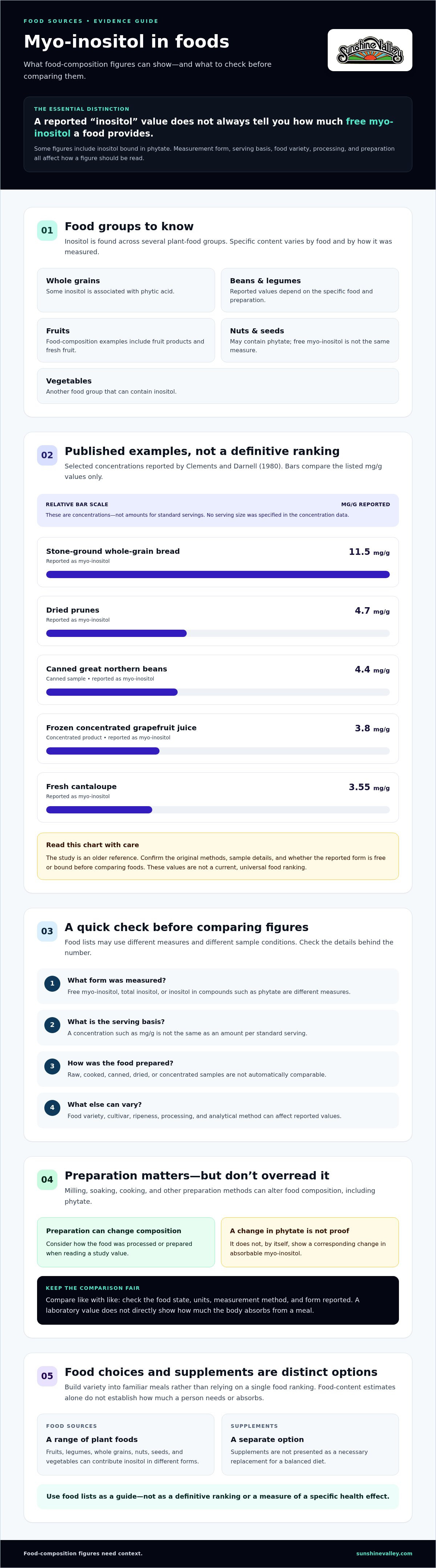
Food-composition research points to several plant-food groups, although the evidence varies by food. A frequently cited study by Clements and Darnell (1980) reported concentrations for selected fruit products, beans, and whole-grain bread. These figures provide examples, not a definitive ranking of foods available today.
For broader context, the National Center for Biotechnology Information review Myo-inositol for insulin resistance discusses dietary sources, including inositol associated with phytic acid in grains and seeds. Nuts and seeds can also contain phytate, but that doesn’t mean every food in those groups provides the same amount of free myo-inositol. Use food-specific data when making comparisons.
Examples reported in food-composition research
The values below are concentrations reported in the Clements and Darnell study, not amounts for standard servings. The study is a decades-old reference. Check its original methods and the form reported before using these figures as a current food ranking.
| Food | Standard serving | Reported value and form | Source and evidence caveat |
|---|---|---|---|
| Stone-ground whole-grain bread | Not specified in the concentration data | 11.5 mg/g, reported as myo-inositol | Clements and Darnell (1980); confirm free versus bound form and sample details |
| Dried prunes | Not specified in the concentration data | 4.7 mg/g, reported as myo-inositol | Clements and Darnell (1980); older data, not a serving-based comparison |
| Canned great northern beans | Not specified in the concentration data | 4.4 mg/g, reported as myo-inositol | Clements and Darnell (1980); canned preparation applies to the tested sample |
| Frozen concentrated grapefruit juice | Not specified in the concentration data | 3.8 mg/g, reported as myo-inositol | Clements and Darnell (1980); product form differs from fresh fruit |
| Fresh cantaloupe | Not specified in the concentration data | 3.55 mg/g, reported as myo-inositol | Clements and Darnell (1980); sample and analytical details matter |
How processing changes the comparison
Milling, soaking, cooking, and other preparation methods can alter food composition, including phytate. A change in phytate doesn’t, by itself, prove a corresponding change in absorbable myo-inositol. Keep raw, cooked, canned, and concentrated foods distinct, and compare them only when the source identifies the preparation state and uses comparable units. The table’s concentrations are not measured amounts per ordinary serving.
For an option separate from food sources, Sunshine Valley offers Super Inositol powder. It is a dietary supplement, not a food source.
Free myo-inositol versus phytate: how to read food-source claims
A food-composition figure may refer to free myo-inositol or include inositol from other compounds in the food. These measures aren’t automatically equivalent. The distinction matters because “total inositol” can sound like a direct measure of free myo-inositol, even when the method counts a broader set of compounds.
Phytate is a plant compound made of inositol joined to phosphate groups. Its inositol is part of the compound, so it isn’t the same measurement as free myo-inositol. Grains, legumes, nuts, and seeds can contain phytate. Whether a food analysis counts only free myo-inositol or also detects inositol released from other compounds depends on how the sample was prepared and analyzed.
What phytate-related inositol does and does not tell you
Finding phytate in a food doesn’t establish how much free myo-inositol that food contains. It also doesn’t show how much inositol becomes available during digestion. Laboratory procedures may extract or break down compounds before measurement, so results can reflect the method as well as the food. Don’t assume phytate-bound inositol is fully available or entirely unavailable without evidence that directly addresses digestion and absorption.
| Term in a label or study | What it may measure | What remains uncertain |
|---|---|---|
| Free myo-inositol | Myo-inositol measured in an unbound form in the tested sample | Whether the result represents a usual serving or reflects the food’s preparation |
| Total inositol | A broader measure that may include free inositol and forms released or counted through analysis | Which compounds are included, and whether the method breaks them down |
| Phytate or phytic acid | Inositol phosphate compounds present in the sample | How much free myo-inositol the food contains or provides after digestion |
| Inositol equivalents | A value expressed as inositol after a specified analytical procedure | The exact chemical forms counted and whether results can be compared across studies |
A reader’s checklist for evaluating food values
Before using a number to decide what foods are high in myo-inositol, inspect the source rather than relying on a reposted ranking. A useful comparison should state:
- Measure: free myo-inositol, total inositol, phytate, or another term.
- Basis: units, serving size, and whether the food was raw, cooked, canned, or processed.
- Method: how the sample was analyzed and which compounds were included.
- Evidence: the specific peer-reviewed study or recognized food-composition database behind the figure.
If these details are missing, treat the number as an estimate with limitations, not a like-for-like comparison. A value for one food or preparation may not translate directly to another food or show how much the body absorbs.
How to include potential myo-inositol food sources in everyday meals
Food-composition lists can help identify plant foods to explore, but they aren’t meal plans. A practical approach is to include a range of fruits, legumes, whole grains, and seeds in meals you already enjoy. You don’t need to seek out one supposed “top” food. Reported values vary by source and preparation, and a single ranking doesn’t account for your overall diet or individual needs.
A practical way to build a varied plate
Focus on variety and familiar combinations rather than trying to reach a target amount of myo-inositol from food. For example, add fruit to breakfast, include beans or peas in a lunch bowl, serve a whole-grain side at dinner, or use seeds as a topping. These are general meal ideas, not validated high-dose plans or treatment advice.
When checking a food value, look at the food’s form and the serving context. A figure for a prepared product may not match the raw ingredient or the portion you eat. Keep the focus on balanced food choices instead of adjusting your diet around a number that may measure a different form of inositol.
When general food guidance is not enough
Food lists don’t diagnose, prevent, or treat health conditions. If you’re considering dietary changes because of a medical concern, or you follow a restrictive diet, ask a qualified clinician for guidance suited to your circumstances. Allergies, intolerances, and other dietary restrictions matter, too. General food-source information can’t determine what’s appropriate for you personally.
Food guidance and supplement-use guidance are separate topics. If you’re considering inositol in powder form, read how to take inositol powder for information about that format, and follow the product’s own directions. A supplement isn’t required simply because a food list includes inositol-containing foods.
Sunshine Valley offers Super Inositol as a separate supplement option. It isn’t a food source and shouldn’t replace advice from a qualified clinician.
Food sources or inositol supplements: what should readers know?
Food and supplements are different ways to encounter inositol. Foods such as fruits, legumes, and whole grains are part of meals and provide a broader dietary context. A supplement is a separate product with its own label and directions. Neither is universally necessary, and choosing a food listed as an inositol source doesn’t establish that it will produce a particular health effect.
What a food-first answer can reasonably conclude
Several plant-food groups contain inositol, but the amount depends on the food, its preparation, and what a study measured. Some sources report free myo-inositol; others may count a broader range of inositol forms. Food-composition figures don’t establish a dependable ranking across all foods or show exactly how much a person absorbs.
If you’re asking what foods are high in myo-inositol, use food lists as a starting point for informed choices, not as a prescription. Variety is a more useful guide than chasing a single “highest” item, especially when rankings may compare different serving sizes or preparations. Eating a listed food should not be presented as treatment or as a guarantee of a health outcome.
Considering a powdered supplement as a separate option
Sunshine Valley offers Super Inositol as a powdered dietary supplement. It’s an optional format for people who want to explore inositol outside food sources, not a requirement or a substitute for medical advice. Supplement products can differ, so review the specific product label and directions rather than assuming details from another product apply.
If you have a medical concern, take medication, or are considering a supplement as part of managing a health condition, discuss your plans with a qualified healthcare professional. They can help you consider your individual circumstances without treating general food-composition data as personalized advice.
To learn more about this separate supplement option, Explore Sunshine Valley.
Choose food sources with clarity and confidence
Several plant-food groups contain inositol, but food lists don’t always measure the same form. Free myo-inositol and inositol associated with phytate aren’t interchangeable figures, and reported values can vary with preparation and testing methods. Treat rankings as a starting point, not a definitive guide to what your body absorbs.
A varied diet can include fruits, legumes, whole grains, and other foods that suit your preferences. No single listed food guarantees a health outcome, and food sources aren’t the same as supplements. If you’re considering a supplement for a personal health reason, review its label and seek qualified professional guidance where appropriate.
Sunshine Valley, founded in 1956, offers Super Inositol as a separate powdered dietary supplement. It’s optional, not a requirement. Use reliable food data and choose meals that work for you. To explore Sunshine Valley’s Super Inositol, visit the online store.
Frequently Asked Questions
What foods are naturally high in myo-inositol?
Several food groups can contain inositol, including some fruits, legumes, whole grains, nuts, seeds, and vegetables. Citrus fruit, cantaloupe, beans, and whole-grain foods are examples to check in food-composition sources, not a definitive ranking. Reported values depend on serving size and preparation, as well as whether the source measures free myo-inositol or includes related forms. Compare like with like before drawing conclusions.
Are citrus fruits high in myo-inositol?
Citrus fruits are commonly discussed as inositol-containing foods, but that alone doesn’t establish that they’re among the richest sources. Check the cited study or database for the specific fruit, whether the value refers to a standard serving or a weight-based measure, and which inositol form was analyzed. A figure for juice, concentrate, or another processed product may not be directly comparable with one for whole, fresh fruit.
Do beans and whole grains contain myo-inositol?
Beans and whole grains can contain inositol-related compounds, including phytate, but a reported total may not represent free myo-inositol alone. Milling and cooking can affect food composition and the values measured. Before comparing beans with grains, check each source’s definitions, units, preparation state, and serving basis. Rankings are most useful when the data measure the same form in comparable portions.
Can you get enough myo-inositol from food alone?
Whether food provides “enough” depends on what you mean by enough and on individual circumstances. Food-composition figures don’t establish a recommended intake or predict an individual’s inositol status. This article can help identify potential food sources, but it can’t determine your personal needs. If you have a health concern or questions about your diet, discuss them with a qualified healthcare professional rather than setting a target or starting a supplement based on a food list.
Does cooking reduce myo-inositol in foods?
Cooking and other preparation can change measured food composition, but the effect depends on the food, method, and compounds analyzed. There isn’t one universal amount of myo-inositol lost through cooking. Check whether a source measured the food raw or cooked, and compare values only when the preparation states are clear. A change in phytate doesn’t directly establish how much free or absorbable myo-inositol remains.
Is myo-inositol in food the same as inositol powder?
Both relate to inositol, but foods and powdered supplements differ in composition and context. A food value may describe free myo-inositol or include related forms, while supplement details depend on the specific product label and formulation. Don’t assume the two formats provide equal effects or that a supplement should replace foods or medical care. If you’re considering a product, review its label and seek professional advice when appropriate.
How can I find reliable myo-inositol amounts in foods?
Look for peer-reviewed food-composition research or recognized databases, then check how each value was measured. Confirm the named food, preparation state, serving size, units, and analytical method. Check whether the result describes free myo-inositol, total inositol, or phytate-related compounds. A total or phytate-related figure shouldn’t be presented as a direct free myo-inositol amount. Cite the original source whenever possible, not just a repeated ranking.



Leave a comment
This site is protected by hCaptcha and the hCaptcha Privacy Policy and Terms of Service apply.