



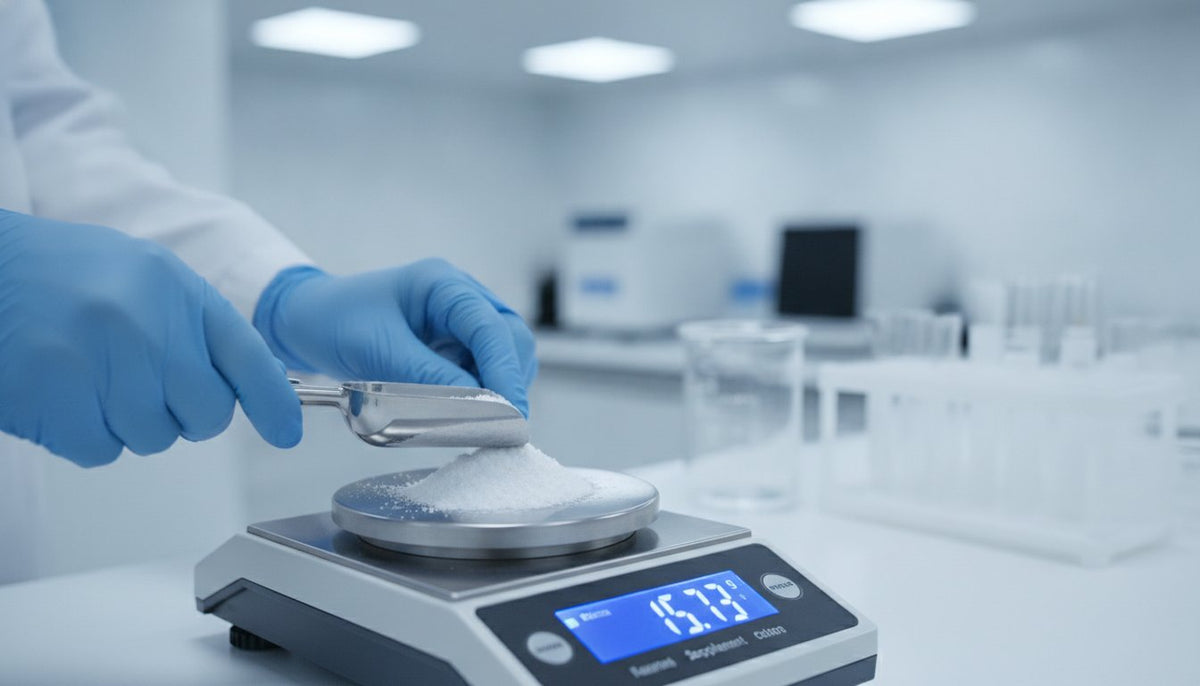
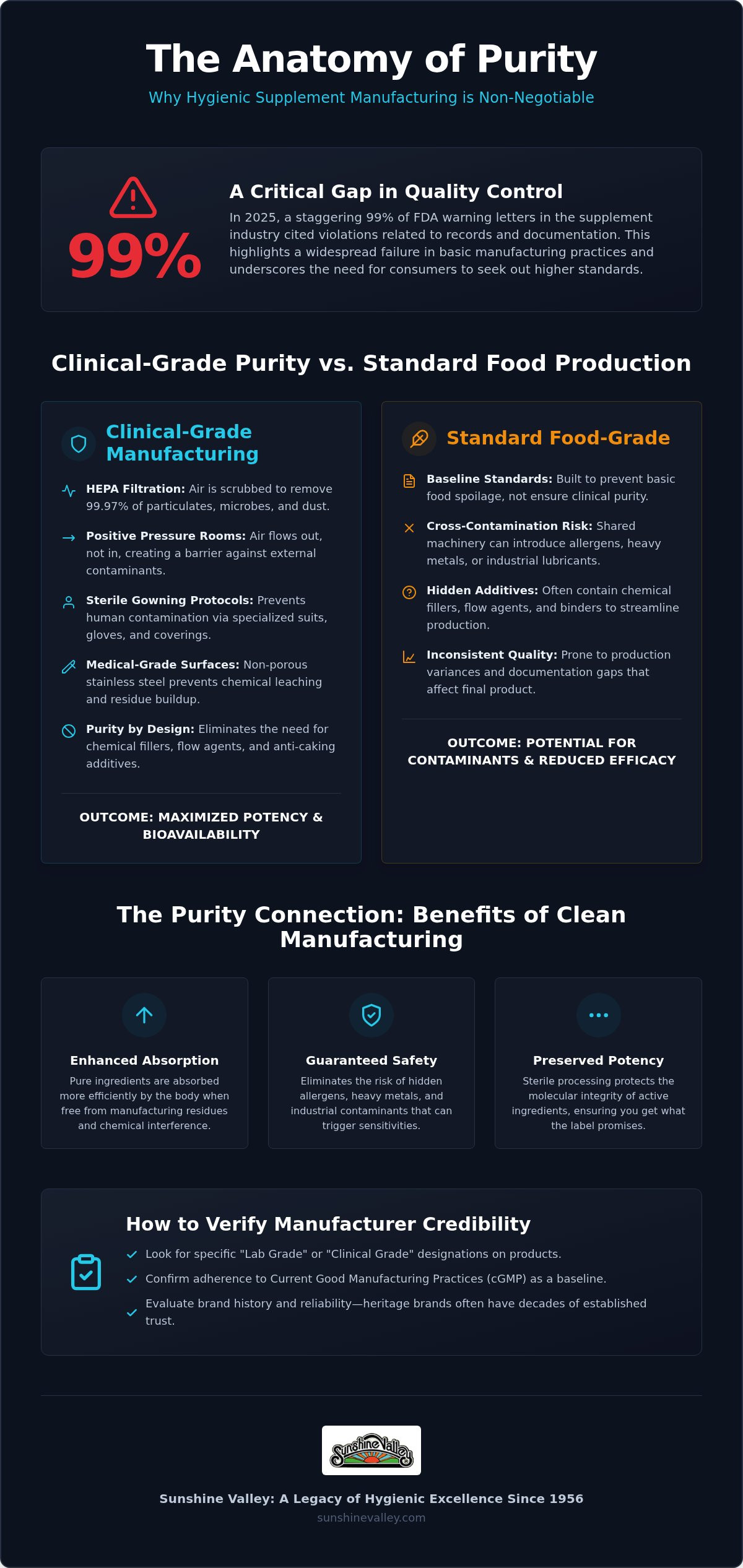
In 2025, a staggering 99% of FDA warning letters in the supplement industry included violations related to records and documentation. This surge in enforcement highlights a critical reality for health-conscious individuals. The safety of your nutritional regime doesn't just depend on the ingredients listed on the label. It depends on the invisible rigor of hygienic supplement manufacturing. You're likely concerned about heavy metal contamination or the presence of hidden fillers that often plague standard food grade products. These are valid fears in an era where many facilities prioritize volume over clinical precision.
We understand that choosing a supplement requires more than just reading a brand name; it requires trust in the manufacturing environment. This article provides a clear look into how sterile protocols and lab-grade hygiene standards differ from standard food production. You'll learn the specific advantages of single-ingredient powders like Super Mannitol or Super MSM when they're produced in professional, clinical settings. We've also included a definitive checklist to help you verify manufacturer credibility so you can invest in your wellness with absolute confidence.
Key Takeaways
- Understand why clinical-grade sterilization and environmental controls are essential for maximizing the bioavailability of nutritional supplements.
- Discover the technical protocols of hygienic supplement manufacturing, including the critical use of HEPA filtration and positive pressure environments.
- Learn how lab-grade production eliminates the requirement for common chemical fillers and flow agents found in standard food-grade products.
- Gain a clear framework for verifying manufacturer credibility by identifying specific "Lab Grade" designations and evaluating historical reliability.
- Explore the professional lineage of Sunshine Valley and the high-tier standards used to produce "Super" grade pure powders since 1956.
Defining Hygienic Supplement Manufacturing and Why It Matters
Hygienic supplement manufacturing is the systematic application of clinical-grade sterilization and rigorous environmental controls throughout the entire production cycle. It's far more than a simple cleaning protocol. This standard ensures that every milligram of powder remains free from environmental pollutants, airborne microbes, and industrial residues. Professional facilities utilize positive pressure environments and advanced HEPA filtration to maintain a pristine atmosphere. For the discerning individual, this level of care is the foundation of a reliable health regimen.
Standard "food grade" certifications often fall short of clinical-grade wellness goals. Food facilities are built to prevent basic spoilage, but they aren't always equipped to prevent microscopic cross-contamination. Non-hygienic facilities may introduce unwanted allergens, heavy metals, or industrial lubricants through shared machinery. These hidden additives can trigger sensitivities in vulnerable users. Clinical-grade environments provide the necessary isolation to guarantee total purity and safety.
To better understand how these professional standards are applied in a real-world facility, watch this helpful video:
The Role of Current Good Manufacturing Practices (cGMP)
The FDA's 21 CFR Part 111 establishes the legally required Good Manufacturing Practice guidelines for the industry. While these rules provide a baseline, the 2024 reorganization of the FDA's enforcement arm has led to much stricter oversight. In 2025, 99% of FDA warning letters cited documentation and record-keeping violations. Premium manufacturers go beyond these basics to ensure excellence. They implement advanced data integrity measures and unannounced internal audits to maintain ingredient stability. This disciplined approach protects the consumer from the risks of inconsistent production and documentation gaps. It creates a level of established reliability that heritage brands have maintained for decades.
Bioavailability and the Purity Connection
Purity isn't just about safety; it's about performance. Pure ingredients are absorbed more efficiently when free from manufacturing residues. High-level hygiene preserves the molecular integrity of powders like Super Inositol. By removing the need for chemical flow agents or anti-caking residues, sterile processing ensures that nutritional potency remains intact. When the product is free from industrial interference, the body can focus on absorbing the active ingredient. This connection between a clean environment and physical absorption is what defines a truly premium supplement.
The Anatomy of a Sterile Laboratory: Standards and Protocols
A sterile laboratory is a complex ecosystem of controlled variables. It operates far beyond the capabilities of a standard food production facility. The foundation of professional hygienic supplement manufacturing relies on high-efficiency particulate air (HEPA) filtration and positive pressure environments. These systems ensure that air only flows out of the production zone, effectively creating a barrier against external pollutants. Every cubic meter of air is scrubbed to remove 99.97% of particulates, including dust, pollen, and microscopic microbes.
Human interaction is the most common source of biological contamination. To mitigate this risk, personnel follow multi-stage gowning protocols. This process involves specialized suits, double-gloving, and facial coverings that prevent the shedding of skin cells or hair into the product stream. Surfaces are not simply cleaned; they undergo clinical disinfection using hospital-grade agents. We utilize medical-grade stainless steel for all contact surfaces. This material is non-porous and resistant to corrosion, which prevents the chemical leaching often associated with plastic or lower-grade alloys. These measures align with the FDA's CGMP regulations to ensure the highest level of consumer safety.
Environmental Control Systems
Precision wellness requires absolute environmental stability. Advanced systems monitor temperature and humidity levels around the clock. This is critical for preserving the molecular structure of sensitive ingredients. For example, high humidity can cause the rapid degradation of B-vitamins and certain amino acids. Dedicated cleanrooms are used for single-ingredient processing to eliminate the possibility of cross-contamination. By maintaining a 99.9% pure environment, the facility protects the potency of the raw materials from the moment they are unsealed until they are safely packaged.
Equipment Calibration and Maintenance
Precision-engineered machinery is the backbone of high-tier production. Standard industrial blenders often have "dead spots" where powder can accumulate and spoil. Clinical-grade equipment is designed with smooth, accessible pathways that allow for total deep-cleaning between different production batches. This meticulous attention to detail is what allows for the creation of high purity dietary supplements that remain free from metallic micro-particulates. Regular calibration ensures that every dose is accurate and consistent. If you value transparency in your health journey, you can learn more about our commitment to excellence by viewing our laboratory standards.
Purity vs. Fillers: How Clean Manufacturing Protects Your Health
High-grade hygienic supplement manufacturing provides a technical advantage that standard facilities cannot match: the complete removal of unnecessary chemical additives. In many production environments, manufacturers rely on flow agents to keep machinery running at high speeds. These substances, such as magnesium stearate or stearic acid, act as lubricants to prevent powders from sticking to industrial equipment. While efficient for the manufacturer, these additives serve no nutritional purpose for the consumer. They're often used to compensate for poor environmental controls, such as high humidity, which causes powders to clump and clog less sophisticated systems.
A truly clinical environment utilizes advanced climate and moisture controls to eliminate the need for these anti-caking agents. By maintaining a precise, dry atmosphere, the facility ensures that raw materials move through the production line without industrial interference. This meticulous approach allows for the creation of single ingredient supplement powders that remain 100% pure. For individuals with chemical sensitivities or those following strict wellness protocols, this absence of hidden "flow agents" is a critical requirement for safety and efficacy.
Long-term exposure to common supplement additives may lead to unwanted health complications or toxic buildup. Many commercial products contain silicon dioxide or maltodextrin, which can disrupt the delicate balance of the gut microbiome. Discerning consumers who prioritize longevity often look to verify manufacturing standards through third-party authorities to ensure their daily regime doesn't include these industrial shortcuts. Choosing a product from a facility that prioritizes hygiene over throughput is the only way to guarantee a filler-free experience.
To support a healthy internal environment with supplements that avoid these common industrial pitfalls, visit Velobiotics and discover their specialized probiotic-based solutions.
Identifying Hidden Additives
Discerning readers should remain vigilant when reviewing product labels. Common fillers to avoid include titanium dioxide, often used as a whitening agent, and various forms of maltodextrin used as bulking agents. Even "Natural Flavors" can act as a red flag in powdered products, as they frequently mask the presence of synthetic carriers or stabilizers. Sunshine Valley maintains a disciplined commitment to zero-filler formulations. Every product in the "Super" line, from Super MSM to Super Niacinamide, contains only the active ingredient. This transparency is a hallmark of professional, heritage-driven manufacturing.
The Purity Advantage for Chronic Wellness
The clinical difference between a "Super" grade powder and generic alternatives lies in the absence of manufacturing residues. These wellness powders for daily use support long-term health goals without the risk of accumulation from metallic micro-particulates or chemical binders. In 2026, purity has become the primary driver of consumer trust. As the FDA continues to increase its enforcement of documentation and safety standards, the value of a clean, single-ingredient product has never been higher. It reflects a standard of excellence that prioritizes the biological needs of the individual over the convenience of the factory.
How to Verify Manufacturing Standards Before You Buy
Verification is the final barrier between your health and industrial shortcuts. To ensure you are receiving the full benefits of hygienic supplement manufacturing, you must look beyond the marketing claims on the front of the bottle. A methodical verification process allows you to distinguish between mass-market products and those produced to a clinical standard. It's a necessary step for anyone who prioritizes purity over price.
Step 1 involves identifying "Clinical Grade" or "Lab Grade" designations on the label. These terms indicate that the product was manufactured in a facility designed for pharmaceutical-level precision rather than general food production. Step 2 requires researching the brand's history. Longevity is a powerful indicator of quality. A company that has maintained a prestigious reputation since 1956 has successfully navigated decades of evolving safety regulations. This established reliability suggests that their hygiene protocols are deeply ingrained in their operational culture and professional lineage.
Transparency is the focus of Step 3. A reputable manufacturer will explicitly state where their products are made and how they source their raw materials. If a brand is vague about its facility locations, it may be utilizing low-tier contract manufacturers with inconsistent standards. Finally, Step 4 is to avoid any product that does not list its specific manufacturing standards. Silence on this topic is often a sign of basic compliance rather than the pursuit of excellence. Identifying these details ensures that your supplements don't contain the hidden contaminants often found in less disciplined facilities.
Decoding Certification Labels
Certifications provide third-party validation of a facility's rigor. Labels such as "SQF Level 3" or "NSF Certified for Sport" represent some of the highest benchmarks in the industry. These designations confirm that the manufacturer undergoes rigorous audits of their environmental controls and documentation. Third-party lab testing for heavy metals and microbial purity is also essential. This is why professional grade wellness supplements are the safest choice for health-conscious individuals. These products undergo testing that exceeds basic regulatory requirements, ensuring that what is on the label is exactly what is in the powder.
The Red Flags of Low-Cost Manufacturing
Price is often a direct reflection of manufacturing integrity. Ultra-low prices typically indicate that a facility has taken shortcuts in sterilization or ingredient testing. High-tier hygienic supplement manufacturing is a resource-intensive process that requires precision-engineered machinery and specialized labor. Another red flag is the use of "proprietary blends." These formulations frequently hide manufacturing inadequacies or the presence of the fillers discussed in previous sections. Small-batch clinical products offer a level of oversight that mass-produced supplements simply cannot match. If you are serious about your wellness, you should prioritize products from facilities that value meticulous detail over high-volume throughput. Explore our clinical-grade pure powders to see the difference that heritage and hygiene make.
Sunshine Valley: A Legacy of Hygienic Excellence Since 1956
Sunshine Valley was founded in 1956 by a medical professional who recognized a critical gap in the market: the need for absolute purity. This clinical origin story defines our approach to every batch of powder we produce. For over seven decades, we've served as a disciplined guardian of health for a select, high-profile clientele. Our history of serving Hollywood stars and health pioneers is built on a foundation of established reliability. We don't just follow industry trends. We set the benchmark for excellence.
Our state-of-the-art facility is where 1956 wisdom meets 2026 manufacturing technology. We've integrated nearly 70 years of professional experience with the latest advancements in hygienic supplement manufacturing. This combination ensures that our premium quality dietary powders remain the gold standard for purity. We maintain a controlled, prestigious environment that prioritizes safety over flashy marketing. This meticulous attention to detail is the reason our products are favored by those who refuse to compromise on their nutritional standards.
The "Super" Standard
The clinical rigor behind our "Super" product line is a direct result of our single-ingredient focus. By specializing in pure powders like Super Mannitol, Super Inositol, and Super MSM, we simplify our hygienic protocols. We've eliminated the risks associated with complex blending and multi-ingredient cross-contamination. This focus allows us to maintain a pristine environment for each specific nutrient. Unlike industrial conglomerates that prioritize volume, Sunshine Valley offers the personalized care of a heritage brand. We treat every gram of Super Niacinamide or Super Lactose with the same medical-grade precision that our founder demanded in 1956.
Commitment to Future Health
Our ongoing investment in advanced sterilization and HEPA technology ensures we stay ahead of evolving safety requirements. We've implemented the latest 2026 standards for environmental control to protect the molecular integrity of our powders. We refuse to compromise on purity by adding fillers, flow agents, or chemical anti-caking residues. This disciplined approach is what allows our customers to supplement with total confidence. We invite you to experience the difference of clinical-grade manufacturing. Discover why Sunshine Valley remains the trusted choice for those who seek pure wellness through scientific rigor and professional lineage.
Prioritizing Clinical Purity
The pursuit of peak health requires a disciplined commitment to hygienic supplement manufacturing. As established throughout this guide; the environment where your nutrients are produced is as critical as the ingredients themselves. Clinical-grade facilities provide the necessary isolation to ensure supplements remain free from heavy metals, airborne microbes, and industrial residues. By prioritizing sterile protocols, you eliminate the requirement for common flow agents and chemical fillers that compromise standard food-grade products. This meticulous care is the cornerstone of a truly effective wellness regimen.
Trusting your health to a manufacturer with a doctor-founded heritage ensures every dose meets a professional standard of excellence. Since 1956, Sunshine Valley has maintained a stable commitment to purity; providing high-tier solutions with zero fillers or flow agents. It's a standard of excellence that prioritizes the biological needs of the individual. You deserve the confidence that comes from a legacy of clinical authority. Take the next step in your health journey by choosing powders that reflect the highest standards in the industry.
Experience Clinical Purity: Shop Our Heritage-Grade Supplements
Frequently Asked Questions
What is the difference between food-grade and hygienic supplement manufacturing?
Hygienic manufacturing involves clinical-grade sterilization and environmental controls that exceed basic food-grade requirements. While food-grade standards focus on preventing spoilage, hygienic supplement manufacturing utilizes HEPA filtration and positive pressure to eliminate microscopic particulates and cross-contamination. This ensures a level of purity suitable for professional health optimization and clinical wellness goals.
Why do some supplements contain fillers like magnesium stearate?
Manufacturers use flow agents like magnesium stearate primarily to prevent powders from sticking to industrial machinery during high-speed production. These additives serve as lubricants for factory equipment rather than providing nutritional value to the consumer. In facilities without advanced moisture controls, these fillers are necessary to prevent clumping and reduce machine downtime during the manufacturing process.
How does a cleanroom environment improve supplement quality?
A cleanroom environment preserves the molecular integrity of raw materials by removing 99.97% of airborne contaminants. By controlling temperature, humidity, and particulates, the facility prevents the degradation of sensitive vitamins and minerals. This sterile atmosphere is essential for producing single-ingredient powders that remain free from environmental pollutants, industrial residues, and biological shedding from personnel.
Can manufacturing hygiene affect the bioavailability of niacinamide or inositol?
Manufacturing hygiene directly influences bioavailability by ensuring that active ingredients like Super Niacinamide or Super Inositol are free from industrial residues. When a product is manufactured without chemical binders or flow agents, the body can absorb the pure nutrient more efficiently. Eliminating manufacturing residues prevents industrial interference with biological absorption and supports long-term health without toxic buildup.
What certifications should I look for to ensure hygienic manufacturing?
Consumers should prioritize facilities with cGMP compliance and third-party certifications like NSF or SQF Level 3. These designations verify that the manufacturer adheres to strict documentation, testing, and environmental standards. Look for Lab Grade or Clinical Grade labels to ensure the facility operates under pharmaceutical-level protocols rather than standard food production guidelines.
Is it safe to buy bulk dietary supplement powders without fillers?
It's safe and often preferable to buy bulk powders without fillers if they're produced in a clinical-grade facility. Pure powders eliminate the risk of long-term exposure to unnecessary additives like silicon dioxide or maltodextrin. Choosing a single-ingredient product from a reputable heritage brand ensures the absence of fillers is a result of superior manufacturing hygiene rather than a lack of oversight.
How has supplement manufacturing changed since Sunshine Valley was founded in 1956?
Supplement manufacturing has evolved from basic compounding to highly automated, sterile processes utilizing advanced HEPA technology and AI-driven monitoring. Since Sunshine Valley was founded in 1956, the industry has shifted toward stricter FDA enforcement and more sophisticated data integrity requirements. We've integrated our original doctor-founded mission for absolute purity with modern 2026 manufacturing technology.
Are Sunshine Valley products tested for heavy metals and contaminants?
Yes, all Sunshine Valley products undergo rigorous third-party testing for heavy metals, microbes, and purity. We maintain a disciplined testing protocol for every batch to verify that our powders meet clinical standards. This transparency is a core pillar of our established reliability and our commitment to serving a discerning, health-conscious clientele who prioritize quality and safety.

Leave a comment
This site is protected by hCaptcha and the hCaptcha Privacy Policy and Terms of Service apply.