



Why do the world’s most discerning health enthusiasts choose a clinical grade polyol like mannitol when the market is flooded with generic alternatives? You’ve likely encountered the ongoing debate regarding mannitol vs inositol and felt the frustration of inconsistent information about purity and safe dosage. It’s difficult to trust a supplement when you can’t distinguish between medical grade excellence and filler-heavy powders that compromise your wellness goals.
This 2026 guide provides the clarity you need to understand the diverse applications of mannitol powder. We move from its established clinical origins to its modern role as a premium, low-calorie dietary supplement. We’ll explore critical differences in chemical structure, explain why Super Mannitol remains the professional choice for purity, and detail the latest 2026 regulatory updates for competitive athletes. You’ll gain the knowledge to identify high-purity products that prioritize results and scientific rigor over flashy marketing. This is the definitive path to understanding how this specialized sugar alcohol supports a disciplined health regimen.
Key Takeaways
- Understand the botanical origins of mannitol and its unique chemical properties as a non-hygroscopic polyol derived from natural sources.
- Decipher the functional differences in the mannitol vs inositol comparison to determine which supplement best aligns with your specific wellness objectives.
- Discover the clinical history of mannitol as an osmotic agent and how these rigorous pharmaceutical standards inform premium dietary supplement production.
- Learn to identify lab-grade purity and "Clean Label" standards to ensure your supplement is free from hidden fillers and artificial flowing agents.
- Explore the heritage of Super Mannitol, a specialized formulation refined since 1956 to meet the exacting standards of discerning health enthusiasts.
What is Mannitol Powder? Defining This Versatile Polyol
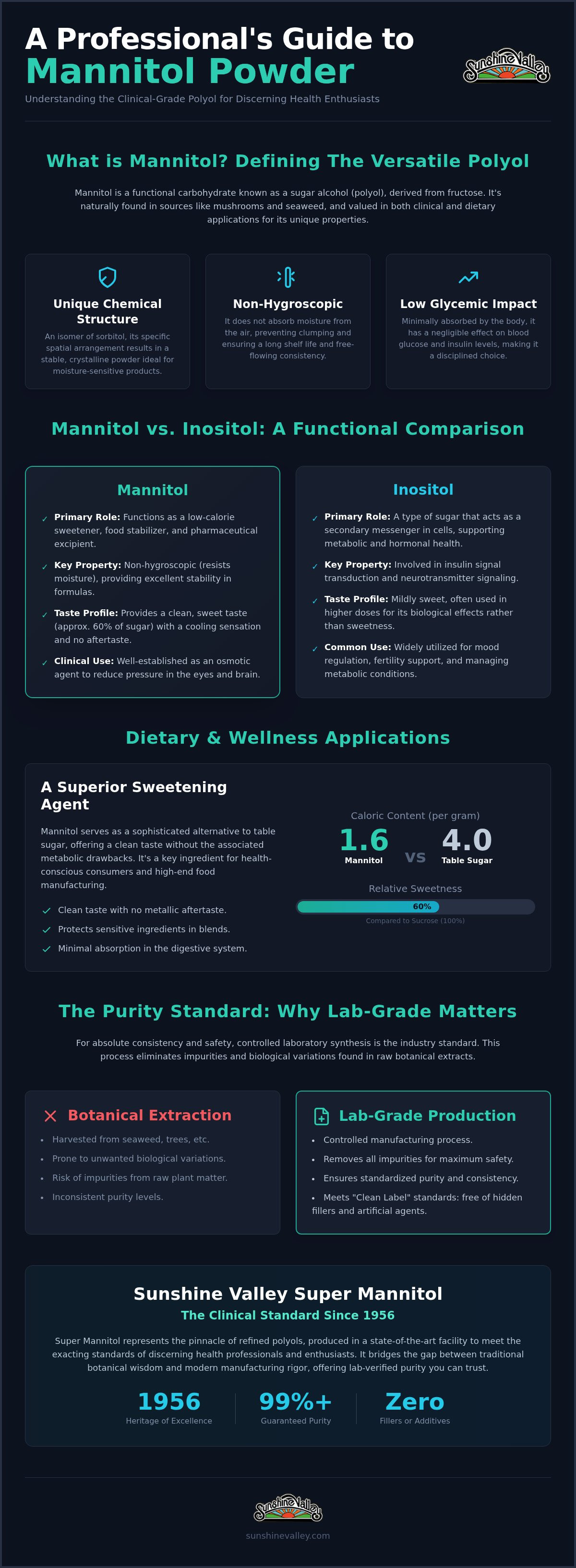
Mannitol is a functional carbohydrate with both clinical and dietary applications. It belongs to the polyol family, specifically derived from fructose. While it's often discussed in the context of mannitol vs inositol, these two substances serve distinct biological roles. Mannitol is naturally found in strawberries, mushrooms, and various trees. Its low glycemic index and unique crystalline structure make it a staple in both high-end food manufacturing and pharmaceutical applications. It provides a clean, sweet taste without the rapid insulin spikes associated with traditional sugars.
The Chemical Structure and Origins
Chemically, mannitol is an isomer of sorbitol. It shares the same molecular formula but possesses a different spatial arrangement. This subtle difference is crucial. It results in a non-hygroscopic powder that doesn't absorb moisture from the atmosphere. Most manufacturers prefer this crystalline form because it ensures exceptional stability and an extended shelf life. Commercial extraction often begins with the hydrogenation of fructose, resulting in a clean, white powder that remains free-flowing even in humid conditions. This structural integrity makes it an ideal excipient for tablets and a reliable sweetener for moisture-sensitive products.
Precision manufacturing is essential for maintaining these properties. When comparing mannitol vs inositol, the physical behavior of the crystals is often a deciding factor for formulators. Mannitol's cooling effect on the tongue and its lack of aftertaste contribute to its prestige in the wellness industry. It's a disciplined choice for those who demand functional ingredients that perform predictably under various environmental stresses.
Natural Sources vs. Lab-Grade Production
Nature provides mannitol in abundance. It's harvested from marine sources like seaweed or the exudate of the manna ash tree. However, botanical extraction often introduces unwanted biological variations. For those requiring absolute consistency, laboratory synthesis is the industry standard. Controlled manufacturing allows for the removal of impurities found in raw plant matter. This precision is where Super Mannitol excels. Produced in a state-of-the-art facility, Super Mannitol represents the pinnacle of refined polyols. It offers a standardized purity level that raw extracts cannot match. This focus on lab-grade excellence is a hallmark of the Sunshine Valley legacy, which has served discerning clients since 1956.
High-purity production eliminates the risk of hidden fillers or contaminants. While some sources focus solely on its medical use as an osmotic diuretic, the dietary grade version is widely utilized for its unique physical properties. Super Mannitol is specifically designed for those seeking the highest quality ingredients without additives. It bridges the gap between traditional botanical wisdom and modern manufacturing rigor. Choosing a lab-verified product ensures that the benefits of this versatile polyol are delivered with maximum efficacy and safety.
Common Uses of Mannitol Powder in Wellness and Food
Mannitol functions as a sophisticated alternative to traditional sweeteners; it offers approximately 60% of the sweetness found in sucrose. Unlike common sugars, it's non-hygroscopic. This prevents the powder from attracting moisture and clumping over time. It remains dry and crystalline. This physical stability is vital for protecting sensitive botanical extracts or vitamins within complex supplement blends. For those diligently monitoring blood sugar, it's a reliable tool. It doesn't trigger the sharp insulin spikes associated with glucose or fructose. While many academic sources prioritize the Clinical applications of mannitol, its utility as a high-grade food polyol is equally significant for daily wellness.
The distinction in mannitol vs inositol is often misunderstood by consumers. Inositol is primarily utilized for metabolic and hormonal support. Mannitol, by contrast, excels as a structural stabilizer and low-calorie sweetening agent. It provides a clean taste profile without the metallic aftertaste common in synthetic alternatives. It's a professional-grade ingredient for those who demand both functionality and purity.
Dietary Benefits and Glycemic Impact
Mannitol contains only 1.6 calories per gram. This is a significant reduction from the 4.0 calories found in table sugar. It passes through the digestive system with minimal absorption. This leads to a negligible impact on blood glucose levels. Compared to other polyols like xylitol or erythritol, mannitol offers superior stability in dry formulations. It doesn't clump. It maintains its integrity even in varying storage conditions. This makes it a disciplined choice for those pursuing a strict, health-conscious lifestyle. If you require a filler-free option, Super Mannitol provides the lab-grade purity necessary for optimal results.
Role as an Excipient in Premium Supplements
High-end supplement brands prioritize mannitol as an excipient. It improves powder flow and solubility. It ensures that active ingredients are distributed evenly throughout a blend. One of its most prized attributes is the "cool" mouthfeel it provides. This sensation is particularly beneficial in chewable or dissolvable formats. It enhances the sensory experience without the need for artificial cooling agents. To understand the technical requirements for these formulations, you can review our Mannitol Powder Quality Standards. This guide details the rigorous benchmarks required for safety and efficacy in modern manufacturing.
Clinical and Pharmaceutical Applications of Mannitol
Mannitol’s reputation in the clinical sector is built on its efficacy as an osmotic diuretic. For decades, medical professionals have relied on its ability to manage critical conditions like elevated intracranial and intraocular pressure. It works by increasing the osmolarity of the blood. This process creates a gradient that draws excess fluid out of sensitive tissues, such as the brain or eyes, and into the bloodstream for excretion. While the comparison of mannitol vs inositol often focuses on metabolic health in a wellness context, mannitol’s role in acute medical intervention is far more established. It’s a disciplined choice for practitioners who require predictable, rapid results in emergency settings.
Beyond pressure management, this polyol serves as a vital diagnostic tool for kidney health. Specifically, it’s used to measure the glomerular filtration rate. Because the kidneys filter mannitol without reabsorbing or secreting it, clinicians can accurately assess how well the renal system is functioning. It’s essential to distinguish between these clinical IV administrations and oral powder supplementation. Intravenous use is strictly reserved for acute medical care under professional supervision. Oral powders, such as Super Mannitol, are designed for dietary and functional food applications where lab-grade purity remains the primary benchmark for safety.
Osmotic Properties and Fluid Balance
The science of fluid balance centers on mannitol’s osmotic properties. It doesn't cross the blood-brain barrier easily. This allows it to effectively pull water from the interstitial space into the vascular system. These properties make purity an absolute necessity. Even in dietary grades, any trace of contaminants can interfere with the substance’s predictable behavior. High-purity standards ensure that the osmotic effect remains consistent. This is why Sunshine Valley has maintained a focus on additive-free crystals since 1956. The FDA-approved uses of mannitol emphasize its safety as a food additive, provided it meets rigorous manufacturing criteria.
Pharmaceutical Coating and Tablet Formulation
In modern drug manufacturing, mannitol is a preferred excipient for pharmaceutical coatings. It protects active ingredients from moisture-driven degradation. This is particularly important for sensitive medications that require a long shelf life. Its non-hygroscopic nature ensures that tablets remain stable and effective. Additionally, it's a cornerstone of "fast-melt" technology. These medications dissolve instantly on the tongue, providing convenience for patients who have difficulty swallowing. Achieving this requires a specific crystalline structure only possible through high-grade manufacturing. When evaluating mannitol vs inositol for formulation, mannitol is often selected for its superior flow properties and solubility. It’s a testament to the versatility of this polyol in both life-saving medicine and premium wellness products.
How to Choose the Best Mannitol Powder for Sale
Selecting a high-tier supplement requires a disciplined approach. You aren't just buying a sweetener; you're investing in a functional polyol that must perform predictably. Purity is the primary metric for any discerning buyer. Always prioritize lab-grade or pharmaceutical-grade designations to avoid industrial contaminants. When evaluating mannitol vs inositol, it's important to recognize that while both are sugar alcohols, their manufacturing rigor often differs. A heritage brand with a history of serving high-profile clients provides the transparency necessary for total confidence in your wellness regimen.
Verify the physical form of the product before finalizing your choice. Mannitol is available in both fine powders and larger crystals. Crystals are generally preferred for their stability and ease of handling in a kitchen or laboratory setting. Fine powders may dissolve faster but can sometimes be more prone to dusting. Ensure the manufacturer provides clear documentation regarding their sourcing and testing procedures. This level of detail is a hallmark of professional-grade products.
The Problem with Fillers and Additives
Lower-quality powders often contain hidden additives that dilute the active ingredient. Magnesium stearate and other flowing agents are common in mass-produced supplements. These substances are used to prevent machinery from clogging during high-speed production. They offer no health benefits. They can interfere with the solubility and purity of the polyol. Super Mannitol focuses on a singular, pure ingredient. This "Clean Label" philosophy ensures you receive exactly what is on the label. Understanding the Hygienic Supplement Manufacturing process is vital for identifying the clinical standards that separate premium offerings from generic alternatives.
Storage and Handling for Maximum Potency
Mannitol is prized for its low hygroscopicity, meaning it doesn't easily absorb moisture from the air. However, improper storage can still compromise the product. Keep your supply in a cool, dry place. Exposure to extreme heat can alter the crystalline structure over time. You can identify compromised powder by looking for discoloration or unusual clumping. Pure mannitol crystals typically have a longer shelf life than blended products. This is because they lack the organic fillers that degrade more quickly.
Maintaining the integrity of your supplement ensures that every serving delivers the expected cooling mouthfeel and sweetening power. Avoid leaving the container open in humid environments like kitchens or bathrooms. When debating mannitol vs inositol for your specific needs, consider that mannitol’s crystalline stability is a significant advantage for long-term storage. For those who demand the highest tier of quality, you can order Super Mannitol today to experience the difference that 70 years of manufacturing expertise provides.
Sunshine Valley Super Mannitol: The Clinical Standard Since 1956
Sunshine Valley has defined excellence in the supplement industry for seven decades. Our flagship product, Super Mannitol, is the result of a steadfast commitment to lab-grade purity. Since 1956, we've focused on providing additive-free crystals for those who refuse to settle for generic, filler-heavy powders. Every batch is produced in our state-of-the-art manufacturing facility. We maintain the highest hygienic standards to ensure you receive only the active polyol. This disciplined approach to manufacturing has made us a trusted partner for elite clients who demand scientific rigor. We provide a level of established reliability that remains unmatched in the modern wellness landscape.
A Heritage of Quality in Every Batch
Our story began with a doctor's vision for clinical-grade purity. In 1956, the supplement market lacked standardized, high-purity options for discerning individuals. Our founder established Sunshine Valley to bridge this gap, focusing on precision manufacturing rather than mass-market trends. While our technology has evolved to meet 2026 standards, our core principles remain unchanged. We still prioritize the total absence of undesirable elements. This long-standing reputation is a vital safeguard in today’s crowded market. It provides a sense of stable, quietly prestigious authority. We don't need to shout to prove our worth; our history of excellence speaks for itself.
Integrating Super Mannitol into Your Wellness Routine
Using Super Mannitol is straightforward due to its exceptional solubility and stable crystalline structure. It mixes effortlessly into cold or warm beverages without clumping. Many users appreciate its clean, sweet profile as a low-calorie sugar alternative. When considering mannitol vs inositol for your daily regimen, remember that mannitol is often chosen for its structural purity and unique cooling mouthfeel. It's a functional carbohydrate that fits perfectly into a health-conscious, disciplined lifestyle. It remains free-flowing and easy to measure, ensuring consistency in every serving.
Proper serving sizes are essential for achieving your specific wellness goals. Most dietary applications require only a small amount to reach the desired sweetness level. Because our product contains zero fillers, you're getting a concentrated, potent ingredient. This efficiency makes it a superior choice for those who track their intake meticulously. The distinction in mannitol vs inositol becomes clear once you experience the physical quality of our additive-free crystals. We invite you to join a select group of individuals who prioritize manufacturing precision. Experience the purity of Sunshine Valley Super Mannitol today.
Elevate Your Wellness Standards with Clinical Purity
Precision in supplement selection is the hallmark of a disciplined health strategy. You now understand that mannitol is more than a low-calorie sweetener; it's a sophisticated polyol with a legacy of clinical efficacy. While the mannitol vs inositol comparison highlights different metabolic pathways, the requirement for lab-grade purity remains constant. Choosing a product free from synthetic fillers like magnesium stearate ensures that your body receives only the intended active crystals for optimal results.
Sunshine Valley has served as a trusted wellness provider since 1956. We maintain strict clinical standards in our state-of-the-art facility to deliver lab-grade purity with zero fillers. This commitment to manufacturing excellence guarantees a product that performs predictably across all dietary and functional applications. Don't compromise on the quality of your ingredients when professional-grade solutions are within reach. Secure your wellness journey with a brand that prioritizes scientific rigor and heritage.
Order Pure Super Mannitol from Sunshine Valley and experience the definitive clinical standard for your health regimen.
Frequently Asked Questions
Is mannitol powder safe for daily consumption?
Mannitol is generally recognized as safe (GRAS) for daily dietary use according to FDA standards. Most healthy adults tolerate servings of 10 to 20 grams without issue. Its safety profile is well-documented in both clinical and food science contexts. You should monitor your individual tolerance, as higher amounts may cause a mild laxative effect. It remains a reliable, non-toxic choice for those pursuing a high-standard wellness routine.
Does mannitol raise blood sugar or insulin levels?
Mannitol has a negligible impact on blood glucose and insulin levels due to its very low glycemic index. It is absorbed slowly and only partially in the small intestine. This prevents the rapid insulin spikes associated with traditional carbohydrates. It is an excellent sweetener for those following ketogenic or diabetic-friendly diets. Its metabolic pathway ensures a stable energy profile without the fluctuations caused by sucrose or high-fructose corn syrup.
What is the difference between food-grade and lab-grade mannitol?
Lab-grade mannitol meets higher purity benchmarks than standard food-grade alternatives. It is refined to eliminate the fillers and anti-caking agents found in mass-market products. Choosing a lab-verified option ensures you receive only the active polyol without undesirable contaminants. When comparing mannitol vs inositol, the focus on chemical precision is a hallmark of premium lab-grade supplements. This level of rigor is essential for maintaining clinical-grade quality.
Can mannitol cause digestive issues like bloating or gas?
Digestive discomfort like bloating or gas can occur if mannitol is consumed in excessive quantities. This is because the polyol is fermented by bacteria in the large intestine. Most users avoid these effects by adhering to recommended serving sizes. It's best to introduce the powder gradually to assess your digestive tolerance. Staying within a 20-gram daily limit typically ensures a comfortable experience for most healthy individuals.
How does mannitol compare to other sugar alcohols like xylitol?
Mannitol is distinguished from xylitol by its non-hygroscopic nature and lower sweetness level. Xylitol matches the sweetness of sucrose, while mannitol offers about 60% of that intensity. Mannitol's crystalline form stays dry in humid conditions, providing superior shelf stability. In the comparison of mannitol vs inositol, mannitol is prized for this physical resilience and its distinct cooling effect. It is a disciplined choice for specific formulation needs.
Is mannitol powder vegan and gluten-free?
Pure mannitol powder is naturally vegan and gluten-free as it is a plant-derived carbohydrate. It is typically produced through the hydrogenation of fructose from botanical sources. High-tier manufacturers ensure their facilities are free from cross-contaminants to protect sensitive users. This makes it suitable for a wide range of restrictive diets. Always look for brands that offer transparent sourcing to confirm these dietary standards are met consistently.
Can I use mannitol powder for baking and cooking?
Mannitol is a heat-stable polyol that functions effectively in various cooking and baking processes. It doesn't brown or caramelize like sugar, which preserves the visual integrity of certain recipes. Its resistance to moisture absorption makes it ideal for dusting confections or creating stable coatings. It provides a clean sweetness and a smooth texture. This makes it a professional-grade tool for health-conscious culinary development.


Leave a comment
This site is protected by hCaptcha and the hCaptcha Privacy Policy and Terms of Service apply.