




One in four adults in America live with arthritis. Natural anti-inflammatory supplements for joints include options such as fish oil, glucosamine, chondroitin, collagen, and turmeric or curcumin. Their potential benefits differ, and evidence varies by supplement and joint condition.
Choosing a supplement can feel confusing when familiar ingredients are promoted for different reasons. Start by understanding what each option may support, where research is mixed, and how supplements fit alongside medical care, physical activity, and a healthy diet.
This guide explains common joint supplements, including omega-3 fatty acids, glucosamine and chondroitin, collagen, turmeric, ginger, and MSM. You’ll learn what studies suggest, what to consider before taking a supplement, and why the right choice depends on your health needs and medications. Clear comparisons can help you have a more informed conversation about joint support without treating supplements as a substitute for care.
Key Takeaways
- Match a supplement to the type of joint concern you’re addressing; evidence differs across osteoarthritis and inflammatory arthritis.
- Compare fish oil, glucosamine, chondroitin, collagen, and other common options by their intended role and the strength of the available evidence.
- Review potential medication interactions and health considerations before adding a supplement to your routine.
- Use supplements as one part of joint care, alongside appropriate medical care, physical activity, and a healthy diet.
- Learn how ingredient quality and careful product selection can inform your next step.
1. What Are Supplements for Joints & Arthritis?
Joint supplements are foods or concentrated ingredients taken to support joint comfort, movement, or connective tissue. Turmeric and curcumin are popular examples, but they are not the same: turmeric is a spice, while curcumin is one of its active compounds. A supplement may contain turmeric, concentrated curcumin, or a formulated extract. Check the label because these forms can differ.
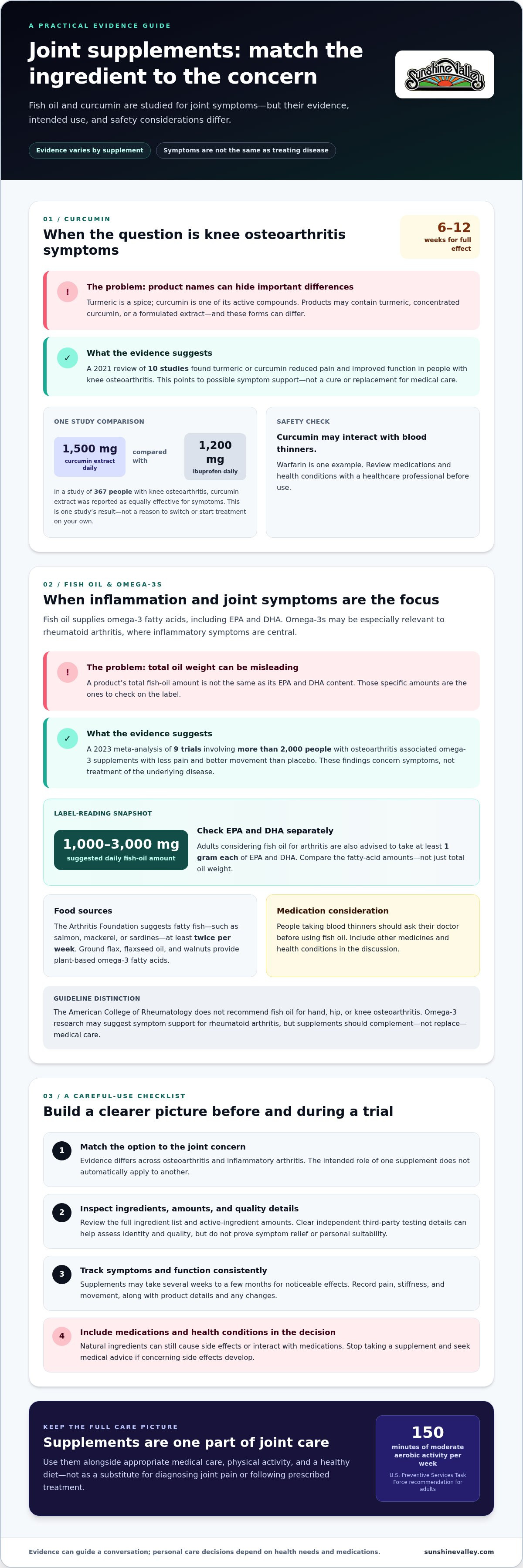
For knee osteoarthritis, the evidence on curcumin offers a useful example of why people consider supplements. A 2021 review of 10 studies found that turmeric or curcumin reduced pain and improved function in people with knee osteoarthritis. That finding suggests potential support for symptoms, not a cure or a replacement for medical care.
For physician-led guidance on turmeric and joint pain, watch this Cleveland Clinic video:
Curcumin may influence inflammation-related processes, which helps explain its study in joint symptoms. A study of 367 people with knee osteoarthritis found that 1,500 mg of curcumin extract daily was as effective as 1,200 mg of ibuprofen daily for symptoms. This comparison describes one study’s results, not a reason to replace prescribed medications or start a supplement without considering personal health factors.
Turmeric in food and curcumin supplements also differ in concentration and formulation. Eating turmeric in a meal is one way to include the spice, while a capsule may provide a concentrated extract. Research has examined curcumin for inflammation and joint function, but results for a particular extract do not automatically apply to every turmeric product.
Prices for turmeric, fish oil, and other joint supplements in the United States vary by ingredient, formulation, concentration, and package size. Compare the amount of active ingredient and servings per container rather than relying on the product name alone.
To choose a supplement more carefully, review the full ingredient list and amounts, then look for clear details about independent third-party testing. Testing can help assess product identity and quality, but it does not establish that a supplement will relieve symptoms or suit everyone. Because medications and health conditions matter, discuss potential interactions with a healthcare professional before use.
Joint supplements may take several weeks to a few months to show noticeable effects; turmeric or curcumin may take six to 12 weeks for its full effect. Track symptoms and function during a consistent trial. Stop taking a supplement and seek medical advice if you develop concerning side effects.
Movement remains part of joint health. The U.S. Preventive Services Task Force recommends adults get at least 150 minutes of moderate aerobic physical activity per week. Supplement use should complement, not replace, medical care, physical activity, and a healthy diet.
Natural ingredients can still cause side effects or interact with medications. Curcumin may interact with blood thinners, including warfarin, so consider your medication list and health conditions before making a decision. A supplement may support symptom management, but it is not a substitute for diagnosing the cause of joint pain.
2. Fish oil and omega-3 fatty acids
Fish oil supplies omega-3 fatty acids, including EPA and DHA. It is one of several natural anti-inflammatory supplements for joints considered for inflammation, stiffness, and pain. These fats may be especially relevant to rheumatoid arthritis, where inflammatory symptoms are central. Their potential role differs from glucosamine and chondroitin, which are more often discussed for osteoarthritis symptoms.
Research has examined omega-3s for joint pain across different conditions. A 2023 meta-analysis of nine trials involving more than 2,000 people with osteoarthritis associated omega-3 supplements with less pain and better movement than placebo. Other studies cited in the research found reduced joint pain among people who ate omega-3-rich foods or used fish oil supplements. These results concern symptoms, not treatment of the underlying disease.
Food is one route to omega-3s. The Arthritis Foundation suggests eating fatty fish, such as salmon, mackerel, or sardines, at least twice per week. Ground flax, flaxseed oil, and walnuts provide plant-based omega-3 fatty acids. These sources differ from fish oil, so dietary preferences and the specific fats in a supplement can help shape a practical choice.
For people comparing natural anti-inflammatory supplements for joints, the label’s EPA and DHA amounts deserve close attention. A suggested daily amount for fish oil and joint health is 1,000 to 3,000 mg. Adults considering fish oil for arthritis are also advised to take at least one gram each of EPA and DHA. Total fish-oil weight is not the same as its EPA and DHA content, so check those amounts separately.
People taking blood thinners should ask their doctor before using fish oil because of possible medication concerns. Include other medications and health conditions in that discussion. This safety step matters even when a supplement is marketed as natural, and helps account for your full treatment plan.
Clinical guidelines do not treat every supplement alike. The American College of Rheumatology does not recommend fish oil for hand, hip, or knee osteoarthritis. For rheumatoid arthritis, omega-3 research suggests possible symptom support, but supplements should complement medical care rather than replace prescribed treatment.
To assess whether omega-3s are useful, record joint pain, stiffness, and movement before and during use. Note the product’s EPA and DHA amounts, serving directions, and any changes in symptoms. A record gives you concrete details to discuss with your doctor and makes it easier to distinguish the active fatty acid content from the product’s total oil weight.
Omega-3s are one option, not a universal answer. Someone who avoids fish might consider walnuts or flax as food sources, while a person with rheumatoid arthritis can discuss the evidence and medication interactions with a doctor. Consider the type of arthritis, current treatment, diet, and supplement label together when deciding whether fish oil fits a joint-health routine.
3. Glucosamine and chondroitin
Glucosamine and chondroitin are commonly paired in supplements marketed for joint comfort and cartilage support. Both are associated with cartilage, the tissue that cushions joints, but taking them does not mean damaged cartilage will be rebuilt. No supplement has been proven to fully rebuild cartilage. Some research suggests these ingredients could support joint cushioning or slow cartilage breakdown, which is not the same as restoring cartilage.
For osteoarthritis, studies have produced mixed results. Some report modest pain relief, while others find little effect. A 2024 meta-analysis of 25 randomized controlled trials found benefits from glucosamine and chondroitin for people with knee osteoarthritis. Other research suggests these supplements could be more helpful for moderate to severe osteoarthritis. Findings for autoimmune arthritis are mixed, so results for osteoarthritis should not be applied to every type of arthritis.
Typical daily amounts are 1,500 mg of glucosamine and 1,200 mg of chondroitin. These are common study or supplement amounts, not a personal prescription. Discuss them with a rheumatologist, especially if you already use medication for joint symptoms. Read each label carefully: a combined product can list both ingredients, while another may contain only glucosamine or only chondroitin.
Guidelines also matter. The American College of Rheumatology recommends against glucosamine and chondroitin for hip or knee osteoarthritis, and against glucosamine for hand osteoarthritis. That guidance differs from the favorable findings in some studies, including the 2024 analysis. The contrast shows why a positive research result does not automatically mean a supplement is recommended for every joint or patient.
Cartilage-related pain can be hard to distinguish from pain caused by inflammation, injury, or another condition. Track symptoms such as pain during movement, stiffness, and swelling, and note any changes in daily activities. This record can help you judge whether a supplement trial corresponds with a meaningful difference, rather than relying on a single good or bad day.
Effects can take several weeks to a few months to become noticeable, depending on the supplement and arthritis severity. If you are considering glucosamine or chondroitin, set a review point with your healthcare professional and compare symptoms over time. Stop and seek medical advice if you develop concerning symptoms. Don’t assume adding collagen or a vitamin will improve the effect: evidence for one ingredient cannot establish the benefit of a different combination.
For someone with knee osteoarthritis, the practical question is whether symptom changes are clear enough to matter in everyday activities. Weigh the mixed study results, the joint involved, existing treatment, and the American College of Rheumatology guidance. Glucosamine and chondroitin are not substitutes for medical care, and persistent pain or swelling deserves proper assessment.
4. Collagen for cartilage and connective tissue
Collagen is a structural protein found in connective tissues, including cartilage. Supplements commonly use hydrolyzed collagen or undenatured type II collagen, also called UC-II. These forms differ, so check the product label: evidence about one collagen type does not automatically apply to another. For joint health, the central question is whether a specific form supports comfort or movement, not whether it can rebuild damaged cartilage.
A 2020 meta-analysis of 41 studies found collagen helped reduce pain and improved cartilage repair. That finding is encouraging, but it does not establish that every collagen product has the same effect. A 2025 analysis of 12 studies on undenatured type II collagen found that every study reported improvements. UC-II may help reduce pain and improve joint flexibility, especially for people with osteoarthritis.
Hydrolyzed collagen is a different option. The suggested daily amount is about 5 to 10 grams. Some collagen supplements are paired with vitamin C for better absorption. Compare the collagen form and amount on the label, rather than choosing by the word “collagen” alone. The preparation used in a study also matters when comparing its results with a retail supplement.
Collagen is also discussed for joint pain and muscle soreness, but these concerns are not interchangeable. Joint discomfort can involve cartilage or other structures, while muscle soreness relates to muscle tissue. The collagen findings described here focus on joint pain, flexibility, and cartilage. For example, someone tracking knee discomfort can record pain while walking and stiffness after rest, then compare those observations over time.
Collagen evidence for osteoarthritis should not be taken as proof that it treats rheumatoid arthritis or another inflammatory disease. These conditions have different causes and care needs. A supplement intended to support cartilage does not replace treatment for rheumatoid arthritis. Keep prescribed medications and your diagnosis central when considering any supplement for ongoing symptoms.
To assess a collagen product, take three practical steps: identify whether it contains hydrolyzed collagen or UC-II, note the amount per serving, and record changes in pain or function. Focus on a specific activity, such as climbing stairs or walking. This gives you a clearer basis for judging whether the product seems relevant to your routine than relying on a broad claim about “joint health.”
Collagen’s potential role is supportive, not restorative. The 41-study meta-analysis and 12-study UC-II analysis offer evidence worth considering, while the differences between collagen forms remain important. Focus on the type studied, the joint concern, and measurable changes in everyday movement. Persistent pain, reduced function, or symptoms associated with inflammatory disease require appropriate medical care alongside any supplement decision.
5. Common joint supplements
Evidence varies by ingredient, condition, and outcome. Curcumin from turmeric has reduced arthritis-related pain in some studies, while omega-3 fatty acids are associated with less pain and better movement in osteoarthritis research. Glucosamine and chondroitin results remain mixed. To compare natural anti-inflammatory supplements for joints, first identify the symptom and condition each ingredient has been studied for, rather than treating them as interchangeable.
Ginger has demonstrated anti-inflammatory properties described as similar to ibuprofen. Boswellia serrata is another plant extract studied for joint symptoms. Willow bark is also used in supplements, but it can cause allergic reactions in people sensitive to aspirin. These differences matter: evidence for one botanical does not establish effectiveness for another, and potential side effects should factor into your comparison.
MSM has been studied for knee discomfort. In a randomized, double-blind study, 88 healthy participants took MSM daily for 12 weeks, and researchers reported improved knee discomfort. Studies of MSM for knee osteoarthritis used doses ranging from 1.5 to 6 grams per day. The suggested daily dose is 2 to 3 grams. Study populations and amounts vary, so these figures are not a reason to copy a study regimen.
Vitamin D supports bone strength and helps regulate inflammation. Its relevance to joint health can depend on a person’s vitamin D status, rather than a general promise to relieve pain. SAM-e has a different safety profile: people with bipolar disorder or who are immune-compromised may face risks. These examples show why “natural” does not mean free from side effects or interactions.
For turmeric or curcumin, a typical supplement dose is 500 to 1,000 mg, and it may take six to 12 weeks to notice the full effect. Curcumin may interact with blood thinners, including warfarin. Compare the ingredient and amount on the label, then consider medications and health conditions before choosing among natural anti-inflammatory supplements for joints.
Which natural supplements have evidence for reducing joint inflammation and pain? Research supports considering curcumin, omega-3s, and some other ingredients for particular symptoms, but findings vary by condition and product. Ginger and Boswellia have been studied for inflammatory properties or joint symptoms, while evidence for glucosamine and chondroitin is mixed.
Do ginger, Boswellia, or willow bark supplements improve joint symptoms? Ginger has anti-inflammatory properties, and Boswellia extracts have been studied for joint concerns. Willow bark carries a known aspirin-sensitivity risk. Evidence and safety differ, so compare the ingredient, intended use, and potential side effects before choosing.
A practical approach is to identify your main goal, such as easing stiffness or supporting movement, then consider one ingredient at a time. Record symptoms and function consistently instead of starting several supplements together. This can help you notice changes and identify possible side effects. Supplements complement medical care, physical activity, and a healthy diet; they don’t replace arthritis treatment.
Sunshine Valley: Super Mannitol
Sunshine Valley offers Super Mannitol, a natural food supplement for people considering options beyond joint-focused ingredients. It is not a treatment for arthritis or a substitute for joint care. Sunshine Valley also offers Super Inositol, Super Lactose, and Super Niacinamide, made with an emphasis on ingredient quality, manufacturing, and hygiene.
Use the evidence reviewed above to guide decisions about joint symptoms, medications, and supplement safety. If you’re exploring Sunshine Valley’s supplement range as part of your wider wellness routine, visit sunshinevalley.com.
Make your next choice with care
Choosing natural anti-inflammatory supplements for joints is only one part of a thoughtful approach to joint health. Make your next step practical: note what you want to improve, consider your current medications, and discuss supplement decisions with a healthcare professional. This gives you a clearer basis for deciding what belongs in your routine.
If you’re also exploring general wellness supplements, Sunshine Valley offers Super Mannitol, Super Inositol, and Super Lactose. These products are distinct from the joint supplements discussed here, so choose according to your needs rather than assuming one ingredient serves every purpose.
For information about Sunshine Valley’s offerings, contact Sunshine Valley today. A considered decision, grounded in your health needs and the evidence, is a positive next step toward caring for your joints.
Frequently Asked Questions
What Are Supplements for Joints & Arthritis?
Joint supplements are dietary ingredients used to support comfort, movement, or connective tissue; they don’t diagnose or treat the cause of arthritis. Examples include fish oil, turmeric extracts, collagen, glucosamine, and chondroitin. To make the category useful, identify your main goal, such as easier walking or less morning stiffness, then record that symptom before changing your routine. This helps distinguish joint-support products from general wellness supplements.
How effective is curcumin or turmeric for joint pain, and what dose is studied?
Curcumin and turmeric have shown potential for knee osteoarthritis symptoms, but findings relate to specific studies and preparations. A study involving 367 people found 1,500 mg of curcumin extract daily was as effective for symptoms as 1,200 mg of ibuprofen daily. That study dose isn’t a universal recommendation. Turmeric spice and concentrated curcumin extracts also differ, so don’t assume they provide equivalent amounts.
Does omega-3 fish oil help joint inflammation, and what daily dose is recommended?
Omega-3 fatty acids from fish oil may help with joint pain, stiffness, and inflammation. A suggested daily fish-oil amount for joint health is 1,000 to 3,000 mg; adults considering fish oil for arthritis are advised to consider at least one gram each of EPA and DHA. Check EPA and DHA separately from the total oil amount, since the label’s fish-oil weight doesn’t show how much of each fatty acid it contains.
What are the risks and side effects of natural anti-inflammatory joint supplements?
Natural supplements can cause side effects or interact with medicines, and risks vary by ingredient. Curcumin may interact with blood thinners, including warfarin; fish oil requires caution for people taking blood thinners. Willow bark can trigger allergic reactions in people sensitive to aspirin. Some supplements may also affect conditions involving blood clotting or diabetes. Keep a list of supplements and medications to review with a healthcare professional.
Which supplements interact with blood thinners, pain medicines, or other common medications?
Curcumin may interact with blood thinners such as warfarin, and people taking blood thinners should ask a doctor before using fish oil. Willow bark is a concern for people sensitive to aspirin. Supplements can also affect conditions such as diabetes or blood clotting. Before adding an ingredient, share its label and serving directions with a healthcare professional, along with prescription medicines, over-the-counter pain relievers, and other supplements.
What are typical prices for turmeric, fish oil, and other joint supplements in the United States?
Prices vary by ingredient, formulation, concentration, and package size. Compare the amount of active ingredient and servings per container rather than relying on the product name alone.



Leave a comment
This site is protected by hCaptcha and the hCaptcha Privacy Policy and Terms of Service apply.