




Visible signs of aging involve more than fine lines. Niacinamide, a form of vitamin B3, may support the skin barrier and moisture retention while helping improve the appearance of uneven tone and fine lines. These benefits of niacinamide for skin health make it a versatile ingredient, but what it can do depends on how it’s used and the concern you want to address.
If your skin looks dull, feels dry, or shows changes in tone and texture, it’s natural to look for one ingredient that can support several needs. This guide explains how niacinamide works, what evidence suggests about its role in moisture, dark spots, and visible aging, and how it differs from niacin taken as a nutrient. You’ll also learn how topical and oral forms fit into skin health, so you can understand what niacinamide may contribute to a considered routine.
Key Takeaways
- Learn how niacinamide may support a more even-looking tone and what to consider when addressing dark spots.
- See how skin-barrier support can help the skin retain moisture and look smoother.
- Understand the potential role of niacinamide in the appearance of fine lines, wrinkles, and other visible signs of aging.
- Distinguish topical niacinamide from oral vitamin B3 supplements and understand why they serve different purposes.
Niacinamide products for dark spots and uneven tone
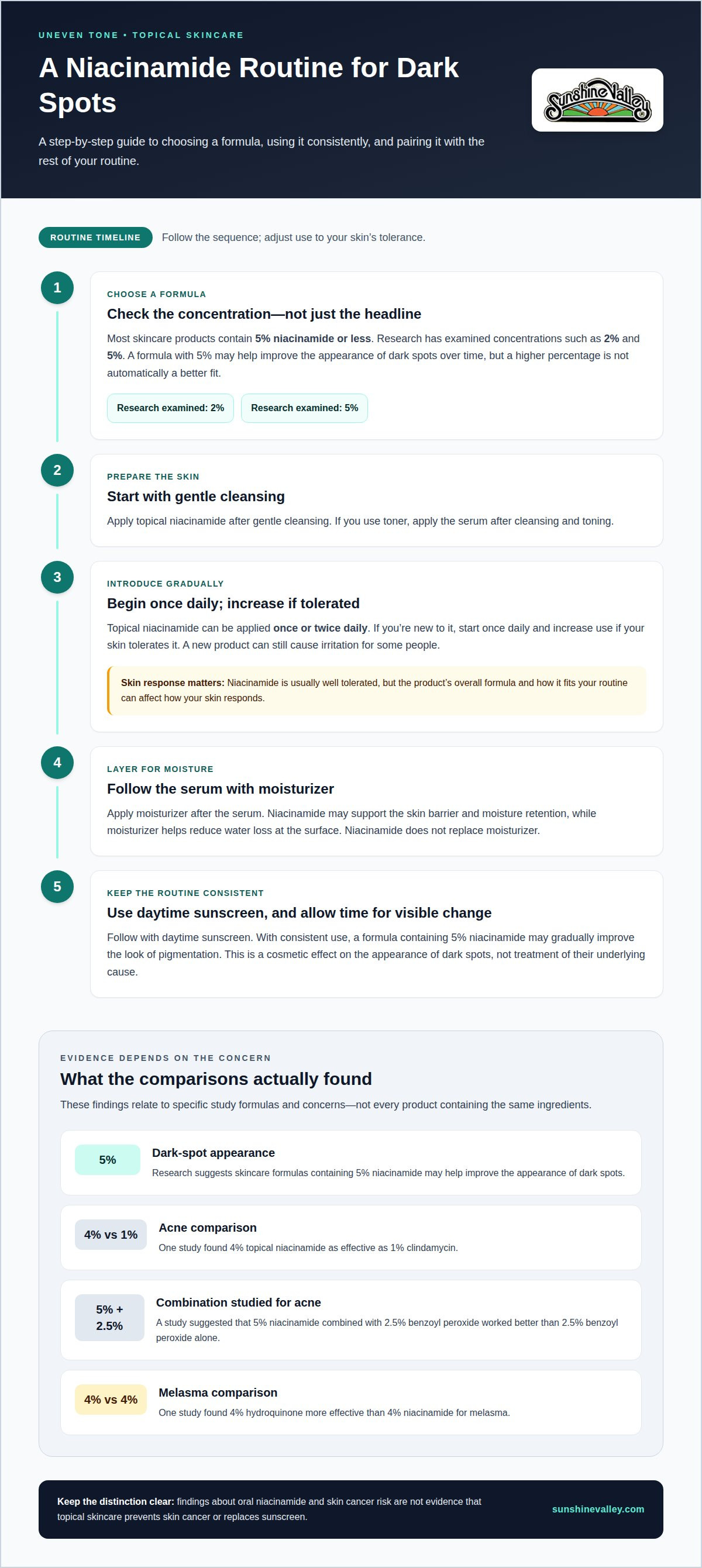
Niacinamide skincare products may help improve the appearance of dark spots and uneven tone. Their effects depend on the formula, the skin concern being addressed, and how the product fits into your routine.
Concentrations and Possible Side Effects
A product’s niacinamide concentration indicates how much of this ingredient its formula contains. Most skincare products contain 5% or less, and research has examined concentrations such as 2% and 5%. Formulas containing 5% niacinamide or less are generally considered safe for skin use. Niacinamide is usually well tolerated, but a new product can still cause irritation for some people. Concentration matters because a higher percentage isn’t automatically a better choice for your skin concern.
Choosing and Applying Niacinamide Products
Choosing a niacinamide product means matching its formula and application to your skin goals. For dark spots, research suggests that skincare formulas containing 5% niacinamide may help improve their appearance. Apply topical niacinamide after gentle cleansing, once or twice daily. If you’re new to the ingredient, start once daily and increase use if your skin tolerates it. Apply serum after cleansing and toning, then follow with moisturizer and daytime sunscreen.
Comparing Niacinamide With Other Ingredients
Niacinamide complements other ingredients, but it doesn’t replace every targeted treatment. For acne, a study found 4% topical niacinamide as effective as 1% clindamycin. Another study suggested that combining 5% niacinamide with 2.5% benzoyl peroxide worked better than using 2.5% benzoyl peroxide alone. Niacinamide may support breakout-prone skin, while benzoyl peroxide and salicylic acid address acne through different approaches. For melasma, a study found 4% hydroquinone more effective than 4% niacinamide.
For uneven tone, niacinamide may help reduce the appearance of dark spots by limiting excess melanin transfer within the skin. Consistent use matters: a formula containing 5% niacinamide may gradually improve the look of pigmentation. That cosmetic effect is distinct from treating the underlying cause of a spot. A skincare routine can also combine niacinamide with other ingredients, but the combination should suit the concern and the skin’s tolerance.
Acne products illustrate why the full ingredient combination matters. Niacinamide may support balanced sebum production and ease visible redness, while benzoyl peroxide or salicylic acid can target acne in other ways. The 5% niacinamide and 2.5% benzoyl peroxide combination has been studied against 2.5% benzoyl peroxide alone. These study findings concern specific formulas, not every product containing those ingredients. Check the product label for both the niacinamide concentration and companion ingredients.
Separate evidence concerns oral niacinamide and skin cancer risk, not topical treatment for dark spots or wrinkles. According to the Authors of the cited study, researchers followed 386 participants for 12 months. The Authors of the cited study also report that participants had a history of nonmelanoma skin cancer within the previous 5 years. This population and outcome differ from everyday skincare use. The findings shouldn’t be treated as evidence that a topical product prevents skin cancer or replaces sunscreen.
Skin-barrier support and moisture retention
A resilient skin barrier helps limit moisture loss and supports skin comfort. Niacinamide may contribute by stimulating ceramide synthesis, supporting the lipid structure that helps skin retain moisture. This can matter when skin feels dry, looks rough, or seems less supple. It’s one reason niacinamide appears in skincare formulas designed for hydration as well as uneven tone.
Ceramides are part of the skin’s natural lipid barrier. By supporting ceramide synthesis, niacinamide may help the barrier retain moisture more effectively, leaving skin looking smoother and feeling less tight. It doesn’t replace moisturizer. Instead, a niacinamide product and moisturizer can support hydration in complementary ways.
Formula combinations can also matter. Skin may look more hydrated, smoother, and toned after 8 weeks of using niacinamide alongside hyaluronic acid. Hyaluronic acid helps draw moisture into the outer layers of skin, while niacinamide supports the barrier that helps retain it. Together, they address hydration from different angles. The outcome is a change in appearance and feel, not a permanent alteration to the skin.
For sensitive skin, barrier support is especially relevant because dryness and irritation can affect comfort and appearance. Topical niacinamide may help ease redness, blotchiness, and irritation. It may also help soothe skin that appears reactive. These effects don’t mean every formula suits every person. The product’s overall formulation and the way it fits into an existing routine also shape how skin responds.
Hydration can influence texture, too. When skin retains moisture, its surface may look smoother and pores may appear less prominent. Niacinamide may help minimize the appearance of pores by supporting smoother, more hydrated skin. It doesn’t change genetically determined pore size. The visible effect is related to hydration and texture, which can make pores seem less noticeable.
For a balanced routine, pair niacinamide with a moisturizer rather than relying on it alone for hydration. Apply a serum before moisturizer; the moisturizer helps reduce water loss at the surface. If your routine already includes hyaluronic acid, using both may support a more hydrated appearance over time. Focus on comfort, moisture retention, and consistency.
Barrier support is one part of skin health, not a cure for every cause of dryness or redness. Niacinamide’s potential role is to support ceramides and the lipid barrier, while moisturizer helps maintain surface hydration. Together, those functions can improve how dry or rough skin looks and feels. The 8-week finding with hyaluronic acid illustrates why combination formulas may be useful for hydration goals.
Fine lines and wrinkles
Fine lines reflect changes in skin structure and surface texture. Niacinamide may support collagen production and improve the appearance of fine lines and wrinkles. Collagen supports the skin’s structure, while the skin barrier influences surface comfort and moisture. These are related but distinct aspects of skin health. A topical niacinamide product may support a smoother-looking appearance, but it doesn’t replace every ingredient or treatment aimed at visible aging. The benefits of niacinamide for skin health may therefore span several visible concerns, rather than one single effect.
Research has also examined niacinamide alongside other skin-brightening ingredients. In one study, a combination that included retinol and niacinamide reduced the appearance of dark spots and fine lines while improving radiance and texture. This is relevant because visible aging often involves several concerns at once: uneven tone, rough texture, and fine lines can occur together. A combination formula targets multiple appearance concerns, but its effects reflect the full formula, not niacinamide alone.
Niacinamide may support collagen-related changes, but collagen production is only one factor affecting how skin looks. Surface hydration, texture, and visible pigmentation also influence how prominent fine lines seem. Niacinamide’s support for the skin barrier can complement its role in a routine focused on texture and visible aging. This doesn’t mean it restores lost elasticity or removes wrinkles. A realistic aim is to improve the appearance of lines and support smoother-looking skin.
Studies have evaluated topical niacinamide at concentrations such as 2% and 5%, and one study found that 4% niacinamide alone improved pores, roughness, and unevenness after 8 weeks. Those findings relate to visible skin quality, not a direct measurement of elasticity. They show why texture matters when assessing fine lines: smoother-looking skin may make lines less noticeable. The concentration and formula differ across products, so study findings shouldn’t be assumed to apply identically to every skincare product.
If your routine includes retinol, niacinamide may complement it with a focus on barrier support and overall texture. The study involving both ingredients examined a combination of skin brighteners; it doesn’t establish that every pairing produces the same result. Consider the concerns each ingredient addresses: formulas may combine retinol and niacinamide to target fine lines, dark spots, radiance, and texture. A consistent routine makes gradual changes easier to assess.
Skin elasticity and wrinkle depth aren’t interchangeable with the appearance of fine lines. Niacinamide may help minimize the visible appearance of wrinkles, while its barrier-supporting role relates to skin comfort and moisture retention. These benefits of niacinamide for skin health concern visible appearance and skin support, not reversal of structural aging. The evidence on 4% niacinamide and visible roughness after 8 weeks offers a specific example of texture improvement, rather than proof of wrinkle removal.
Niacinamide’s role as a form of vitamin B3
Niacinamide, also called nicotinamide, is a water-soluble form of vitamin B3. Vitamin B3 belongs to a group of eight B vitamins that support many aspects of health. Niacinamide supports cell function, skin health, and energy metabolism. Its role in a skincare routine is different from its role as an oral supplement. Understanding that distinction helps you choose an approach suited to your goal.
Niacinamide and niacin are different forms of vitamin B3. Niacin is used for people with high cholesterol and can cause flushing. It isn’t the form used for skin health. The body can create niacinamide from niacin supplements, but that doesn’t make the two forms interchangeable for every purpose. A topical niacinamide product is used on skin, while an oral supplement affects the body more broadly.
Topical niacinamide can fit into routines that include vitamin C. Niacinamide works alongside antioxidants, and vitamin C is an antioxidant used in skincare. The two can serve different routine goals, and neither replaces the other. A dermatologist can consider the formula and your skin’s tolerance when advising on a routine. If a combination causes irritation, simplify your routine and assess which product may be contributing.
Oral niacinamide supplements may help address vitamin B3 deficiency, but they aren’t a general substitute for topical skincare. Speak with a doctor before adding an oral supplement to your routine. Supplements in doses under 35 milligrams per day may be safe for most people. The stated upper limit is 1 gram per day, and very high doses around 900-1500 milligrams a day may cause side effects. These amounts describe oral supplements, not topical products.
Health context matters when considering oral use. People with diabetes who take niacinamide should monitor blood sugar closely. People with severe liver disease or active peptic ulcers shouldn’t use oral niacinamide supplements. These precautions show why a nutrient’s role depends on its form and a person’s health circumstances. For skin, topical niacinamide is the relevant form; decisions about supplements for a suspected deficiency involve overall health and dietary needs.
Keep the distinction clear: niacinamide is vitamin B3, but niacin has different uses and effects. Topical products are applied to skin, while oral supplements may address deficiency and carry dose-related considerations. This difference helps prevent confusing skincare benefits with the broader effects of taking a vitamin supplement.
Niacinamide for visible signs of aging
Visible aging can involve changes in tone, texture, and the appearance of fine lines. Niacinamide’s antioxidant properties may help counter oxidative stress and visible environmental skin damage. It also supports the skin’s ability to repair damaged DNA and protect cells from oxidative stress. These processes connect niacinamide with several aging concerns. They don’t mean a topical product reverses aging; they help explain why this ingredient appears in routines focused on skin appearance.
Evidence points to several visible outcomes rather than one single effect. In studies cited in the research, 4% niacinamide alone improved pores, roughness, and unevenness after 8 weeks. Those outcomes matter because a smoother texture and more even tone can change how aged skin appears. They are distinct from claims about removing wrinkles or restoring skin to an earlier state. The practical takeaway is to consider the concern being targeted, such as roughness, rather than treating “aging” as one uniform problem.
Niacinamide can also be included in combination formulas. A study of skin-brightening ingredients, including retinol and niacinamide, found reduced dark spots and fine lines, alongside improved radiance and texture. Because the formula combined ingredients, the outcome can’t be attributed to niacinamide alone. The example shows how topical actives may target different concerns together. If you have sensitive skin, introduce combinations thoughtfully, since multiple active ingredients can make irritation harder to identify and manage.
Timing matters when assessing a topical product. Niacinamide may take 4 to 12 weeks to show effects, and consistent daily use is associated with maximum benefits after 8 to 12 weeks. Skin’s appearance can vary with the concern, formula, and regularity of use. A useful approach is to track one or two visible changes, such as texture or dark spots, rather than expecting every aging concern to respond equally. A steady routine makes those changes easier to assess.
Sun protection remains a central part of a routine for visible aging. Baylor dermatologist Ida Orengo recommends daily sunscreen with SPF 30 or higher as part of skin cancer prevention. Niacinamide can complement sunscreen, but it doesn’t replace it. The ingredient’s antioxidant role and sunscreen’s protection from ultraviolet exposure serve different functions. Pairing topical niacinamide with daytime sunscreen therefore addresses environmental concerns through complementary measures, while moisturizer can support skin comfort.
For a focused routine, match the active ingredients to the concern: niacinamide for tone and texture, retinol in combinations studied for fine lines, and sunscreen for daytime protection. Observe how sensitive skin responds as the routine develops. If niacinamide fits your approach to visible aging, explore niacinamide options as one way to continue learning about this ingredient.
Sunshine Valley: Super Niacinamide
Sunshine Valley’s Super Niacinamide is a powdered niacinamide supplement for readers considering vitamin B3 as part of their nutrition routine. It’s distinct from topical skincare: a supplement isn’t a serum or a direct treatment for dark spots, dryness, or wrinkles. The right choice depends on your goal. If you’re exploring oral niacinamide for nutritional support, keep its role separate from products applied to skin and from advice about a diagnosed concern. Sunshine Valley also offers Super Mannitol, Super Inositol, and Super Lactose. For questions about Super Niacinamide, contact Sunshine Valley.
Make Your Next Step Deliberate
Choose your next step based on the concern you want to address. For visible changes in tone, moisture, or texture, keep topical skincare separate from decisions about oral supplements. The benefits of niacinamide for skin health depend on its form and purpose, so defining your goal can help you decide what belongs in your routine. If you’re considering an oral supplement, discuss it with a healthcare professional, especially if you have a health condition or take medication.
Sunshine Valley offers Super Niacinamide, alongside Super Mannitol, Super Inositol, and Super Lactose. To learn more about its offerings, contact Sunshine Valley today. Take a thoughtful approach, choose what aligns with your needs, and give your routine room to work.
Frequently Asked Questions
What is niacinamide?
Niacinamide is nicotinamide, a water-soluble form of vitamin B3. It supports cell function, skin health, and energy metabolism, but its use depends on the form: topical products are applied to skin, while supplements are taken orally. For example, a niacinamide serum is a skincare product, not a dietary supplement. Niacin is another form of vitamin B3, with different uses and effects.
Can you combine it with other ingredients?
Yes, topical niacinamide can be used alongside ingredients such as vitamin C, retinol, antioxidants, and chemical exfoliants. Introduce products one at a time so you can identify which one may cause irritation if your skin reacts. Niacinamide and vitamin C can serve different roles in the same routine. Use sunscreen during the day when building a routine around active skincare ingredients.
How long until I see results?
Visible changes may take 4 to 12 weeks of consistent use. The timing depends on the concern, the formula, and how regularly you apply it. For example, changes in the look of uneven tone may not appear as quickly as a difference in skin feel. Keep your routine consistent and assess the same concern over time, rather than changing several products before you can judge their effects.
Why is it (seemingly) everywhere in skincare?
Niacinamide appears in skincare because it may address several cosmetic concerns, including uneven tone, moisture retention, redness, and the appearance of fine lines. It also fits into routines with other common ingredients and can be formulated into serums and moisturizers. Its presence in a product doesn’t mean every formula serves the same purpose. Check the ingredient list and directions to understand how a specific product fits your routine.
What are the skin benefits of topical niacinamide?
Topical niacinamide may support a stronger moisture barrier, more even-looking tone, and smoother-looking texture. It may also help ease visible redness and minimize the appearance of fine lines. These are cosmetic effects, not a promise to treat a skin condition. Someone focused on dryness, for example, may value barrier support, while someone concerned about dull-looking skin may prioritize its potential effect on tone.
How does niacinamide help acne, redness, and inflammation?
Topical niacinamide may help ease visible redness, blotchiness, and irritation, and may support breakout-prone skin. It may also help balance sebum production. It doesn’t replace acne ingredients such as benzoyl peroxide or salicylic acid. If acne is your main concern, consider how niacinamide fits alongside those ingredients rather than relying on it as the only active in your routine.
Can niacinamide reduce dark spots and hyperpigmentation?
Skincare formulas containing 5% niacinamide may help improve the appearance of dark spots. The effect is cosmetic: niacinamide may help limit excess melanin transfer, which can contribute to visible pigmentation. Results depend on consistent use and the product formula. For example, a serum may be used as one part of a routine focused on uneven tone, with daytime sunscreen supporting protection from sun damage.
Does niacinamide improve skin barrier function and hydration?
Niacinamide may support the skin barrier by stimulating ceramide synthesis, which can help skin retain moisture and contribute to a more comfortable, smoother-looking complexion. It works differently from a moisturizer, so a practical routine can include both: apply a niacinamide product, then use moisturizer to support surface hydration. Formulas that pair niacinamide with hyaluronic acid have also been studied for hydration and skin appearance.


Leave a comment
This site is protected by hCaptcha and the hCaptcha Privacy Policy and Terms of Service apply.