



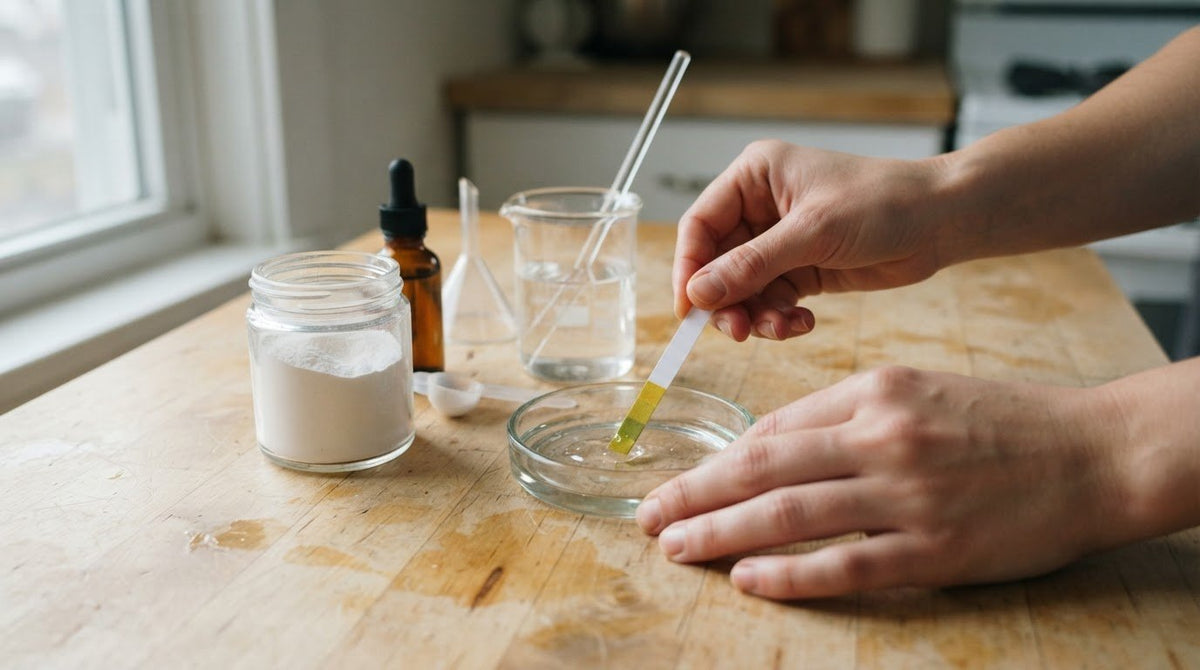
A niacinamide serum is only as sound as its formula. A simple 5% version uses 1/4 teaspoon of niacinamide powder in 4 tablespoons of distilled water or rose water, but a water-based mixture also needs compatible ingredients, a suitable preservative, and a controlled pH. At 5%, niacinamide is used for general brightening and skin-barrier support.
A straightforward recipe can sound appealing, especially when you’re making a serum at home. But dissolving the powder is only one part of the process: concentration, preservation, and texture all affect the finished formula.
This guide explains how to make a DIY niacinamide serum with a measured formula and practical steps for choosing compatible ingredients, incorporating a preservative, checking pH, and adjusting texture. You’ll also learn why a simpler concentration may suit a first formulation better than using more powder, and how to handle the finished serum with care.
Key Takeaways
- Choose compatible water-based ingredients and measure them carefully to keep the formula balanced.
- Consider a lower concentration when you’re new to niacinamide or have sensitive skin.
- Select a preservative suited to the formula and use it according to its supplier’s directions.
- Test the finished serum’s pH and adjust it gradually to keep it within a suitable range.
- Use glycerin for added humectancy and xanthan gum to create a thicker texture.
Ingredient Compatibility: What Works Well with Niacinamide?
A DIY niacinamide serum can irritate skin if the formula is poorly measured or unsuitable. Apply a small amount to a discreet patch of skin, then wait 24-48 hours and watch for irritation before broader use.
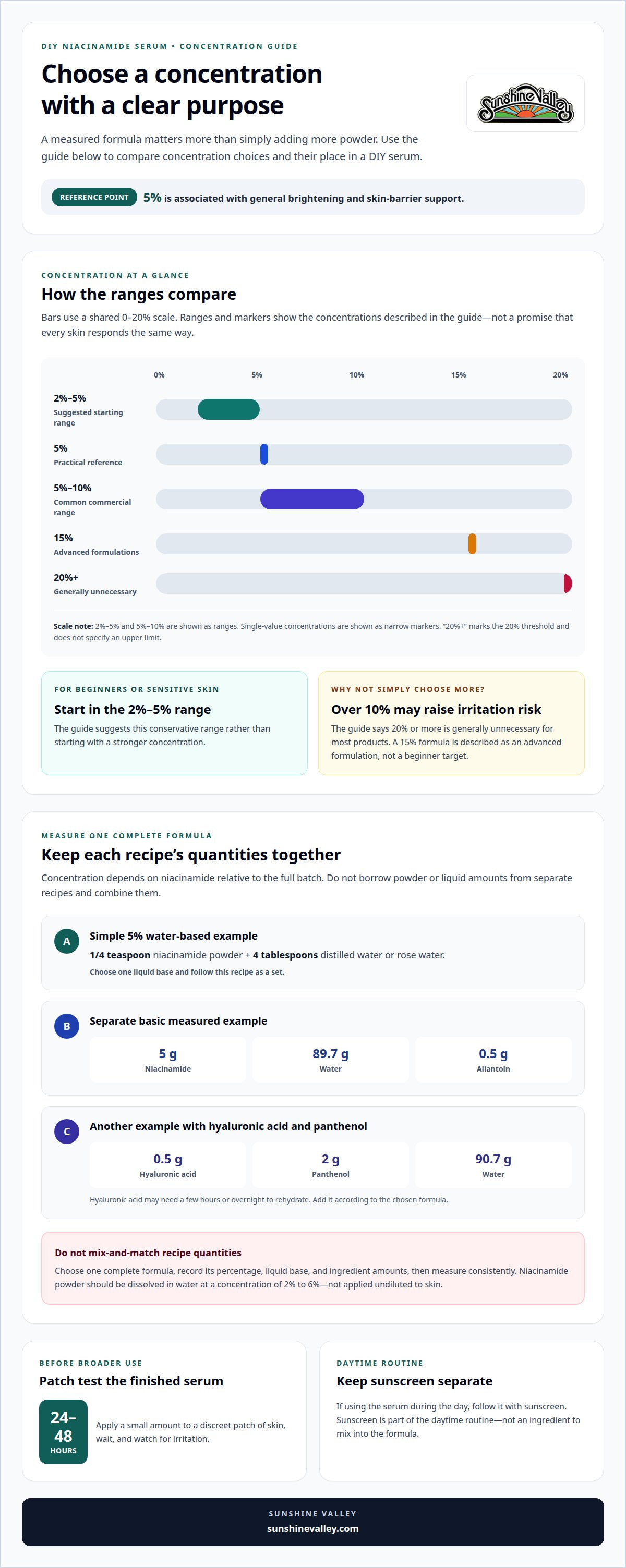
- Choose a simple water phase. A basic recipe uses 1/4 teaspoon of niacinamide powder in 4 tablespoons of distilled water or rose water for a stated 5% concentration. Distilled water gives the formula a neutral base, while rose water adds another ingredient. Keep the liquid choice consistent so you can assess the finished serum clearly.
- Measure ingredients before mixing. Niacinamide dissolves in water, so add the powder gradually while stirring. For more precise formulation, a separate basic example uses 5 g niacinamide, 89.7 g water, and 0.5 g allantoin. These proportions differ from the teaspoon-and-tablespoon recipe. Don’t combine quantities from separate recipes; choose one complete formula and follow its measurements.
- Add compatible water-based ingredients selectively. Hyaluronic acid and panthenol appear together in a niacinamide serum example: 0.5 g hyaluronic acid, 2 g panthenol, and 90.7 g water. Hyaluronic acid may need a few hours or overnight to rehydrate. Add it as directed by the chosen formula rather than tipping dry powder into a finished serum. Allantoin is another example used in a basic water-based formula.
- Keep the ingredient list controlled. Each extra ingredient changes the formula and can affect its feel, clarity, or stability. For a first batch, use niacinamide, the chosen water, and only ingredients included in a complete recipe. Avoid combining several online formulas by borrowing glycerin, allantoin, or hyaluronic acid measurements from each. A short, measured list makes dissolving and troubleshooting easier.
- Mix in a deliberate order. Add the water to a clean mixing vessel, then sprinkle in niacinamide while stirring until the powder dissolves. If your formula includes another powder, follow its specific addition instructions. For example, one basic method adds niacinamide and allantoin after the mixture cools below 50°C. Don’t assume that heating or cooling steps from one recipe suit another. The order matters because ingredients can behave differently at different temperatures.
If you use the serum during the day, follow it with sunscreen. Treat sunscreen as part of your daytime routine, not as an ingredient to mix into the formula. Keep this in mind as you choose compatible ingredients.
Is 10% Niacinamide the Right Concentration?
- Choose a conservative starting range. A concentration of 2%-5% is suggested for beginners and people with sensitive skin. The lower end gives you a measured starting point without beginning at a stronger level. Keep the selected percentage consistent throughout your formula, and assess the finished serum before considering any change.
- Use 5% as a practical reference point. This concentration is associated with general brightening and skin-barrier support. Concentrations of 5%-10% are commonly used in commercial skincare products and are described as suitable for most skin types. That range is a guide, not a reason to assume that every skin responds identically.
- Don’t assume 10% will have a better effect. A 10% formula is at the upper end of the commonly used 5%-10% range. Concentrations over 10% may increase irritation risk, while 20% or more is generally unnecessary for most products. Advanced formulations may use 15%, but that isn’t a beginner target.
- Dilute the powder rather than applying it pure. Niacinamide powder should be dissolved in water at a concentration of 2% to 6%, not used undiluted on skin. Choose one target percentage before measuring. Don’t raise the concentration by adding extra powder to a finished batch, since that changes the formula’s intended balance.
- Select distilled water or a hydrosol as the liquid base. Distilled water provides a straightforward base, while rose water is one hydrosol used in DIY recipes. Choose one liquid and use it consistently rather than switching bases midway through a batch. Because a different base changes the formula’s composition, keep the remaining ingredients aligned with your chosen recipe.
- Match the liquid quantity to your chosen formula. A recipe’s concentration depends on the amount of niacinamide relative to the full batch, including its water or hydrosol and other ingredients. Don’t combine the powder measurement from one recipe with the liquid amount from another. Before mixing, record the percentage, base, and ingredient amounts you’ve chosen.
For a larger reference batch, a 100 g batch of the serum formula uses 84.0% distilled water. This gives you a specific water proportion to follow when using that formula; it should not be treated as the same measurement as a volume-based recipe. Keep the chosen batch and its stated quantities together, and measure the water in the way the formula specifies. Recording the water amount alongside the niacinamide amount helps you preserve the intended relationship between ingredients instead of estimating by eye.
A separate recipe uses 46.7 grams of flower water or distilled water in an approximately 50-milliliter batch. Those quantities belong to that smaller recipe, so don’t substitute them into a 100 g batch without adjusting the complete formula. Flower water and distilled water are both named options in that recipe, but choose the one you intend to use before measuring and keep it consistent for the batch. When comparing recipes, note whether each describes a weight-based or volume-based batch and follow its own ingredient amounts as a set. This makes it easier to prepare the selected concentration consistently and to repeat the same formula if it suits your needs.
Preservatives for water-based serums
- Treat preservation as part of the formula. Distilled water, rose water, and hydrosols create water-based mixtures that need a suitable preservative. Niacinamide alone does not preserve a serum. A preservative helps protect the finished product from microbial growth; it does not change skin tone or act as a brightening ingredient.
- Choose a preservative intended for your formula. Leucidal and Geogard Ultra are examples used in DIY serum recipes, but they are not automatically interchangeable. Each has its own recommended use level, ingredient compatibility, and processing directions. Follow the supplier’s instructions for your specific preservative rather than borrowing another product’s percentage or addition method.
- Calculate the amount against the full batch. One 100 g formula uses 1.0% preservative, subject to the supplier’s recommendation. That example means the preservative is calculated as a proportion of the finished batch, not just its water. A separate recipe for an approximately 50-milliliter batch uses 0.3 grams of Leucidal. Don’t merge the amounts or batch sizes from those separate formulas.
- Follow the recipe’s heating and cooling sequence. A basic method heats the water phase above 50°C before adding Geogard Ultra. Other serum steps may require cooling before adding heat-sensitive powders. These instructions apply to their respective formulas; don’t assume the heating requirement for one ingredient applies to every preservative. Check the chosen preservative’s processing directions and preserve the listed order of additions.
- Add the preservative evenly. Measure it accurately, add it at the stage specified by your formula, and mix thoroughly so it disperses throughout the serum. Preservative concentrated in one part of a batch cannot reliably protect the entire mixture. Keep your equipment and storage bottle clean, and transfer the serum without touching the product or bottle opening.
- Set realistic storage expectations. Properly preserved serum made with proper manufacturing practices has an approximate shelf life of 6-12 months. That estimate isn’t a guarantee for every homemade batch. Ingredient choice, preservation level, clean handling, and storage all matter. Use the preservative’s directions and discard a serum if its appearance, smell, or texture changes unexpectedly.
Testing and adjusting serum pH
Measure the finished mixture before making adjustments. Use the reading to guide pH changes, and refine the texture only after the liquid formula is balanced.
-
Test the Serum pH
Mix 2 g of serum with 18 g of water, then test that diluted sample. A finished niacinamide serum should have a pH between 4.5 and 5.5. Use a pH meter or suitable test strips, and follow the tool’s instructions. Test the complete formula, not just its water phase, because added ingredients can affect the reading.
-
Adjust the pH
Use a prepared adjustment solution and add it to the diluted sample in measured increments. One method adds 0.5 g of lye solution before retesting. The 10/90 solution is made with 10 g sodium hydroxide and 90 g water. Mix thoroughly, then measure again. Don’t add dry sodium hydroxide directly to serum.
- Lower a reading that exceeds the target. If the serum pH is above 5.5, one method uses citric acid diluted in water: 10 g citric acid with 90 g water. Prepare the solution separately, then add it gradually to the batch and retest after mixing. Avoid pouring in a large amount at once, since each addition can shift the reading.
- Keep each test sample separate. The 2 g serum and 18 g water mixture is for measurement, not for returning to your batch. Test a fresh sample after making an adjustment. This keeps diluted test water from changing the serum’s proportions and lets you compare readings consistently.
- Adjust consistency after pH. For a thicker texture, a basic recipe uses 0.3 g xanthan gum. Disperse it carefully so it doesn’t form dry clumps. Another DIY option uses 1/8 teaspoon xanthan gum. These are separate measurement examples, not quantities to combine. Add the thickener gradually, then allow it to hydrate before judging the texture.
- Use glycerin for a more spreadable feel. A basic formula uses 2 g vegetable glycerin, while another recipe lists 1/2 teaspoon as optional. Mix glycerin with xanthan gum before incorporating it into the water phase to help disperse the thickener. Make small adjustments, then let the serum rest before assessing whether its texture needs a refresh.
Adding xanthan gum and glycerin
- Decide what texture you want before adding a thickener. Xanthan gum increases viscosity, while glycerin adds a humectant to a water-based formula. A serum for a dropper bottle needs to remain easy to dispense. Because a thicker gel may feel different during application, adjust the texture in a small, measured batch rather than changing the whole formula at once.
- Choose one xanthan gum measurement from a complete recipe. A formula for an approximately 50-milliliter batch uses 0.5 grams of xanthan gum. Another recipe uses 0.3 g, so treat these as separate examples, not amounts to combine. The right quantity depends on the batch and desired thickness. Keep the recipe’s other ingredient proportions intact as you select its stated amount.
- Disperse the gum before adding it to the water. Gradually sprinkle xanthan gum into glycerin and stir until the powder is evenly wetted. This makes a smoother slurry before you add it to the serum base. Add the mixture slowly while stirring. Don’t tip dry gum straight into the liquid: it can form lumps with dry centers that are difficult to smooth out.
- Measure glycerin as part of the full formula. One 100 g serum formula uses 4.0% glycerin. That percentage describes the whole batch, not the water phase alone. Glycerin changes the serum’s feel and can contribute to a more moisturising texture. Measure it alongside the other ingredients, and avoid adding an unmeasured extra pour after the batch is mixed.
- Stir, then allow the texture to develop. Xanthan gum needs time to hydrate throughout the liquid. Mix steadily, scrape the sides of the vessel, and check for visible clumps before transferring the serum. A freshly mixed sample may feel thinner than the fully hydrated formula. Judge the consistency after the gum has dispersed instead of immediately adding more powder.
- Test dispensing before filling the final bottle. Put a small sample in the intended dropper bottle and check whether it flows easily. If it moves too slowly, the batch may be too thick for that packaging. If it runs like water, it may need a carefully measured adjustment. Record the ingredients and amounts so you can reproduce the texture in your next batch.
Sunshine Valley: Super Niacinamide
Sunshine Valley® Super Niacinamide is a powdered supplement, not a ready-made topical serum. The DIY steps above describe making a skincare formula; Sunshine Valley® Super Niacinamide is relevant if you’re looking for niacinamide as a supplement instead. Choose based on your intended use, and don’t assume a supplement powder is formulated for application to skin. Sunshine Valley® also offers Super Mannitol, Super Inositol, and Super Lactose as powdered supplements. Explore Sunshine Valley® Super Niacinamide if you’re looking for a powdered niacinamide supplement.
Choose Your Next Step with Care
Learning how to make a DIY niacinamide serum can be a useful formulation exercise, but a topical serum and a powdered supplement serve different purposes. Choose your next step according to how you intend to use niacinamide, and don’t treat a supplement powder as a ready-made skincare ingredient. Sunshine Valley® also offers Super Mannitol, Super Inositol, and Super Lactose in its powdered supplement range.
If you have questions about Sunshine Valley’s offerings, contact Sunshine Valley with your questions. A thoughtful choice starts with understanding the intended use, then selecting the option that fits. Take that next step with confidence.
Frequently Asked Questions
What does niacinamide do for your skin?
Niacinamide can support the skin barrier and help brighten the appearance of skin. In a face serum, its effects depend partly on concentration and how well the formula suits your skin. It is not a substitute for sunscreen or a complete skincare routine. If you’re introducing it alongside other products, make one change at a time so you can identify what may be causing irritation.
Why Make Your Own Niacinamide Serum?
Making your own serum lets you choose its concentration, liquid base, and texture. That control can be useful if you want a simpler ingredient list or prefer a lighter or thicker feel. The trade-off is responsibility for accurate measurements, preservation, and pH. A homemade formula also needs clean handling, so DIY is best suited to someone prepared to manage each formulation detail.
How to do it?
Prepare the ingredients and clean equipment before mixing, then follow one complete formula from start to finish. Measure each ingredient, combine them in the stated order, and stir until the powders dissolve or disperse. Follow the formula’s temperature instructions, add its preservative as directed, and measure the finished serum’s pH. Don’t add extra powder or liquid by guesswork, as that changes the proportions you selected.
How to use it?
Apply the serum to clean, dry skin before creams or oils. Start with 2-3 drops, and use it once or twice daily if your skin tolerates it. Before applying it broadly, test a small area and wait 24-48 hours for signs of irritation. For morning use, finish with sunscreen. Stop using the serum if you notice irritation, and avoid layering several new products during the same routine.
What is needed?
Set up a clean work area, a formula, measured ingredients, mixing tools, and a suitable container. A digital scale with 0.01 g accuracy is preferred for precise formulation. You’ll also need a way to measure pH, since appearance alone doesn’t tell you the reading. Keep a written record of the formula and each measurement, so you can reproduce the batch or identify which change affected its texture.
What ingredients and equipment are needed to make a DIY niacinamide serum?
A basic water-based formula needs niacinamide powder, distilled water or a chosen hydrosol, and a compatible preservative. Optional ingredients include glycerin for a different feel or xanthan gum for added thickness. Gather a scale, clean mixing vessel, stirrer, pH-testing tool, and dropper bottle. Follow the preservative’s directions and the chosen recipe’s measurements; don’t combine amounts from separate formulas.
What concentration of niacinamide is effective and safe for a face serum?
A 2%-5% concentration is a suggested starting range for beginners or sensitive skin. A 5%-10% range is commonly used in commercial skincare, while concentrations over 10% may increase irritation risk. A higher percentage isn’t automatically a better choice. Select a concentration that fits your experience and formula, and patch-test the finished serum before adding it to your regular routine.
How do you calculate niacinamide powder amounts for a chosen serum batch size?
Calculate powder by multiplying the total batch weight by the target percentage, expressed as a decimal. For a 100 g batch at 5%, use 5 g niacinamide; at 10%, use 10 g. Include all ingredients in the final batch weight, not water alone. For example, a 50 g batch at 5% needs 2.5 g powder. Use a scale for accurate measurement.


Leave a comment
This site is protected by hCaptcha and the hCaptcha Privacy Policy and Terms of Service apply.