




Could fatigue, joint aches, or skin changes prove you have a sulfur deficiency? These symptoms are often listed as signs of sulfur deficiency in the body, but they can have many causes and can’t identify a deficiency on their own. A broad, generalized sulfur deficiency isn’t a recognized medical diagnosis.
It’s understandable to look for a simple explanation when symptoms persist, especially when online lists disagree. This guide separates what’s known from what’s claimed: sulfur’s role in the body, how dietary sulfur differs from sulfur-containing amino acids such as methionine and cysteine, and why MSM is a separate supplement, not a diagnostic test or established treatment for deficiency.
You’ll learn which concerns warrant medical assessment, how rare disorders of sulfur metabolism are investigated, and how to think about food and supplements without self-diagnosing. There’s no official recommended intake for elemental sulfur, so broad symptom lists can’t tell you whether you need more. Symptoms can be useful clues to discuss with a health professional, but they aren’t proof that sulfur is the cause.
Key Takeaways
- There’s no official recommended intake for elemental sulfur. The body gets sulfur through compounds such as the amino acids methionine and cysteine.
- Dietary sulfur, sulfur-containing amino acids, and MSM aren’t interchangeable. Understanding the difference can help you assess supplement claims more carefully.
- The signs of sulfur deficiency in the body often mentioned online, including changes in skin, hair, energy, or joints, aren’t specific enough to identify the cause.
- Keep track of symptoms and dietary patterns, then discuss persistent concerns with a health professional who can assess your overall history.
- Prioritize a varied, adequate diet and consider supplements carefully. MSM isn’t a diagnostic test or established treatment for presumed sulfur deficiency.
Signs of Sulfur Deficiency in the Body: Is It a Recognized Diagnosis?
A symptom checklist can be worrying, especially when websites connect familiar problems to a nutrient shortage. But a long list of possible symptoms doesn’t prove a cause. The phrase “sulfur deficiency” is often used online as if it describes a routine, clearly defined condition. In mainstream medicine, a generalized, isolated sulfur deficiency isn’t a commonly recognized diagnosis.
A suspected sulfur deficiency is a concern to investigate, not a diagnosis established by symptoms alone. A clinical assessment considers a person’s diet, health history, and symptoms, and uses appropriate tests when a specific condition is suspected.
What does sulfur do in the body?
Sulfur is present in biological compounds, including the amino acids methionine and cysteine. Methionine must come from food, while the body can make cysteine from methionine. These amino acids contribute to proteins and other essential processes. This biochemical role matters, but it doesn’t make fatigue, skin changes, or other vague symptoms a sulfur-specific test. The overview of Sulfur metabolism provides further context on how sulfur is processed in living organisms.
Can someone have a sulfur deficiency?
The body’s dietary requirement is generally discussed in terms of sulfur-containing amino acids, rather than a separate target for elemental sulfur. There’s no official recommended dietary allowance for elemental sulfur. Inadequate overall protein intake can affect the supply of amino acids, but that concern needs to be considered in the context of a person’s diet and health, not inferred from a symptom checklist.
Illness, restricted eating, or persistent symptoms may warrant an individualized clinical assessment. Rare genetic disorders can disrupt sulfur-containing amino acid metabolism, but they’re distinct from a presumed general dietary shortage and are investigated with specific metabolic or genetic tests. Symptoms alone can’t establish that such a disorder is present or reveal its cause.
So, the signs of sulfur deficiency in the body described online are best treated as prompts to look more carefully, not as confirmation. If you’re concerned, note what you’re experiencing and discuss it with a qualified health professional. They can assess the whole picture and decide whether testing is appropriate.
How Dietary Sulfur, Amino Acids, and MSM Differ
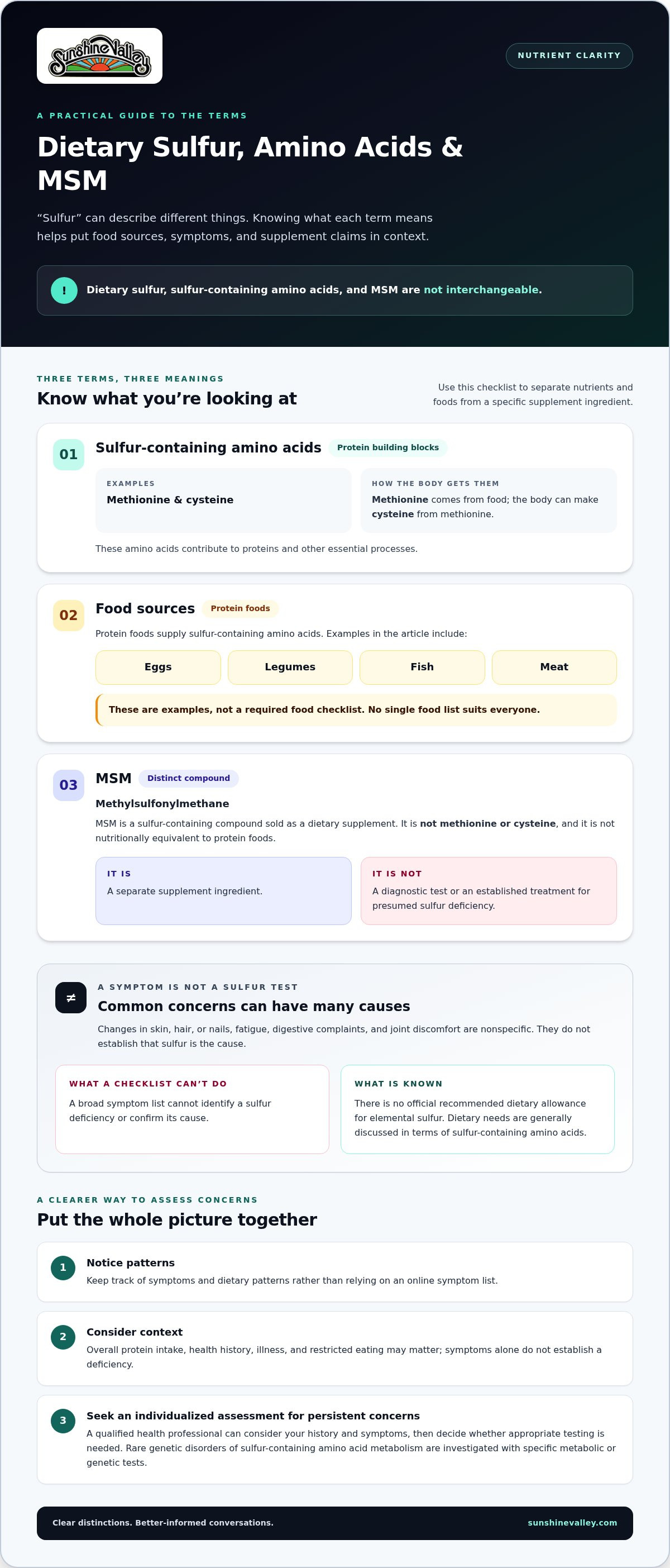
“Sulfur” can refer to an element, a component within nutrients and other compounds, or a specific supplement ingredient. These forms aren’t interchangeable. The body uses sulfur as part of larger molecules, so seeing it listed on a supplement label doesn’t mean it provides the same thing as protein foods or sulfur-containing amino acids.
| Category | What it is | Examples or role |
|---|---|---|
| Sulfur-containing amino acids | Building blocks of protein that contain sulfur | Methionine comes from food; the body can make cysteine from methionine. |
| Food sources | Foods that supply protein and these amino acids | Eggs, legumes, fish, and meat are examples. No single food list suits everyone. |
| MSM | Methylsulfonylmethane, a distinct sulfur-containing compound | Sold as a dietary supplement; it isn’t methionine or cysteine. |
Where does dietary sulfur come from?
Protein foods provide sulfur-containing amino acids. The University of Hawaiʻi at Mānoa’s overview of dietary sulfur explains the connection between sulfur and protein in the diet. Eggs, legumes, fish, and meat can all contribute, but they aren’t a required checklist. Needs depend on overall nutrition and individual circumstances, including health and dietary pattern.
Methionine and cysteine also contribute sulfur to compounds the body makes and uses. Glutathione, for example, is a sulfur-containing compound because it includes cysteine. That describes its composition; it doesn’t establish that eating a particular food or taking a supplement will “detoxify” the body or prevent disease.
Is MSM the same as sulfur in food?
No. MSM stands for methylsulfonylmethane. It’s a distinct compound, while methionine and cysteine are amino acids used in proteins and other biological processes. MSM isn’t another name for methionine or cysteine, and being a sulfur-containing compound doesn’t make it nutritionally equivalent to protein foods.
MSM supplements shouldn’t be assumed to correct a diagnosed deficiency. They aren’t diagnostic tests or established treatments for presumed sulfur deficiency. For background on the supplement category, see Premium MSM Powder: The Ultimate Guide to Purity and Wellness (2026). Sunshine Valley offers Super MSM as a powdered dietary supplement. Learn more about Super MSM as a product, separate from assessing symptoms or nutritional concerns.
Are Skin Changes, Fatigue, or Joint Pain Signs of Sulfur Deficiency?
Brittle nails, changes in skin or hair, fatigue, digestive complaints, and joint discomfort often appear in online lists of the signs of sulfur deficiency in the body. These are nonspecific symptoms, not established signs that identify a sulfur deficiency. A symptom may be worth discussing, but it can’t confirm that sulfur is the cause.
Sulfur is essential to the body, but that doesn’t make every change in hair, skin, nails, digestion, energy, or joints evidence of inadequate sulfur. The Linus Pauling Institute’s overview of minerals offers context on essential nutrients and their roles. No broad symptom checklist can establish a standalone sulfur deficiency or explain an individual’s symptoms.
Which symptoms are commonly claimed online?
Readers may encounter claims that brittle nails, dry or irritated skin, hair changes, low energy, digestive issues, and joint pain point to a sulfur shortage. These concerns can be real, but the claimed connection doesn’t make them diagnostic. Don’t treat a collection of online symptoms as a checklist for self-diagnosis, or assume that more severe claims about disease, “detox” failure, or memory loss are established effects of sulfur deficiency.
What else could cause these symptoms?
Many factors can contribute, including overall nutrition, medical conditions, medicines, sleep, stress, and other aspects of daily life. Which possibilities matter depends on the person. A short symptom list can’t identify an alternative cause, either.
A symptom list can describe what someone feels, but it can’t identify which nutrient, if any, is responsible. Use the table as a prompt for sensible follow-up, not as a diagnostic tool.
| Symptom | Why it’s nonspecific | A sensible next step |
|---|---|---|
| Brittle nails or hair changes | Appearance can be influenced by multiple nutritional, health, medication-related, or lifestyle factors. | Note when the change began and whether it’s persistent or progressing. |
| Skin changes | Many different circumstances can affect skin, so appearance alone doesn’t reveal sulfur status. | Record the change and any relevant timing or accompanying symptoms. |
| Fatigue or low energy | Energy can be affected by health, nutrition, sleep, medicines, and other factors. | Track duration and impact on daily life; seek clinical advice if it persists or concerns you. |
| Digestive complaints or joint discomfort | These symptoms have broad possible causes and don’t point specifically to sulfur. | Describe the pattern and discuss ongoing or worsening symptoms with a health professional. |
Persistent, worsening, or disruptive symptoms deserve attention. Self-prescribing sulfur or MSM based on them may distract from finding the actual cause. A health professional can assess symptoms alongside your medical history and dietary patterns.
What to Do If You Suspect a Nutrient Deficiency
If symptoms have you searching for the signs of sulfur deficiency in the body, take a measured approach rather than trying to diagnose the cause from a list. A clear record of what has changed can help a health professional decide what deserves attention. Avoid starting a restrictive diet or using supplements as a substitute for assessment.
How can a clinician assess the concern?
Before an appointment, note when symptoms began, how often they occur, and whether they’re changing or affecting daily activities. Add a brief picture of your usual eating pattern and a current list of medicines and supplements, including amounts if known. These details help put the concern in context.
Assessment depends on the symptoms, medical history, diet, and possible causes. A clinician may recommend tests based on your individual circumstances. There’s no reason to assume a general symptom checklist points to a specific sulfur test. Follow individualized clinical advice rather than ordering tests online or matching symptoms to supplement claims.
When should symptoms receive medical attention?
Arrange timely medical advice for unexplained or persistent changes, especially if they’re worsening or interfering with daily life. Sudden, severe symptoms may need urgent attention. If symptoms seem like an emergency, contact local emergency services or go to an emergency department. Don’t wait for a dietary change or supplement trial to see whether serious symptoms improve.
Keep the next steps simple:
- Write down symptoms and when they occur.
- Review your eating pattern without cutting out major food groups on your own.
- Share your symptom notes, diet details, and medicine and supplement list with a qualified health professional.
- Ask what follow-up or testing, if any, is appropriate for your circumstances.
This article provides general education, not an individual diagnosis or treatment plan. Supplements aren’t diagnostic tools, either. If, after discussing your concerns with a health professional, you’re comparing supplement forms, you can review Sunshine Valley’s powdered Super MSM as a product category, not as a test or established treatment for presumed sulfur deficiency.
Food Choices, Supplements, and a Safe Way Forward
A varied, adequate diet is a sound starting point for nutrition. It’s usually more useful to consider overall eating patterns than to chase one nutrient because of symptoms that don’t specifically identify a deficiency. Food choices should fit your health needs and circumstances, including any medical or dietary restrictions.
Can food provide sulfur-containing nutrients?
Yes. Protein foods supply methionine and cysteine, amino acids that contain sulfur. Sources include eggs, dairy foods, legumes, fish, poultry, and meat. These are examples, not a required food list, and no individual food should be treated as a remedy for skin changes, fatigue, or joint discomfort.
Dietary needs vary. Someone avoiding certain foods, following a medically prescribed diet, or managing a health condition may need individualized guidance to support overall nutrition. If your diet is limited or symptoms are concerning, discuss the pattern with a qualified health professional rather than making major changes based on online claims about the signs of sulfur deficiency in the body.
What should readers know before considering MSM?
MSM, or methylsulfonylmethane, is a distinct compound sold as a dietary supplement. It isn’t the same as methionine or cysteine, and it isn’t a diagnostic tool for sulfur deficiency. Taking MSM, including Sunshine Valley’s Super MSM, shouldn’t be assumed to correct a deficiency or treat symptoms.
Supplement suitability and safety depend on the individual and the product. If you’re pregnant, managing a health condition, or taking medicines, discuss a supplement with a qualified clinician before using it. Don’t use an online symptom list to decide on a product or dose, and don’t treat supplements as a replacement for medical assessment.
Quality and manufacturing practices are also relevant when evaluating supplements, but they don’t establish that a product diagnoses or treats a medical condition. Sunshine Valley’s article, Hygienic Supplement Manufacturing: The Clinical Standard for Pure Wellness, offers background on its approach to manufacturing. Consider supplement information separately from medical advice.
The practical path is straightforward: aim for a balanced diet that suits your needs, seek clinical guidance for persistent concerns, and make supplement decisions carefully. If you’d like to learn more about Sunshine Valley’s powdered Super MSM, explore it as a supplement, not as a solution for presumed sulfur deficiency.
Take a Clear, Careful Next Step
The key point is simple: symptoms commonly described as signs of sulfur deficiency in the body can’t confirm a deficiency or explain what’s causing them. Sulfur is used within compounds such as methionine and cysteine, while MSM is a distinct supplement ingredient. Persistent or concerning changes are best assessed in the context of your health history, diet, medicines, and other symptoms.
Choose a varied diet that fits your needs, and don’t start restrictive eating or supplements as a substitute for medical advice. If you’re considering a supplement, discuss suitability and safety with a qualified health professional, particularly if you take medicines, are pregnant, or manage a health condition.
Founded in 1956, Sunshine Valley offers powdered dietary supplements, including Super MSM, and emphasizes premium-quality ingredients and strict hygiene standards. These product and manufacturing attributes are separate from medical diagnosis or treatment. Explore Sunshine Valley’s powdered supplement range to learn more. With reliable information and thoughtful next steps, you can make choices with greater confidence.
Frequently Asked Questions
Is sulfur deficiency a recognized medical condition?
An isolated sulfur deficiency isn’t commonly treated as a routine diagnosis in otherwise adequately nourished people. Sulfur is part of important compounds in the body, including certain amino acids, but symptoms alone can’t establish a deficiency. If you’re concerned about persistent symptoms or restricted food intake, a clinician can review your overall diet, health history, and possible causes, then decide whether further assessment or testing is appropriate.
What are the most common signs of sulfur deficiency in the body?
Online lists often mention brittle hair or nails, skin changes, fatigue, digestive problems, and joint discomfort. These are nonspecific symptoms with many possible causes, so they don’t confirm sulfur deficiency. Treat them as a reason to consider your overall health, not as a checklist for self-diagnosis. Seek clinical advice if symptoms persist, worsen, or concern you, especially if they affect daily activities.
Can low sulfur cause hair loss or brittle nails?
Hair loss and brittle nails can have nutritional, medical, medication-related, or other causes. On their own, they aren’t reliable evidence of sulfur deficiency. Avoid starting a supplement solely to address these changes. A health professional can consider when they began, how they’ve changed, your diet, and any other symptoms to determine whether an evaluation or testing is appropriate for your circumstances.
Is MSM the same as sulfur, and can it correct a deficiency?
MSM, or methylsulfonylmethane, is a specific sulfur-containing compound sold as a supplement. It isn’t interchangeable with the sulfur-containing amino acids found in protein foods, and symptoms can’t show that someone needs MSM. Don’t treat it as a proven correction for presumed sulfur deficiency. Discuss supplement use with a qualified clinician, particularly if you take medication, are pregnant, or have a health condition.
Which foods contain sulfur?
Sulfur is present in compounds found in a range of foods, especially protein foods that provide the amino acids methionine and cysteine. Examples include eggs, legumes, fish, and meat. This doesn’t mean you need to eat every listed food or take a supplement. Aim for a balanced eating pattern that suits your health needs and dietary preferences, and follow any guidance from your clinician.
How is a suspected sulfur deficiency diagnosed?
No symptom checklist can diagnose sulfur deficiency. A clinician can review your symptoms, diet, medical history, medicines, and other possible explanations. Any testing depends on the specific concern and clinical context, so don’t assume a particular sulfur test is appropriate. Before an appointment, note persistent symptoms and list the supplements you use. Then follow the clinician’s individualized recommendations for assessment or next steps.
Should I take a sulfur supplement if I have these symptoms?
Not based on symptoms alone. Fatigue, skin changes, digestive complaints, and joint pain aren’t specific to sulfur deficiency, and a supplement may not address their cause. A clinician can help assess whether a supplement is appropriate and review possible risks or interactions. Don’t use MSM or another supplement instead of medical evaluation for persistent or severe symptoms, or change prescribed treatment without professional guidance.



Leave a comment
This site is protected by hCaptcha and the hCaptcha Privacy Policy and Terms of Service apply.