




A common niacinamide mistake is assuming it is incompatible with every active ingredient. In practice, niacinamide can pair with retinol and hyaluronic acid. Exfoliating acids and potent vitamin C formulas may call for more care, since layering can irritate some skin. When deciding what not to mix with niacinamide in skincare, focus less on universal bans and more on your skin’s tolerance and how you layer products.
It makes sense to be cautious: a routine with several active ingredients can leave skin uncomfortable, even when each product is suitable on its own. Niacinamide is generally easy to pair with other skincare ingredients, and thoughtful timing can simplify your routine. Start with fewer actives and introduce products one at a time to see what your skin tolerates.
This guide explains how niacinamide works alongside retinol, hyaluronic acid, vitamin C, and exfoliating acids. It also offers practical ways to reduce irritation, manage layering, and decide when alternating products may be a better fit.
Key Takeaways
- Niacinamide can fit into routines with retinol, but alternating use may be a gentler approach for sensitive skin or anyone new to retinol.
- Layer hyaluronic acid before niacinamide to help build a simple hydration-focused routine.
- Use exfoliating acids thoughtfully: spacing them apart from niacinamide can help reduce the chance of redness or stinging.
- Introduce active ingredients gradually and avoid mixing separate products together before applying them.
- Learn how timing, product order, and skin tolerance shape combinations with vitamin C and other actives.
1. Can you use niacinamide with retinol?
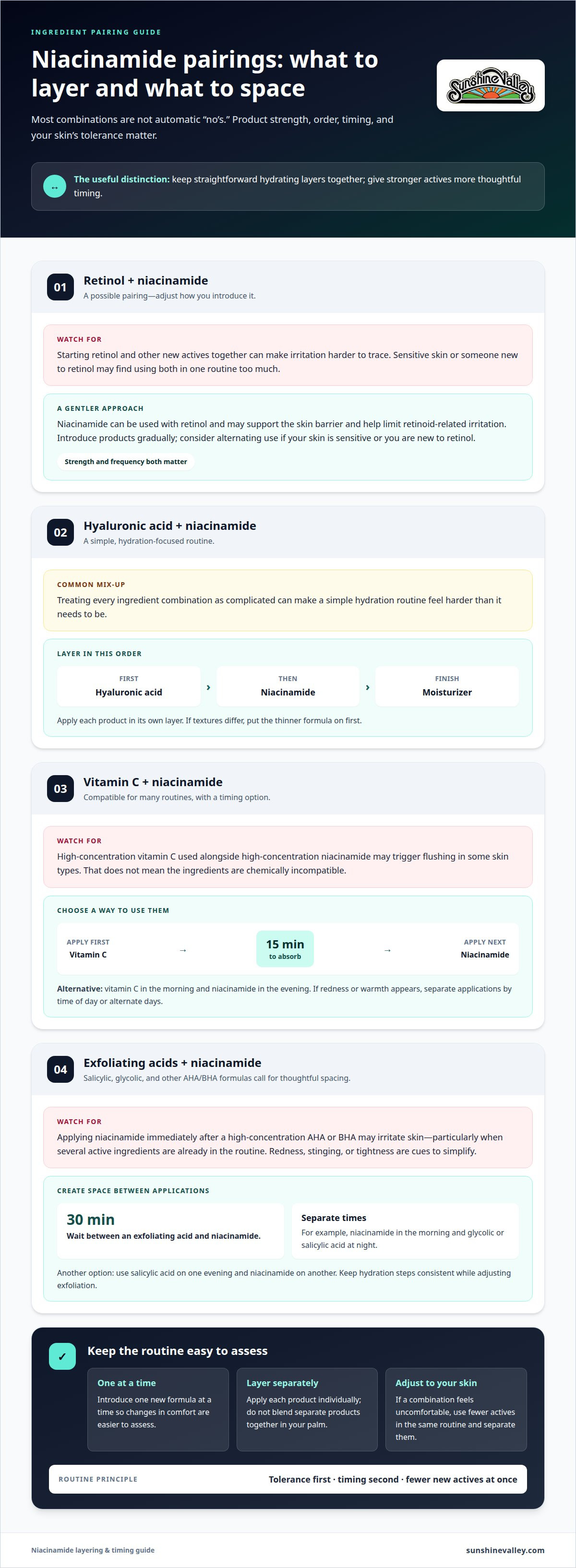
Niacinamide can be used with retinol, and it may help reduce irritation associated with retinoids. Niacinamide is a water-soluble form of vitamin B3. In skincare, it can support the skin barrier, reduce redness, and improve uneven tone. Retinol targets different concerns, so using both in one routine may suit someone addressing texture and visible redness. The combination isn't automatically unsuitable; the strength and frequency of each product matter.
Vitamin C can also be paired with niacinamide. Both ingredients have antioxidant properties and may help protect skin from environmental stressors. They can be used in the same routine, rather than being treated as ingredients that always cancel each other out. If applying separate products, put vitamin C on first, wait 15 minutes for it to absorb, then apply niacinamide. Another option is vitamin C in the morning and niacinamide in the evening.
For someone new to niacinamide or managing sensitive skin, a concentration of about 5% is a sensible starting point for reducing irritation risk. Products containing 2-5% niacinamide are also suggested as an entry range. Concentration alone doesn't determine tolerance: how often you apply the product and which other actives are in your routine also matter. Introduce one new formula at a time, so a change in redness or comfort is easier to assess.
High-concentration vitamin C used alongside high-concentration niacinamide may trigger flushing in some skin types. That does not mean the ingredients are chemically incompatible. If redness or warmth appears, separate applications by time of day or alternate days. Sensitive skin may benefit from a slower introduction and a patch test before facial use. A formula containing both ingredients is another option, since they are combined in one product.
Retinol and tretinoin are both retinoids, so the same careful approach applies to either. Niacinamide may support the skin barrier and help limit retinoid-related irritation, but adding several new actives at once makes it harder to identify what caused discomfort. Peptides are another ingredient category: introduce a peptide product separately rather than changing several parts of your routine at once. Niacinamide can also be combined with azelaic acid for calming support, including for redness and sensitive skin.
Keep the order simple: cleanse, apply the thinnest product first, then layer thicker formulas. For vitamin C followed by niacinamide, allow the 15-minute absorption interval before the second application. Don't blend separate products together in your palm; apply each product individually. If combining ingredients feels uncomfortable, use fewer actives in the same routine. These steps help you assess tolerance while keeping moisture and skin texture concerns in view.
2. Combining niacinamide with hyaluronic acid
Hyaluronic acid and niacinamide make a straightforward pairing for hydration and barrier support. Apply hyaluronic acid first, then niacinamide, so the hydrating layer comes before the treatment step. Follow with moisturizer to help keep skin comfortable. This order suits a routine focused on moisture rather than adding another exfoliating active. It can also simplify combinations for people concerned about dryness or the appearance of fine lines.
Apply each product in its own layer. After cleansing, use hyaluronic acid, then niacinamide, and finish with moisturizer. If the products have different textures, apply the thinner formula first. Do not mix them together in your hand; applying each separately makes the routine easier to follow. For example, use a hydrating serum followed by a niacinamide serum, then moisturizer.
Salicylic acid is different from hyaluronic acid. It exfoliates and can help unclog pores, while niacinamide can support the barrier and soothe skin. The ingredients can work together, but using them on different days can reduce the chance of irritation and support efficacy. For example, use salicylic acid on one evening and niacinamide on another, rather than adding both to a new routine at once.
Glycolic acid and other exfoliating formulas also need thoughtful timing. Applying niacinamide immediately after a high-concentration AHA or BHA product can irritate skin, particularly if the routine already includes several active ingredients. One spacing approach is to wait 30 minutes between an exfoliating acid and niacinamide. Another is to use niacinamide in the morning and glycolic or salicylic acid at night.
Choose your approach based on the products and your skin’s response. If redness, stinging, or tightness follows a combination, simplify your routine and separate the active ingredients. Avoid introducing niacinamide and salicylic acid at the same time as a new glycolic product; changing one step at a time makes it easier to identify the source of discomfort. Keep your hyaluronic acid and moisturizer steps consistent while adjusting exfoliation.
For a simple hydration-focused routine, use hyaluronic acid before niacinamide and moisturizer. For a pore-focused routine, reserve salicylic acid for a separate day or evening. If you use an acid and niacinamide in one routine, leave 30 minutes between applications. These steps distinguish a compatible hydrating combination from a more powerful exfoliating routine that needs careful spacing.
3. Potential irritation, redness, and reduced ingredient stability
Niacinamide is generally compatible with many skincare ingredients, but a crowded routine can still cause irritation. Often, the issue is the combined effect of several active products, not niacinamide alone. Using niacinamide, retinol, vitamin C, and an exfoliating acid in one routine, for example, creates more opportunities for redness or stinging. A simpler routine makes it easier to identify which ingredient is affecting your skin’s comfort.
Acidity and timing matter, too. Low-pH exfoliants applied directly before niacinamide may destabilize it, while concentrated AHAs or BHAs layered immediately afterward can irritate skin. Do not mix products together in your hand. Apply each formula separately, and use an exfoliating acid at night with niacinamide in the morning, or alternate them on different days.
Vitamin C and niacinamide can be used together, but sensitive skin may flush in response to potent concentrations. Separate them by time of day, or alternate days if redness develops. Introducing both ingredients gradually helps you see how your skin responds to each. For example, add one product first, then introduce the second once the first is established in your routine.
Patch testing is a practical first step with a new niacinamide product or combination. Apply the product to a small area and monitor the skin for 24 hours before using it on your face. If irritation appears during that period, don't add the product to a routine containing other new actives. This approach helps distinguish a reaction to one formula from irritation caused by several ingredients together.
Keep the routine to two or three active ingredients at a time. A sample routine might pair niacinamide with one retinoid or one exfoliating acid, rather than adding both alongside vitamin C. Niacinamide, a form of vitamin B3, is often used for soothing support and concerns such as redness or dark spots. Limiting the other actives leaves room to assess how each product affects skin.
If redness, stinging, or tightness appears after adding a product, pause the newest active and simplify your routine. Keep familiar cleansing and moisturizing steps steady while removing the recent addition. Once your skin feels comfortable, reintroduce products one at a time, patch testing before facial use. This measured process helps clarify whether the cause was niacinamide, an exfoliating acid, vitamin C, or simply too many active ingredients.
4. Combining niacinamide with retinol
Niacinamide and retinol can share a skincare routine. Niacinamide supports the skin barrier, while retinol addresses concerns such as uneven texture. Their different properties can complement each other, and niacinamide may help reduce retinoid-related irritation. Pairing them does not mean combining every active at once. Keep the rest of your routine simple, especially if retinol is new to you or your skin is prone to sensitivity.
Layer products individually rather than mixing them in your palm. After cleansing, apply the thinner formula first, then follow with thicker treatments and moisturizer. If niacinamide is a serum, use it before moisturizer. Follow your retinol product’s directions, and avoid adding another new active during the same routine. This makes it easier to identify which step affects comfort or hydration.
If you have sensitive skin or are new to retinol, stagger the ingredients instead of applying both in one routine. Use niacinamide one day and retinol another, then observe your skin’s response before combining them. This approach gives each product a clear place in your routine. If the pairing feels comfortable, stick to a consistent schedule rather than increasing use and adding other actives at the same time.
Retinol-related irritation can include redness, dryness, or stinging. Niacinamide may support the skin barrier and reduce that irritation, but it does not make every retinol routine comfortable. Keep a gentle moisturizer in your routine and avoid layering retinol with exfoliating acids while testing the pairing. A simpler combination makes it easier to distinguish retinol’s effects from irritation caused by too many active ingredients.
Retinol and vitamin C need separate consideration. If both are new to your routine, introduce one first and use it consistently before adding the other. One suggested approach is to use only retinol or vitamin C for a full skin-cell turnover, described as four weeks, before introducing the other. Niacinamide can remain a separate supporting step, but changing several products at once makes it harder to assess tolerance.
Build the pairing step by step: keep familiar cleansing and moisturizing products, introduce niacinamide or retinol, then add the other after your skin has adjusted. If you are new to both, stagger their use on different days. Do not increase retinol frequency while also adding vitamin C or an exfoliating acid. This measured approach keeps hydration and barrier support in view as you address texture concerns.
5. Niacinamide and exfoliating acids
Glycolic, lactic, and salicylic acid exfoliate, while niacinamide supports the skin barrier. Using these skincare ingredients together is not automatically prohibited, but applying them close together can feel too aggressive. A high-concentration AHA or BHA followed immediately by niacinamide may cause irritation. Sensitive skin, or skin that already feels dry, may benefit from separating the products rather than layering them in one routine.
Low-pH exfoliants applied back-to-back may also destabilize niacinamide. This concern is different from irritation: the issue is the conditions created by applying acidic formulas one after another. If you choose to use both in one routine, apply the exfoliating acid first and niacinamide afterward. Allow 30 minutes between applications to create space between the steps.
For a simpler schedule, use niacinamide in the morning and glycolic or salicylic acid at night. This separates the ingredients by time of day without removing either from your routine. Alternating days is another option: apply an exfoliating acid one evening, then use niacinamide the next. These approaches may help limit irritation while keeping each product’s role clear.
Redness, flushing, stinging, or a burning sensation can signal that a combination is too intense. Pay attention to the pattern: discomfort after an acid night may point to exfoliation, while symptoms after adding another active may reflect the overall routine. Reduce the number of active ingredients and take a break from exfoliation if discomfort appears. Avoid layering a second acid over glycolic or salicylic acid.
Your skin type and product strength affect how much spacing may help. For sensitive skin, alternating days is a more cautious starting point than applying both products together. If your routine already includes retinol, adding glycolic acid and niacinamide at the same time introduces further variables. Make one change at a time so it is easier to associate redness or irritation with a particular product.
Niacinamide may also be used after an AHA or BHA peel to help soothe inflamed skin, but that doesn't make every acid combination suitable for every routine. Keep post-exfoliation care simple, and avoid adding several potent products at once. For pigmentation concerns, steady use and comfortable layering matter more than stacking acids. You can explore a niacinamide option as part of a thoughtfully spaced skincare routine.
Avoid pairing niacinamide with AHAs or BHAs because redness and flushing may occur. If using both, apply acids first and niacinamide afterward. Another option is to use niacinamide in the morning and acids at night.
Sunshine Valley: Super Niacinamide
Sunshine Valley® Super Niacinamide is a powdered food supplement, not a topical skincare serum. It is not intended to be layered with retinol, hyaluronic acid, or exfoliating acids. For a skincare routine, use topical products as directed and introduce active ingredients carefully. If your interest in niacinamide extends beyond topical skincare, Sunshine Valley® Super Niacinamide offers a supplement form. Sunshine Valley® also offers Super Mannitol, Super Inositol, and Super Lactose. These are distinct supplement options, not skincare ingredients to add to the routine described above. Explore Sunshine Valley® Super Niacinamide on the company website.
Build a Routine You Can Keep
Let your skin’s response guide your next adjustment. Keep a simple record of new products and any changes in comfort, so you can make deliberate decisions instead of changing several steps at once. Understanding what not to mix with niacinamide in skincare is useful, but a routine works best when each product has a clear purpose and suits your needs.
For a separate supplement option, Sunshine Valley offers Super Niacinamide, Super Mannitol, Super Inositol, and Super Lactose. These are food supplements, not topical skincare products. If you’d like to learn more about Sunshine Valley’s offerings, contact Sunshine Valley about its supplement range. Take your next step with care, keeping your skincare choices and supplement decisions distinct.
Frequently Asked Questions
What is niacinamide, and why is it a skincare essential?
Niacinamide is a water-soluble form of vitamin B3 used in skincare. It can support the skin barrier, help reduce redness, regulate oil, and improve the appearance of uneven tone. Someone concerned about both excess shine and dark spots may consider it for these different goals. It isn't an exfoliating acid, so its role in a routine differs from ingredients such as glycolic or salicylic acid.
Can you use niacinamide with retinol?
Yes, niacinamide and retinol can be used together. Niacinamide may help reduce retinoid-related irritation, while retinol addresses concerns such as uneven texture. If retinol is new to your routine, try using the products on separate days first. Keep your other skincare steps unchanged during this adjustment so you can more clearly notice how the pairing affects your skin.
Can you use niacinamide with vitamin C?
Yes, niacinamide and vitamin C can be used together. Both have antioxidant properties and may help protect skin from environmental stressors. Potent concentrations may cause flushing for some people, especially those with sensitive skin. Introduce the combination gradually. If warmth or redness develops, use the products at different times of day or alternate them. A product formulated with both ingredients is another way to use the pairing.
What Can You Layer With Niacinamide?
Hyaluronic acid, retinol, vitamin C, and azelaic acid can all fit into a routine with niacinamide. For example, a hydration-focused routine can place hyaluronic acid before niacinamide, followed by moisturizer. With retinol, keep other active ingredients steady while introducing the pairing. Compatibility does not mean every combination suits every routine; the product formulas and your skin’s response determine what layering feels comfortable.
What Skincare Products Should Not Be Mixed?
There is no universal list of products that must never be combined with niacinamide. A practical answer to what not to mix with niacinamide skincare products is to use caution with potent exfoliating acids, particularly if your skin is already sensitive. For example, avoid adding glycolic acid, salicylic acid, and retinol to a new routine all at once. Separate actives by time of day or alternate their use.
What reacts badly with niacinamide?
Niacinamide is generally well tolerated, but some people experience flushing when they combine it with potent vitamin C. Strong glycolic or salicylic acid products applied close together may also contribute to stinging or redness. The full routine matters: several active products can compound irritation. If discomfort starts after adding something new, pause that addition and return to familiar skincare steps before making another change.
What skincare ingredients should not be mixed with niacinamide?
No ingredient is automatically unsuitable for everyone using niacinamide. When considering what not to mix with niacinamide skincare products, pay particular attention to exfoliating acids such as glycolic, lactic, and salicylic acid. Applying them back-to-back may be uncomfortable, especially for sensitive skin. Use niacinamide in one routine and acids in another, or alternate the products on different days.
Can you use niacinamide with vitamin C in the same routine?
Yes. Apply vitamin C first, allow it to absorb, then layer niacinamide. One suggested approach is to wait 15 minutes before applying the second product. If your skin is sensitive, you can instead use vitamin C in the morning and niacinamide in the evening. Alternating days is another option. Introduce the combination gradually so you can identify which timing works comfortably in your routine.



Leave a comment
This site is protected by hCaptcha and the hCaptcha Privacy Policy and Terms of Service apply.