




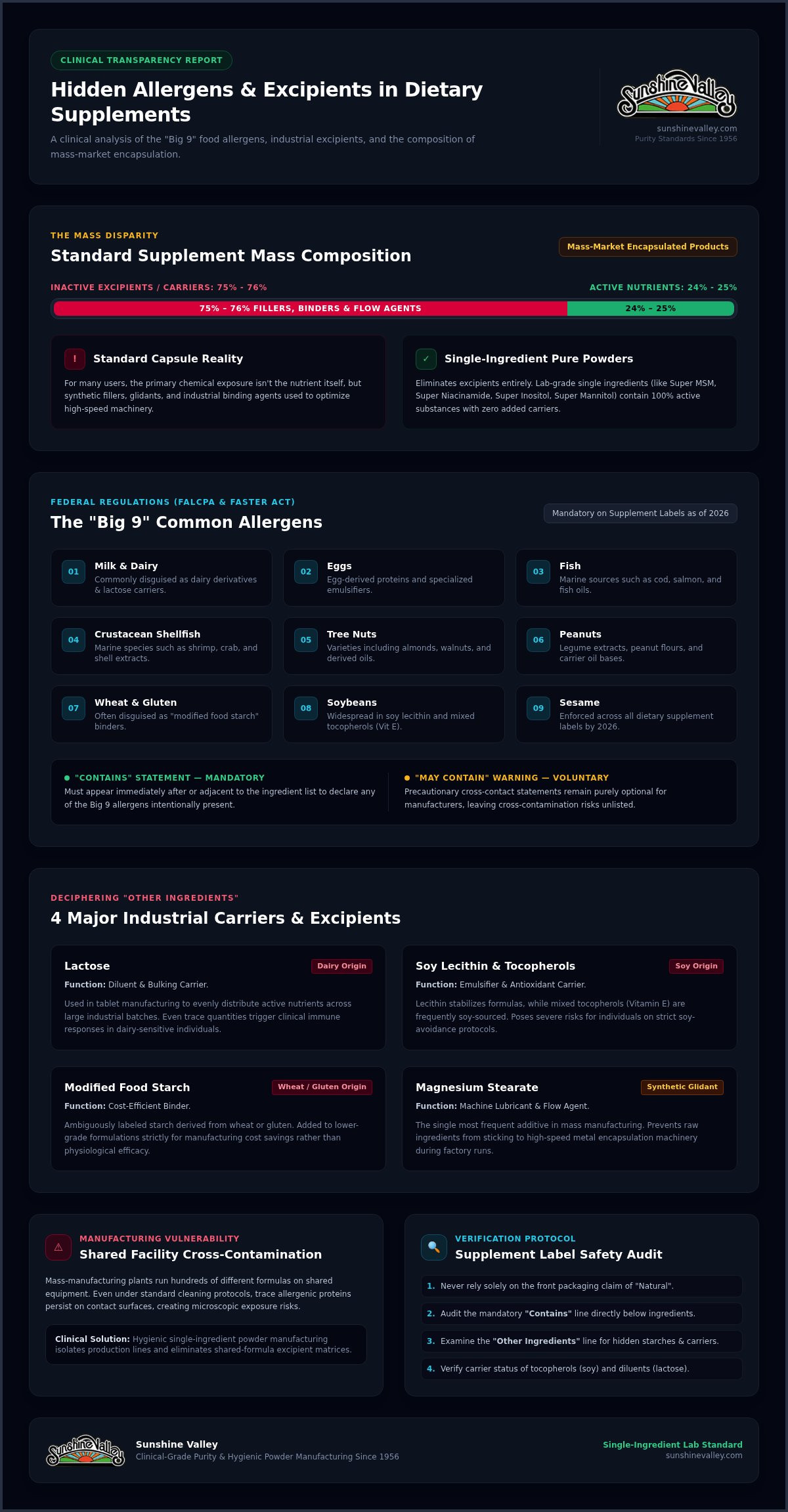
Did you know that inactive excipients often account for 75% to 76% of a standard supplement's total mass? This means that for many users, the primary exposure isn't the nutrient itself, but the fillers, binders, and flow agents used in mass production. Identifying common allergens in dietary supplements becomes a significant challenge when these substances are buried under complex terminology or relegated to the "other ingredients" line. You've likely felt the frustration of a mysterious reaction to a product marketed as natural. It's difficult to maintain a clean regimen when labels prioritize manufacturing convenience over total transparency.
We understand that true health optimization requires meticulous standards. This guide will help you identify hidden risks and provide a comprehensive allergen-detection checklist for selecting high-purity alternatives. You'll learn to distinguish between active ingredients and industrial carriers to gain total control over your intake. We'll also explore how to source clinical-grade, single-ingredient powders like Super Mannitol or Super MSM. Purity is the ultimate safety feature for the discerning individual who refuses to compromise on quality.
Key Takeaways
- Recognize the federal "Big 9" mandates and how these common allergens in dietary supplements are often obscured by complex manufacturing nomenclature.
- Distinguish between active nutrients and hidden carriers, such as lactose or starch-based fillers, that frequently trigger sensitivities in "natural" products.
- Understand why encapsulated formulas often require synthetic flow agents and glidants that compromise the purity of the final delivery.
- Master a systematic 5-point label-reading protocol to isolate clinical-grade formulas from industrial-grade alternatives.
- Explore the safety advantages of transitioning to lab-grade pure powders, including Super Niacinamide and Super Inositol, for a disciplined approach to wellness.
The Big 9 and Common Allergens in Dietary Supplements
Safety in the supplement industry begins with transparency. The Food Allergen Labeling and Consumer Protection Act (FALCPA) establishes the legal framework for identifying health risks. This federal mandate requires manufacturers to clearly declare any major food allergens present in their products. For sensitive individuals, identifying common allergens in dietary supplements isn't just a preference; it's a medical necessity. Labels must distinguish between active nutrients and the "Other Ingredients" where fillers often hide.
The "Big 9" represents the specific group of ingredients responsible for most allergic reactions. These include:
- Milk and dairy derivatives
- Eggs
- Fish (such as cod or salmon)
- Crustacean shellfish (such as shrimp or crab)
- Tree nuts (such as almonds or walnuts)
- Peanuts
- Wheat
- Soybeans
- Sesame
To better understand how these regulations protect you, watch this informative module from the FDA:
Regulatory Standards for Allergen Labeling
Compliance requires specific formatting. A "Contains" statement must appear immediately after or adjacent to the ingredient list. While this statement is mandatory for the Big 9, precautionary warnings like "May Contain" remain voluntary. Under the Food Allergen Labeling and Consumer Protection Act and the FASTER Act, manufacturers must declare nine major allergens, including sesame, on all dietary supplement labels as of 2026. Consumers shouldn't rely solely on the "Contains" box. A thorough audit of the "Other Ingredients" section is vital to spot hidden derivatives like lactose or soy-based lecithin.
The Risk of Cross-Contamination
Mass-manufacturing plants often utilize shared equipment for hundreds of different formulas. Even with standard cleaning protocols, trace proteins can persist. This introduces common allergens in dietary supplements that aren't intentionally part of the recipe. For those with severe sensitivities, even microscopic exposure is a risk. Sunshine Valley addresses this by adhering to the standards of hygienic supplement manufacturing. Since 1956, our focus has been on lab-grade purity. By specializing in pure powders like Super MSM and Super Niacinamide, we eliminate the complex web of excipients found in industrial-scale capsules.
Identifying Hidden Allergenic Carriers and Fillers
Identifying common allergens in dietary supplements requires a meticulous review of the "Other Ingredients" list. Fillers are non-nutritive substances added to create bulk, improve flow, or bind ingredients together. While they serve a manufacturing purpose, they frequently harbor hidden risks for sensitive individuals. Lactose, for instance, is a ubiquitous dairy-derived carrier in many tablet formulations. It acts as a diluent to ensure active ingredients are distributed evenly across a large batch. For those with a clinical sensitivity to dairy, even these trace amounts can trigger a significant immune response.
Soy derivatives are equally prevalent in the industrial supply chain. Soy lecithin is a standard emulsifier used to stabilize formulas, while mixed tocopherols (Vitamin E) are frequently soy-sourced antioxidants. These ingredients can cause adverse reactions in those following the FDA food allergy guide for soy avoidance. Wheat-based starches and gluten also appear as hidden binders in lower-grade products. These substances are often listed under the ambiguous title of "modified food starch" and are chosen for their cost-efficiency rather than their physiological benefit.
Common Filler Names to Watch For
Magnesium stearate is the most frequent additive found in modern manufacturing. It's a lubricant that prevents ingredients from sticking to metal machinery during the high-speed encapsulation process. While it facilitates production, it's an unnecessary industrial additive. Maltodextrin is another common polysaccharide used for texture and bulk. It's typically derived from corn, but wheat-sourced versions exist and aren't always clearly identified on the label. Gelatin remains the primary material for standard capsule shells. Because it's derived from bovine or porcine connective tissue, it represents a significant animal-derived allergen that many disciplined health enthusiasts choose to avoid.
The Problem with "Natural Flavors"
Proprietary flavor blends are often a "black box" on supplement labels. A single "natural flavor" listing can hide soy, dairy, or even nut derivatives without explicit disclosure. This lack of transparency makes unflavored, single-ingredient powders the safest choice for severe allergy sufferers. Adhering to strict mannitol powder quality standards ensures that a product is free from these hidden industrial additives. Transitioning to a lab-grade powder like Super Mannitol or Super MSM allows you to bypass the risks associated with complex multi-ingredient manufacturing. If you prioritize excellence in your regimen, you can find clinical-grade pure powders that meet the highest standards of safety. Purity is the only reliable safeguard against unintentional exposure to common allergens in dietary supplements.
Pure Powders vs. Capsules: Where Do Allergens Hide?
Most consumers assume the capsule shell is a neutral container. It isn't. The manufacturing of solid dosage forms requires a complex array of industrial additives to function on high-speed machinery. These substances, known as excipients, often introduce common allergens in dietary supplements that aren't present in the active raw material. While a raw nutrient might be pure, the process of turning it into a pill frequently compromises that integrity.
Encapsulation mechanics require ingredients to flow like liquid through metal funnels. To achieve this, manufacturers add glidants and lubricants such as silicon dioxide or magnesium stearate. Tablets are even more complex. They necessitate disintegrants to ensure the pill breaks apart in the digestive tract, often utilizing starches that may carry trace gluten or corn-derived allergens. Beyond the risk of reaction, high excipient volume can hinder nutrient absorption. The NIH Office of Dietary Supplements consumer guide emphasizes that understanding the full ingredient profile is essential for both safety and efficacy. Pure crystalline powders eliminate this industrial interference, providing direct access to the nutrient without a chemical barrier.
The Hidden Risks of Capsule Shells
Standard capsules typically utilize bovine or porcine gelatin. This presents a primary concern for individuals with Alpha-gal syndrome or specific mammalian meat allergies. Even vegetarian HPMC (hydroxypropyl methylcellulose) capsules aren't always inert; they can contain residual solvents or synthetic colorants used for branding. Dyes like FD&C Red #40 or Yellow #6 are frequent triggers for sensitive users. Transitioning to a single-ingredient powder like Super Inositol bypasses the shell entirely. It removes the need for dyes, animal-derived proteins, and synthetic polymers.
Why Crystalline Purity Matters
Clinical-grade supplements prioritize the physical structure of the nutrient itself. Lab-grade crystals are inherently stable and require fewer stabilizers to maintain their potency over time. When you source high-purity niacinamide, you're receiving a product free from the flow agents that plague mass-market encapsulated versions. Our "Super" grade standard reflects a 70-year commitment to this level of refinement. It ensures that common allergens in dietary supplements are excluded at the manufacturing source. This disciplined approach to purity offers a significant clinical advantage for those who require high-dose nutritional support without the burden of industrial waste.
Your 5-Point Checklist for Safe Supplement Label Reading
Evaluating common allergens in dietary supplements requires a disciplined, systematic approach. It isn't enough to glance at the front of the bottle; true safety is found in the technical details of the back panel. This 5-point checklist serves as your clinical protocol for vetting every product in your regimen.
- Step 1: Scan the "Other Ingredients" section first. As established, this is where industrial carriers like lactose or wheat-based binders reside.
- Step 2: Look for specific source declarations. High-standard brands will specify if a nutrient is "from corn" or "from soy," allowing you to avoid hidden triggers.
- Step 3: Verify the manufacturing facility standards. Ensure the product is manufactured in a facility that follows current Good Manufacturing Practices (cGMP) and maintains lab-grade hygiene protocols.
- Step 4: Check for third-party purity certifications. Look for seals from independent laboratories that verify the absence of undeclared contaminants.
- Step 5: Contact the manufacturer for proprietary blend details. If a "natural flavor" or "proprietary complex" is listed, demand a full breakdown of the constituent ingredients.
Red Flags on Supplement Labels
Vigilance is your best defense. Be cautious of vague terminology like "vegetable lubricant" or "natural sweetener," which often masks soy or dairy derivatives. A lack of a "free from" statement for the Big 9 allergens is another significant warning sign. If a label omits the country of manufacture or fails to reference specific facility standards, it likely lacks the oversight necessary for an allergy-sensitive individual. These omissions suggest a priority on mass production over consumer safety.
How to Research a Manufacturer
A brand's history is a reliable indicator of its commitment to safety. Look for companies with a long-standing clinical heritage, such as those established in 1956. Verify if the manufacturer specializes in premium msm powder and other pure crystalline forms, or if they primarily produce high-volume capsules filled with bulk carriers. Transparent brands provide accessible customer support channels staffed by experts who can answer technical questions about common allergens in dietary supplements. If you value a regimen defined by excellence, you should source your pure powders from Sunshine Valley.
Sunshine Valley: Clinical-Grade Purity Since 1956
Sunshine Valley represents a legacy of uncompromising standards. Founded in 1956 by a physician dedicated to high-profile wellness, the brand has operated for 70 years as a disciplined guardian of health. We combine traditional reliability with modern technological sophistication to deliver products that meet the needs of the most discerning individuals. Every offering in our inventory adheres to the "Super" standard, a designation that signifies lab-grade purity and clinical-grade manufacturing precision. While the broader market is saturated with common allergens in dietary supplements, we provide a definitive alternative through meticulous refinement and expertise.
Our decision to offer specialized powders instead of capsules is rooted in physiological logic. As established in previous sections, encapsulation requires industrial flow agents, synthetic glidants, and animal-derived shells. These components introduce unnecessary risks and variables into a health regimen. By specializing in pure crystalline forms, we eliminate the need for these additives entirely. Our state-of-the-art facility operates under strict hygiene protocols that exceed standard requirements. We maintain a controlled environment to prevent cross-contact, ensuring that the integrity of our raw materials is never compromised by unintentional exposure.
Our Core Range of Pure Supplements
We provide a targeted selection of nutrients designed for maximum efficacy and safety. Each product is a result of industry-leading procedures and a commitment to health optimization. Our range includes:
- Super Mannitol and Super Inositol: Clean-label wellness support for those with sensitive digestive systems.
- Super MSM and Super Niacinamide: Crystalline purity for daily nutritional needs without the burden of industrial waste.
- Super Lactose: Processed with the same rigor, adhering to our 2026 guide to food-grade lactose purity and standards.
The Discerning Choice for Health
Excellence is not an accident; it's the result of decades of adherence to professional standards. Hollywood stars and wellness experts have trusted Sunshine Valley since 1956 because we prioritize results over flashy marketing. We act as a seasoned professional in an industry often filled with transparency gaps. Our promise is simple: no hidden fillers, no unnecessary additives, and no common allergens in dietary supplements. We provide direct-to-consumer reliability for national wellness needs, offering high-tier solutions that were once favored by a select clientele but are now accessible to you. Trust in a legacy of purity that has been proven over seven decades of clinical excellence.
Securing Your Regimen with Lab-Grade Purity
Mastering the art of label reading is the first step toward total control over your health. By identifying where common allergens in dietary supplements hide, you can eliminate the industrial variables that compromise your wellness. Transitioning from complex capsules to pure crystalline powders removes the need for synthetic flow agents and animal-derived shells. This shift ensures your body receives only the nutrients it requires without the burden of non-nutritive waste. Every choice you make at the label level impacts your long-term vitality.
Sunshine Valley has maintained this disciplined approach to manufacturing since 1956. Our clinical-grade manufacturing processes guarantee that every powder is free from hidden fillers and industrial carriers. We prioritize scientific rigor and heritage-driven standards to provide the most reliable nutritional support available. It's time to approach your supplement choices with the confidence of a seasoned professional. Purity isn't just a standard; it's a commitment to your body's safety. Take the final step toward a cleaner, safer wellness routine today.
Shop Premium Lab-Grade Supplements at Sunshine Valley
Frequently Asked Questions
Can dietary supplements contain hidden gluten?
Yes, gluten is a frequent hidden component in mass-market products. It often serves as a binder or is found in carriers like maltodextrin and modified food starch derived from wheat. While FDA regulations require a "gluten-free" label to mean less than 20 parts per million, trace amounts can still trigger sensitivities. Choosing single-ingredient powders like Super Inositol helps you bypass these complex grain-based fillers entirely.
Is Super Lactose safe for people with dairy allergies?
Super Lactose is not suitable for individuals with a diagnosed dairy allergy. As a milk-derived sugar, it contains the proteins that trigger allergic responses. While Sunshine Valley maintains clinical-grade manufacturing standards established in 1956, this product remains a dairy derivative. We provide Super Mannitol and Super MSM as clean-label alternatives for those who must strictly avoid all milk-based ingredients in their nutritional regimen.
What is the difference between food-grade and lab-grade purity?
Food-grade purity is the baseline legal standard for human consumption. Lab-grade, or clinical-grade purity, involves significantly higher levels of refinement and testing. Sunshine Valley adheres to these superior standards to ensure our crystalline powders are free from the industrial waste and heavy metals often found in lower-tier products. This level of precision is essential for identifying and avoiding common allergens in dietary supplements that occur through poor refining.
Are vegetarian capsules always free from allergens?
Vegetarian capsules aren't guaranteed to be allergen-free. Although they replace animal gelatin with HPMC, the manufacturing process still requires glidants and lubricants like magnesium stearate or silicon dioxide. These additives can be sourced from soy or corn. Additionally, capsule shells may contain synthetic dyes or colorants that provoke sensitivities. Pure powders offer a more disciplined approach to wellness by removing the capsule variable altogether.
How can I tell if a supplement was made in a nut-free facility?
You must verify the manufacturer's specific facility protocols to confirm nut-free status. While federal law requires the disclosure of nuts as an ingredient, "made in a facility" warnings are currently voluntary for manufacturers. Disciplined brands with a history of serving high-profile clients often implement rigorous hygiene standards to prevent cross-contact. Contacting the brand's customer support is the most reliable way to confirm their equipment sanitization procedures.
What are common symptoms of an allergic reaction to supplement fillers?
Reactions often manifest as gastrointestinal issues, skin rashes, or respiratory discomfort. These symptoms frequently result from common allergens in dietary supplements used as inactive carriers, such as lactose or soy lecithin. Because these fillers can account for over 75% of a pill's mass, the immune system may react to the excipient rather than the vitamin. If you experience unexpected symptoms, auditing the "Other Ingredients" list is a clinical necessity.
Why does Sunshine Valley sell powders instead of tablets?
We specialize in powders to maintain the highest level of crystalline purity. Tablets and capsules require binders, disintegrants, and coatings to remain stable and pass through high-speed machinery. These industrial additives introduce unnecessary risks for sensitive individuals. By offering pure forms like Super Niacinamide, we ensure our clients receive active nutrients without the chemical interference or hidden allergenic carriers found in traditional solid dosage forms.
Does the FDA regulate allergen labeling for all supplements?
The FDA mandates the declaration of the nine major food allergens on all supplement labels. This includes milk, eggs, fish, shellfish, tree nuts, peanuts, wheat, soybeans, and sesame. However, the regulations don't require the disclosure of every possible trace contaminant or voluntary advisory statements. This gap makes it critical to source products from manufacturers with a long-standing reputation for clinical-grade manufacturing and total ingredient transparency.



Leave a comment
This site is protected by hCaptcha and the hCaptcha Privacy Policy and Terms of Service apply.