



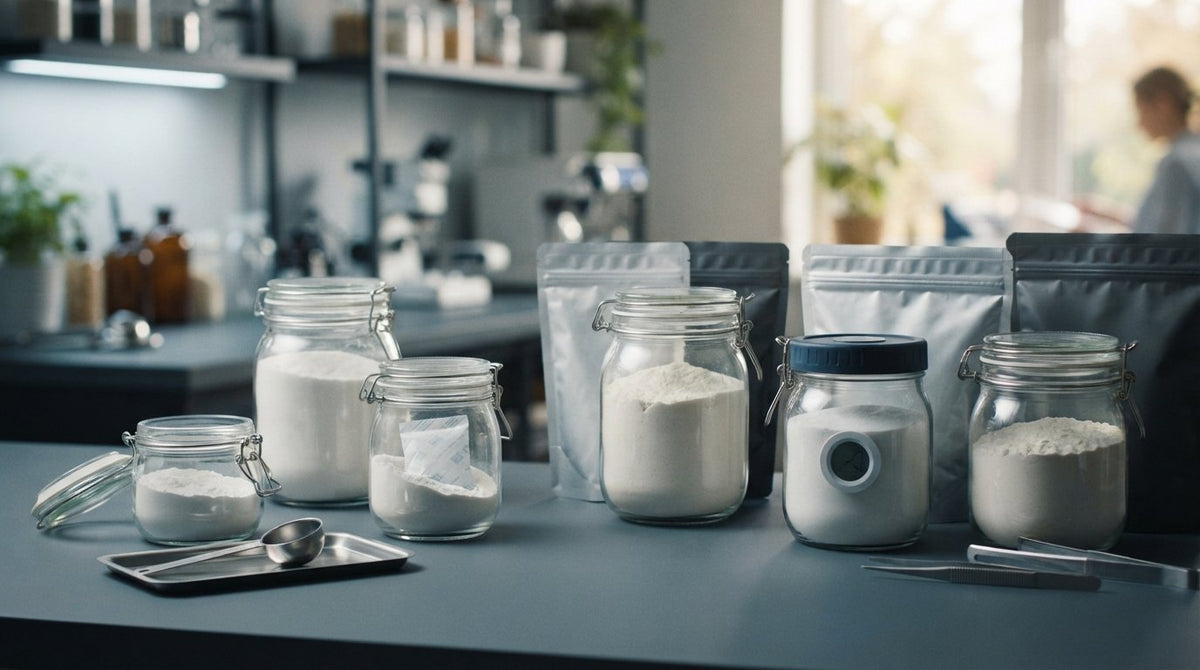
The moment you break the factory seal on a high-purity supplement, a silent clock begins to tick against its molecular integrity. For the discerning individual, a bulk purchase is an investment in long-term wellness, yet environmental factors like humidity and UV exposure can quickly compromise that value. You likely understand that moisture is the enemy of fine crystals, but the standard kitchen pantry is rarely a suitable laboratory for sensitive compounds. It's discouraging to find a premium supply of Super Mannitol or Super Inositol ruined by clumping or oxidation. Learning how to store bulk supplement powders long term is the only way to ensure your health regimen remains as potent on day 500 as it was on day one.
We agree that purity should never be a matter of chance. This clinical guide provides a professional protocol for preserving the potency and purity of your bulk dietary supplements for years. We'll detail the specific mechanics of moisture contamination, the necessity of medical-grade desiccants, and the exact container materials required to maintain a stable environment. You'll gain the confidence to manage your inventory with the same precision used in our high-standard manufacturing facilities.
Key Takeaways
- Identify the molecular triggers of powder degradation to prevent clumping and preserve the biological activity of high-purity crystals.
- Discover why standard kitchen storage fails and how to shield sensitive compounds like Super Niacinamide from the destructive power of UV rays and heat.
- Master professional container selection and learn how to store bulk supplement powders long term using non-reactive glass and medical-grade Mylar barriers.
- Implement a clinical "Working Jar" strategy to minimize oxygen exposure during daily use while keeping your primary supply in deep, hermetic storage.
- Apply heritage-driven sanitization protocols to ensure premium products like Super MSM and Super Inositol remain free from microscopic contaminants.
The Science of Supplement Degradation: Why Powders Fail
Chemical stability defines the lifespan of your nutritional investment. In the context of dietary supplements, stability refers to the ability of a substance to maintain its molecular integrity and potency over time. When you manage large quantities, you're fighting a constant battle against oxidation. This process occurs when oxygen molecules interact with your powder, stealing electrons and fundamentally altering the chemical structure. For high-purity compounds, oxidation doesn't just change the color; it renders the active ingredients biologically inert. The resulting loss of potency means your supplements no longer deliver the clinical results you expect.
Temperature fluctuations act as a kinetic catalyst for these destructive reactions. Heat provides the energy required for molecular bonds to vibrate and eventually break. Even minor shifts in a standard room environment can accelerate the rate of degradation. Without a controlled climate, the shelf life of premium powders diminishes rapidly. Understanding the specific vulnerabilities of your inventory is the first step in mastering how to store bulk supplement powders long term.
Hygroscopic Properties of Pure Powders
High-purity crystals like Super Mannitol and Super Inositol are naturally hygroscopic. This means they possess an inherent physical drive to attract and bond with water molecules from the surrounding air. In a humid environment, these powders act like a sponge. This moisture absorption triggers a transition from a free-flowing, crystalline state to a dense, hardened mass. Unlike retail brands that use synthetic anti-caking agents and fillers to mask this effect, our "Super" grade products remain pure. This purity demands more rigorous environmental control. Moisture isn't just a texture issue; it's a medium for microbial growth. Even trace amounts of water can allow bacteria or mold to colonize the powder, turning a health supplement into a safety hazard.
The Potency Clock: Understanding Shelf Life
A "Best By" date is a manufacturer's conservative estimate of peak quality, but it's not a hard expiration of safety. However, improper storage conditions can slash this timeline in half. Super Niacinamide and Super Inositol are particularly sensitive to their environment. You can identify a compromised supplement through several physical indicators. Look for the following signs of failure:
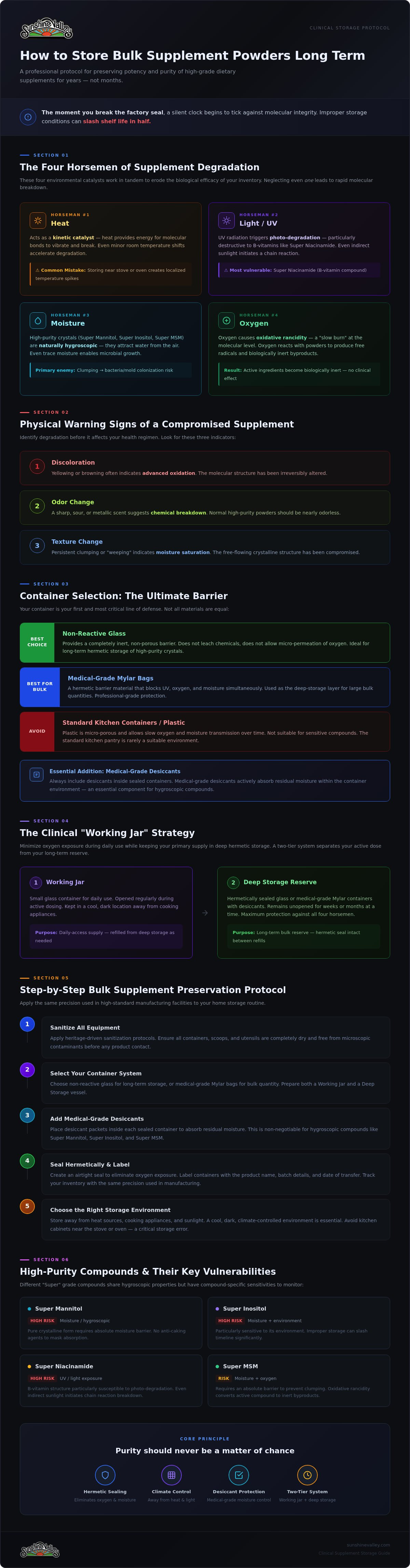
- Discoloration: Yellowing or browning often indicates advanced oxidation.
- Odor: A sharp, sour, or metallic scent suggests chemical breakdown.
- Texture: Persistent clumping or "weeping" indicates moisture saturation.
Maintaining the clinical efficacy of your supply requires proactive intervention. The following protocols explain how to store bulk supplement powders long term by neutralizing these environmental catalysts before they can compromise your health regimen.
The Four Horsemen of Supplement Storage
To master how to store bulk supplement powders long term, you must neutralize the four primary environmental catalysts. These "Four Horsemen" include heat, light, moisture, and oxygen. They work in tandem to erode the biological efficacy of your inventory. While retail products often rely on heavy stabilizers, high-purity crystals require a more disciplined approach to environmental control. Neglecting even one of these factors can lead to rapid molecular breakdown.
Heat is often the most overlooked threat. Many individuals mistakenly store their bulk purchases in kitchen cabinets near the stove or oven. This is a critical error. Radiant heat from cooking appliances creates localized temperature spikes that destabilize molecular bonds. Similarly, light provides the energy necessary for photo-chemical reactions. Ultraviolet (UV) radiation triggers photo-degradation, which is particularly destructive to B-vitamins like Super Niacinamide. Even indirect sunlight can initiate a chain reaction that breaks down the vitamin's structure before you've used a fraction of the supply.
Moisture remains the primary enemy of crystalline integrity. As established, high-purity powders like Super MSM require an absolute barrier to prevent clumping. Finally, oxygen exposure causes oxidative rancidity. This is essentially a "slow burn" at the molecular level. Oxygen molecules react with the powder to produce free radicals and inactive byproducts. Adhering to FDA dietary supplement guidelines regarding quality control helps maintain these standards during manufacturing, but home storage is where the chain of purity often breaks.
Thermal Stability and Optimal Temperature Zones
In clinical terms, a "cool, dry place" is an environment maintained strictly between 60°F and 70°F. Temperatures exceeding this range accelerate chemical degradation. While refrigeration might seem like a logical solution, it often introduces the risk of condensation traps. When a cold container is opened in a warm room, moisture from the air immediately condenses on the cold powder. For the long-term preservation of Super MSM, a dedicated, climate-controlled pantry is superior to a standard refrigerator. Stability is found in consistency, not extreme cold.
Photo-Degradation and Light Barriers
Light breaks down chemical structures at a molecular level by exciting electrons within the powder. Amber glass is the non-reactive gold standard for light protection. It filters out the most damaging UV wavelengths while remaining chemically inert. Opaque, high-density plastics also provide effective barriers. Clear containers should be reserved for short-term "working jars" that remain inside dark cabinets. For multi-year storage, any light exposure is a liability that compromises the purity of the crystals.
Container Comparison: Selecting the Ultimate Barrier
Selection of the correct vessel is the decisive factor in how to store bulk supplement powders long term. While retail packaging often prioritizes cost, a clinical-grade storage protocol prioritizes the total exclusion of environmental contaminants. Glass remains the non-reactive gold standard for purity. It's chemically inert, meaning it won't leach phthalates into your Super Mannitol or absorb the scent of neighboring substances. For the highest level of protection, amber glass should be utilized to neutralize the photo-degradation risks discussed previously.
Mylar bags represent the ultimate oxygen and light barrier for multi-year preservation. These multi-layered metallic films are virtually impermeable to gas. When combined with vacuum sealing, they create a hermetic environment that halts the "slow burn" of oxidation. High-density polyethylene (HDPE) plastic is a common industry standard for mid-term accessibility, but it possesses a degree of oxygen permeability that glass and Mylar do not. For those managing a professional-grade inventory, plastic is suitable for daily use, but it's insufficient for deep storage of high-purity crystals.
Glass vs. Mylar: The Longevity Debate
The choice between glass and Mylar often depends on the volume and frequency of use. Glass jars require a high-quality induction lining or a thick silicone gasket to ensure an airtight seal. They're ideal for maintaining clinical hygiene during daily access. Conversely, Mylar is the superior choice for bulk Super Lactose or large quantities intended for long-term reserves. Its lightweight, flexible nature allows you to remove excess air before sealing, which is a significant advantage for preserving the "Super" status of your supply over several years.
The Role of Desiccants and Oxygen Absorbers
Maintaining a stable internal environment requires active moisture and gas management. Silica gel is the preferred desiccant for dietary supplements due to its high absorption capacity and non-toxic nature. It's more effective than clay-based alternatives in the low-humidity environments required for crystalline stability. When preparing your storage, consult the NIH Office of Dietary Supplements for data on the specific moisture sensitivities of your ingredients. Proper placement is essential; desiccants should be secured to the lid or placed in a way that avoids direct, prolonged contact with the powder to prevent localized over-drying. Oxygen absorbers are necessary for powders prone to rancidity, but they're often overkill for stable sugars like mannitol unless the storage duration exceeds 24 months.
Step-by-Step Guide to Bulk Supplement Preservation
Implementing a clinical protocol for how to store bulk supplement powders long term requires more than just a tight lid. It demands a structured environment where every variable is controlled. By following a professional preservation sequence, you maintain the "Super" status of your inventory. This methodical approach mirrors the standards we've upheld since 1956. It's the difference between a spoiled investment and a long-term wellness resource.
Phase 1: Preparation and Hygiene
Sanitization is the foundational step. Begin by disinfecting your workspace with 70% isopropyl alcohol. Clean all transfer tools and storage vessels thoroughly. Residual moisture is the primary cause of premature clumping in high-purity crystals. Every container must be bone-dry before the powder makes contact. Hygienic supplement manufacturing represents the rigorous elimination of biological and chemical contaminants to ensure product stability from the moment of synthesis. Without this baseline of cleanliness, long-term storage is impossible.
Phase 2: The Transfer and Seal
Minimizing air exposure during the transfer process is critical. Work quickly and efficiently. We recommend the "Working Jar" strategy to protect your main supply. Divide your bulk purchase into two categories: a small jar for daily access and a larger vessel for deep storage. This ensures your primary inventory of Super Niacinamide or Super Inositol is only exposed to the atmosphere once every few months. For Super Niacinamide, include an oxygen absorber in the deep storage container to neutralize potential oxidation. For products like Super MSM, utilize vacuum sealing to remove all residual air before placing the bag inside a secondary light-proof container. This multi-layered defense is the professional standard for how to store bulk supplement powders long term.
Phase 3: Monitoring and Inventory
Traceability ensures safety and efficacy. Label every container with the product name, batch number, and the date of storage. Use the "First In, First Out" (FIFO) method to rotate your stock. This prevents older inventory from being pushed to the back of the pantry. Perform periodic integrity checks every three months. Observe the powder for any shift in color or the presence of moisture beads on the container walls. Maintaining these high standards at home complements the Hygienic Supplement Manufacturing protocols used in our facilities. Consistency in monitoring preserves the clinical grade of your supply.
To ensure your wellness regimen begins with the highest possible purity, explore our full range of Sunshine Valley powders and start your storage protocol with confidence.
Maintaining Clinical Purity with Sunshine Valley
Sunshine Valley has established the benchmark for lab-grade supplement powders since 1956. Our commitment to clinical-grade standards ensures that every batch of Super Mannitol or Super Inositol leaves our facility with the lowest possible moisture content. This initial precision is vital. It creates a stable baseline that makes it significantly easier to manage how to store bulk supplement powders long term. When you start with a product of this caliber, you aren't fighting existing contamination; you're simply preserving a state of absolute purity.
The relationship between "Super" grade purity and storage ease is direct. Impurities in lower-grade powders act as catalysts for degradation, attracting moisture and accelerating oxidation. By removing these variables at the point of manufacture, we provide a more stable crystalline structure. Our heritage of serving high-profile, discerning customers dictates a level of care that exceeds standard industry practices. This meticulous attention to detail ensures your Super Mannitol remains as pure and potent as the day it was synthesized.
The Sunshine Valley Quality Difference
Our commitment to a zero-filler policy is a strategic choice for long-term stability. Most retail brands include flow agents and synthetic bulking materials that are inherently hygroscopic. These additives introduce microscopic moisture traps that can initiate clumping from within the container, regardless of your external seals. Our manufacturing processes exceed standard food-grade requirements by prioritizing molecular integrity over production speed. Discerning individuals understand that "Super" grade purity is a functional advantage for those buying in bulk. For more technical data on our purity benchmarks, consult our guide on Mannitol Powder Quality Standards.
Investing in Long-Term Wellness
Discerning customers choose Super Inositol and Super MSM for their consistent purity and performance. Bulk purchasing is an economically sound strategy, but it requires the clinical storage protocols detailed in this guide to be effective. By applying these professional techniques to our premium powders, you protect your investment from environmental degradation. Purity is a choice made at the point of purchase and maintained through disciplined storage. It's a commitment to your long-term health that requires no compromise.
Secure your supply of clinical-grade supplements today. Visit Sunshine Valley to explore our heritage-driven product lines and experience the gold standard of nutritional purity.
Mastering Your Long-Term Nutritional Reserves
Maintaining the potency of your health investment requires a shift from casual storage to clinical discipline. You've now mastered the professional protocol for neutralizing environmental catalysts and selecting the correct barriers for deep storage. By implementing the "Working Jar" strategy and utilizing non-reactive materials, you ensure your crystalline compounds remain stable. Understanding how to store bulk supplement powders long term is the final step in bridging the gap between high-purity manufacturing and effective daily use.
Sunshine Valley has championed these standards since 1956. Our "Super" line is defined by a total absence of fillers or artificial additives. It's a legacy of purity trusted by high-profile health enthusiasts for decades. Starting with a lab-grade foundation simplifies your preservation efforts and guarantees consistent results. Secure your wellness with our clinical-grade Super Mannitol and Inositol powders today. Your commitment to excellence ensures your supply remains pure until the final dose.
Frequently Asked Questions
Can I freeze supplement powders to make them last longer?
Freezing is generally discouraged for bulk supplement storage. While cold temperatures slow chemical reactions, the cycle of removing a container from a freezer introduces significant condensation risks. Moisture from the air will liquefy on the cold powder surface. This causes immediate clumping and potential microbial growth. Maintain a stable environment between 60°F and 70°F to ensure molecular integrity without the hazards of moisture traps.
What is the best container for long-term storage of Super Mannitol?
Amber glass with an airtight induction lining is the gold standard for Super Mannitol. Glass is chemically inert. It prevents the leaching of synthetic chemicals into the powder. For larger quantities intended for multi-year reserves, Mylar bags provide a superior oxygen and light barrier. These materials ensure that the high-purity crystals remain free from environmental contaminants. Always choose opaque or dark-tinted vessels to neutralize the destructive effects of ultraviolet radiation.
How do I know if my Niacinamide powder has gone bad?
You can identify compromised Super Niacinamide through physical and sensory changes. Look for yellowing or browning of the white powder, which indicates advanced oxidation. A sharp, sour, or metallic odor is another definitive sign of chemical degradation. If the powder has hardened into a solid mass, moisture has breached the seal. While it may not be toxic immediately, these changes signal that the clinical potency has been significantly reduced.
Do I really need silica packets for every supplement?
Silica desiccants are essential for the "Super" line of products. Because Sunshine Valley powders don't contain fillers or anti-caking agents, they're more susceptible to moisture than retail brands. Pure crystals are naturally hygroscopic and will attract water molecules from even the smallest amount of ambient air. Including a medical-grade silica packet in every container is a necessary step in how to store bulk supplement powders long term without clumping.
How long will Super Inositol last if stored correctly?
Super Inositol can maintain its clinical potency for two to three years when stored under optimal conditions. The actual shelf life depends on your ability to exclude the "Four Horsemen" of degradation: heat, light, moisture, and oxygen. By utilizing vacuum-sealed Mylar for deep storage and amber glass for daily use, you maximize the stability of the compound. Following a strict protocol for how to store bulk supplement powders long term preserves the initial purity of the batch.
Can moisture in the air ruin my supplements during the transfer process?
Atmospheric moisture can compromise your supplements in seconds during the transfer process. On a humid day, high-purity powders like Super Lactose act as a desiccant, pulling water from the air into the container. This is why we recommend working in a climate-controlled room and keeping exposure time to a minimum. Use the "Working Jar" strategy to ensure your main supply is only opened occasionally, protecting the bulk of your inventory from repetitive exposure.
Is it safe to store different powders in the same large container?
Storing different supplement powders in the same large container is a violation of clinical hygiene standards. Cross-contamination can lead to unintended chemical reactions between different molecular structures. Additionally, some powders have distinct natural odors that can be absorbed by more neutral substances like Super Mannitol. To ensure the purity and traceability of your wellness regimen, always keep each product in its own dedicated, labeled, and airtight vessel.
What happens if my MSM powder starts to clump?
Clumping in your Super MSM indicates that moisture has breached your storage barrier. When pure crystals absorb water, they begin to bond together, eventually forming a hardened mass. While you can often break these clumps apart, the presence of moisture accelerates the degradation of the supplement. It's a clear signal to check your seals, replace your desiccant packets, and ensure the container is kept in a cooler, drier location to prevent further spoilage.



Leave a comment
This site is protected by hCaptcha and the hCaptcha Privacy Policy and Terms of Service apply.