



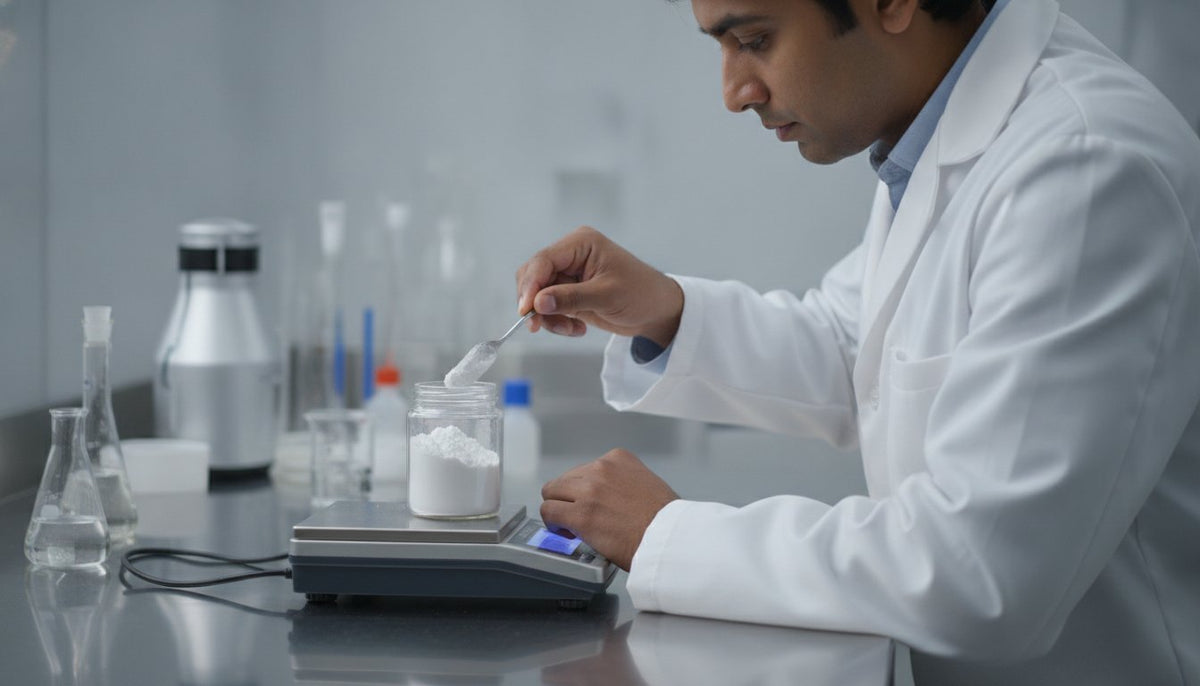
What if the "pure" nutrients in your cabinet are actually undermining your wellness goals through hidden flow agents and industrial fillers? You likely invest in your health with clear intentions, yet the gap between retail marketing and clinical reality is wider than ever. In an era where the U.S. dietary supplement market is projected to reach up to $85.4 billion by the end of 2026, the demand for transparency has never been more critical. Finding genuine high purity dietary supplements requires looking beyond the label to the rigorous manufacturing standards that define professional excellence.
It's frustrating to realize that many products prioritize shelf stability over biological absorption. This guide provides a clear framework for evaluating supplement purity, helping you distinguish between standard food-grade options and the lab-grade powders required for optimal results. You'll learn how to identify authentic clinical quality and why professional manufacturing remains the benchmark for nutritional efficacy. We'll explore the impact of the 2026 Amazon compliance standards and the specific advantages of our additive-free "Super" line, including Super Mannitol and Super MSM, designed for those who refuse to compromise on their health.
Key Takeaways
- Identify the clinical threshold for high purity dietary supplements by distinguishing between raw ingredient quality and the absence of post-processing additives.
- Understand how common retail fillers like magnesium stearate and silicon dioxide can compromise digestive health and nutrient bioavailability.
- Evaluate manufacturing excellence through the lens of CGMP compliance and specialized hygienic facility standards.
- Discover the biological advantages of powdered delivery systems, such as Super Niacinamide and Super MSM, over traditional encapsulated formats.
- Leverage a professional framework to select lab-grade nutritional supports based on a legacy of clinical expertise dating back to 1956.
What Defines High Purity Dietary Supplements in 2026?
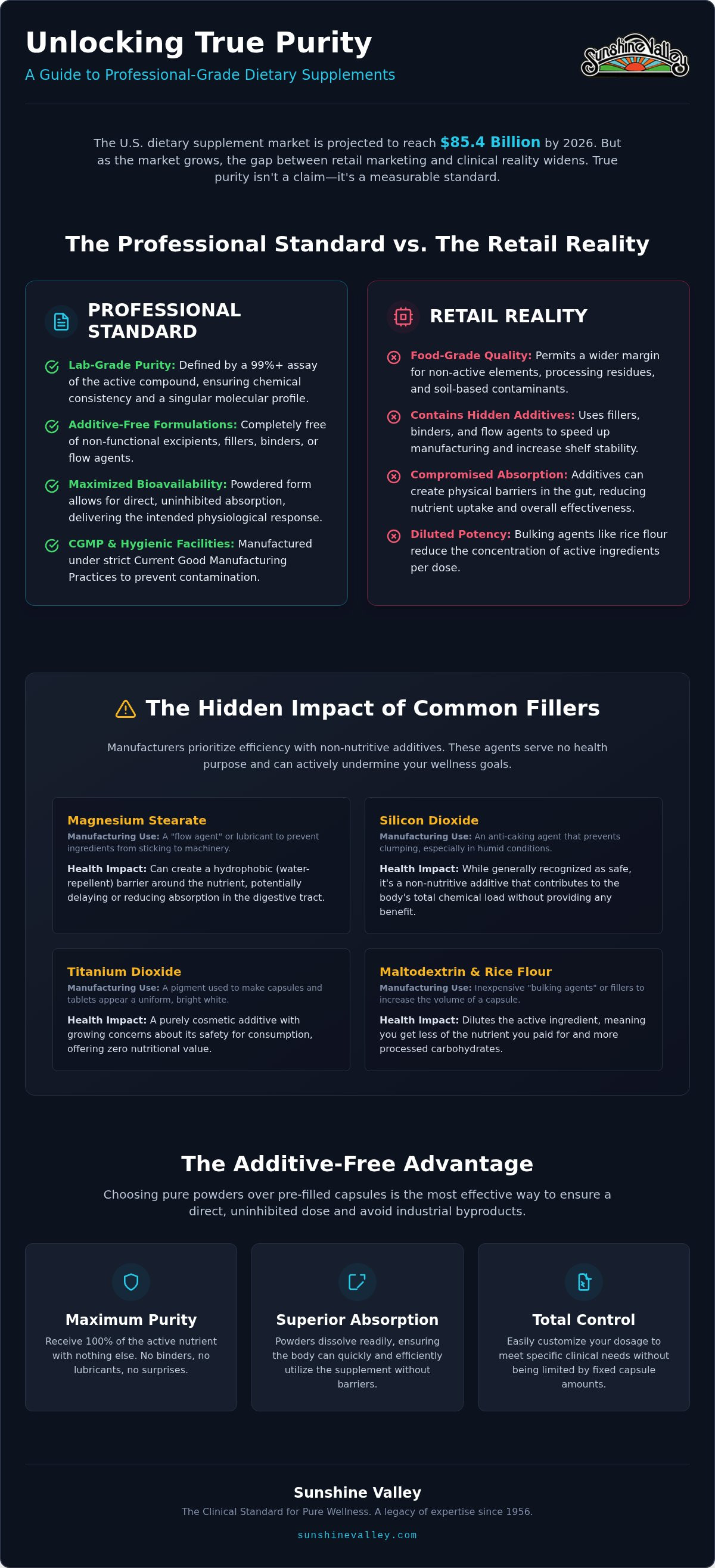
In the complex wellness market of 2026, the term "purity" has moved from a marketing claim to a measurable clinical standard. To understand what is a dietary supplement in a professional context, one must distinguish between basic regulatory compliance and the elite threshold of lab-grade isolates. High purity dietary supplements are defined by their chemical consistency and the total absence of secondary substances. While many brands focus on raw ingredient sourcing, finished product purity is the only metric that dictates nutritional efficacy. Contamination often occurs during the manufacturing phase, where industrial shortcuts can introduce heavy metals or microbial impurities that bypass standard food-grade audits.
Professional nutritional support relies on clinical-grade isolates. These substances are refined to a specific molecular weight and crystalline structure. This precision ensures that every milligram of a product like Super Mannitol or Super MSM delivers the exact physiological response intended by the formulator. It's a level of accuracy that mass-market vitamins rarely achieve.
Lab-Grade vs. Food-Grade: Understanding the Spectrum
The distinction between food-grade and lab-grade standards rests on the measurement of impurities in parts per million (PPM). Standard food-grade requirements permit a wider margin for non-active elements, provided they are generally recognized as safe. Laboratory-grade powders adhere to a stricter protocol. They prioritize a singular molecular profile. Technical specifications for these powders often require a 99% or higher assay of the active compound. This minimizes the presence of unintended chemical byproducts.
It's a common misconception that "natural" origins guarantee safety. Raw botanical extracts frequently carry soil-based contaminants or processing residues. Without strict laboratory refinement, these "natural" products fail to meet the stability required for clinical use. True purity is achieved through rigorous filtration and crystallization processes that remove everything but the target molecule.
The Importance of Additive-Free Formulations
Fillers and excipients are the primary enemies of bioavailability. Mass-market manufacturers use these agents to speed up automated encapsulation lines or prevent clumping. Unfortunately, these non-functional additives can create a physical barrier in the digestive tract. This interference reduces the metabolic absorption of the active nutrient. It makes the supplement less effective and harder for the body to utilize.
When a supplement is diluted by binders, the active concentration drops. This forces the body to process an unnecessary chemical load. High purity is the absence of non-functional excipients. By utilizing additive-free powders, such as Super Inositol, users ensure that the body receives a direct, uninhibited dose of the nutrient. This streamlined delivery system is essential for achieving the health results expected from professional-grade nutrition.
The Hidden Impact of Fillers and Excipients in Retail Supplements
Retail shelves are often crowded with products that prioritize shelf-life and manufacturing speed over consumer wellness. A significant portion of mass-market vitamins consists of non-nutritive additives that serve no health purpose. While FDA regulations for dietary supplements establish baseline safety guidelines, they don't mandate the exclusion of secondary binders or flow agents. This has led to a growing "clean label" movement. Consumers now demand transparent sourcing and the removal of hidden excipients that can compromise the integrity of their nutritional regimen. Choosing powders over capsules is the most effective way to ensure you aren't consuming these industrial byproducts.
Why Manufacturers Use Non-Nutritive Additives
Manufacturing efficiency often dictates the final ingredient list. High-speed automated encapsulation machines require lubricants to prevent powders from sticking to the machinery. Magnesium stearate is the most common choice. It ensures smooth production but can create a hydrophobic barrier around the nutrient. Similarly, silicon dioxide is used to prevent clumping in humid conditions. These agents help maintain pill structural integrity during shipping but offer no biological benefit. From an economic perspective, fillers like rice flour or maltodextrin are used to bulk out expensive active ingredients. This practice reduces the cost per dose but dilutes the concentration of high purity dietary supplements.
Bioavailability and the Purity Connection
The metabolic system functions most efficiently when it doesn't have to filter out industrial waste. Pure powdered supplements are the preferred choice for those seeking maximum bioavailability. Crystals like Super Inositol or Super MSM enter the bloodstream without the delay caused by breaking down a capsule shell. This direct pathway leads to faster nutrient uptake. It also removes the risk of digestive irritation caused by synthetic binders. Many wonder if the premium cost of lab-grade powders is necessary. The answer lies in the results. By removing the physical barriers to absorption, you maximize the value of every milligram. Selecting professional-grade nutritional powders is an investment in clinical efficacy rather than manufacturing convenience.
Evaluating Professional Supplement Manufacturing Standards
The integrity of your nutritional support depends entirely on the environment where it's produced. While most consumers focus on the front label, the true measure of quality lies in the manufacturing facility's operational rigor. Professional standards require adherence to the FDA's Current Good Manufacturing Practices (CGMPs), which mandate strict controls over identity, purity, and composition. For high purity dietary supplements, these regulations are the absolute baseline. Elite facilities often pursue additional ISO certifications to ensure global quality consistency and safety.
Sunshine Valley operates a specialized lab where clinical standards are maintained with meticulous detail. Since our founding in 1956, we've prioritized a controlled environment that prevents the introduction of environmental toxins. Every batch of our "Super" line undergoes rigorous testing for heavy metals, microbial activity, and chemical contaminants. This level of scrutiny ensures that the finished powder meets the specific needs of a discerning, health-conscious clientele. It reflects a commitment to safety that mass-market brands often bypass in favor of production speed.
The Role of Certificate of Analysis (COA)
A Certificate of Analysis is the definitive proof of a supplement's quality. This document provides a detailed breakdown of a specific batch's laboratory results. When you review a COA for Super Mannitol or Super MSM, you should look for the "Assay" percentage. This number indicates the actual concentration of the active ingredient. Transparent brands provide these reports upon request to verify that their high purity dietary supplements meet the stated claims. A reliable COA also confirms that the product has passed safety thresholds for lead, mercury, and arsenic, ensuring the powder is as clean as it is potent.
Hygienic Processing and Cross-Contamination Prevention
Maintaining a sterile environment is critical for pure powdered isolates. True hygienic supplement manufacturing involves dedicated machinery that's never shared with lower-grade products or allergens. This specialized equipment prevents cross-contamination that can occur in mass-production facilities. Standard operating procedures include deep-cleaning cycles and air filtration systems that remove airborne particulates. Professional grade wellness supplements require clinical-level sanitization to preserve their chemical integrity. By using dedicated lines for products like Super Niacinamide, we ensure that every gram remains free from unwanted residues or industrial byproducts.
A Guide to Selecting Pure Nutritional Powders
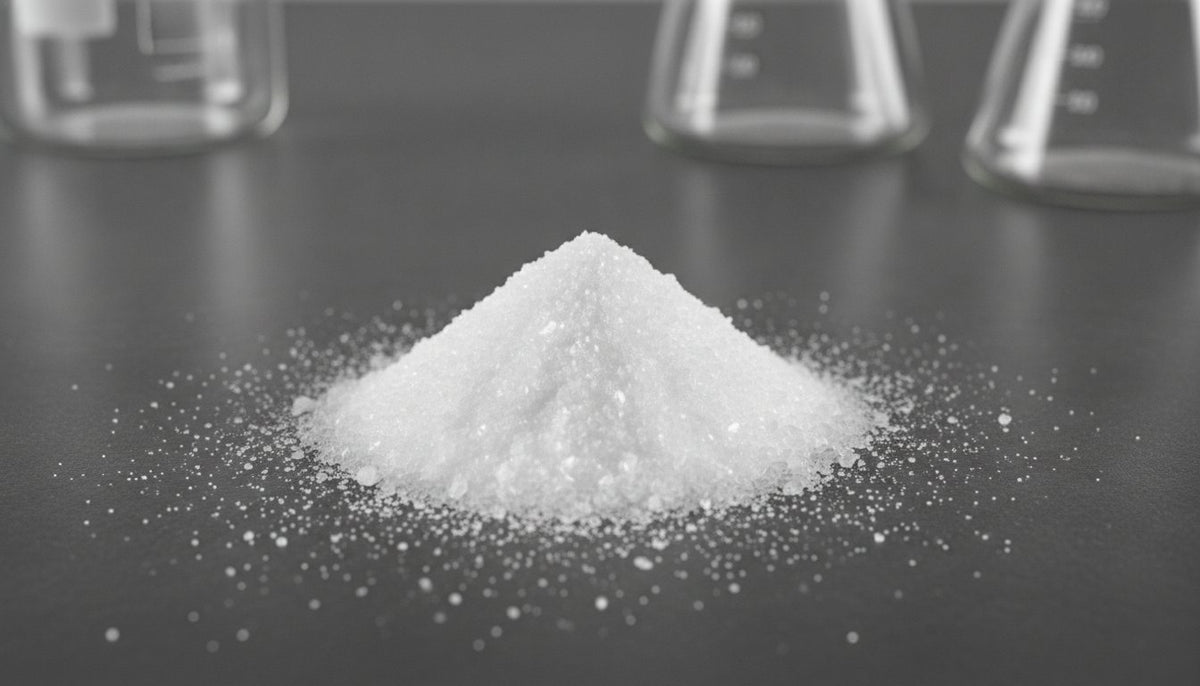
Selecting the right isolate requires matching specific chemical profiles to your individual health objectives. High purity dietary supplements offer a level of control that pre-measured capsules simply cannot provide. When you choose a powdered format, you are prioritizing the active compound over the convenience of a pill. This choice demands an understanding of how different crystals behave and how their purity impacts your results. Texture and solubility are silent indicators of quality. A truly pure powder should dissolve predictably without leaving behind the gritty residue often associated with industrial binders.
For those seeking targeted support, niacinamide vitamin b3 powder represents the pinnacle of additive-free nutrition. It provides a concentrated dose without the flushing common in lower-grade niacin products. By integrating these professional-grade isolates into your routine, you ensure that your body receives only the intended nutrient in its most bioavailable form.
Comparing Pure Powders: Mannitol, Inositol, and MSM
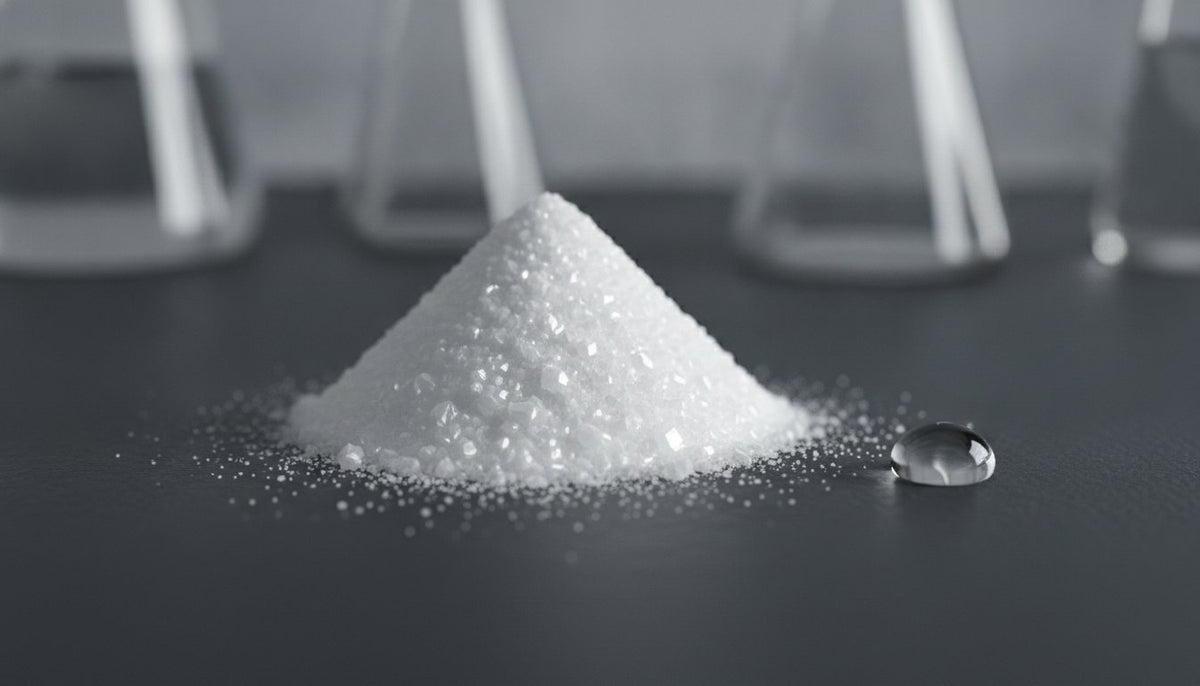
Different isolates serve distinct roles in a clinical wellness regimen. Super Mannitol is highly regarded for its osmotic properties and is produced to meet strict lab-grade purity expectations. It should be free from the off-white tint often found in food-grade alternatives. When evaluating premium msm powder, the crystalline structure is the primary indicator of excellence. Large, translucent crystals suggest a slow, careful purification process. This is superior to the fine, dusty powders produced by high-heat industrial drying. Additionally, Super Lactose offers a versatile and pure option for those needing a clean dietary base or a precise food-grade carrier without secondary contaminants.
Powder vs. Capsule: Efficiency and Control
The move toward powdered isolates is driven by the need for precision. Powders allow for incremental dosage adjustments that capsules cannot accommodate. This is essential for personalized nutrition plans where a standard 500mg dose may not be appropriate. Beyond dosage control, buying high purity dietary supplements in bulk is significantly more cost-effective. You are paying for the nutrient itself rather than the manufacturing costs of encapsulation and complex packaging.
Proper handling is vital for maintaining the integrity of these professional powders. Because they lack chemical anti-caking agents, they are more sensitive to environmental moisture. Always store your isolates in a cool, dry environment and use a dedicated, clean measuring tool to prevent cross-contamination. This disciplined approach preserves the lab-grade quality from the first dose to the last. To begin your journey with clinical-grade nutrition, explore our full range of additive-free powders today.
Sunshine Valley: The Clinical Standard for Pure Wellness
Sunshine Valley represents a unique intersection of medical heritage and modern laboratory precision. Established in 1956 by a medical doctor. A brand built on the premise that nutritional support should be as pure as pharmaceutical isolates. For decades, our formulations were the preferred choice for Hollywood icons and high-profile clientele who required the highest standards of wellness. These elite users understood that health optimization requires a level of detail that mass-market brands rarely provide. Today, we continue to provide high purity dietary supplements to discerning individuals who prioritize efficacy over manufacturing convenience. Our "Super" range remains a testament to zero-filler manufacturing, ensuring that every serving is purely active and biologically available.
The 1956 Heritage of Quality
The founding principles of Sunshine Valley remain unchanged in 2026. We believe that the absence of undesirable elements is the true measure of a product's worth. Maintaining consistency in premium supplement manufacturing standards for over 70 years has allowed us to refine our purification processes to an elite level. What began as an exclusive insider secret for a select group of health professionals has evolved into a national premium provider. We bridge the gap between traditional reliability and the rigorous demands of contemporary clinical labs. Every batch of Super Lactose or Super Mannitol is a result of decades of institutional knowledge paired with modern analytical testing. This ensures that our powders meet the highest assay requirements, providing a stable and trustworthy foundation for your nutritional regimen.
Why Choose Sunshine Valley Powders?
The technical advantage of our products lies in their specialized crystalline structures. Unlike the fine, dusty powders found in mass-market retail, our crystals are processed slowly to ensure maximum stability. This meticulous approach to high purity dietary supplements prevents the degradation of active compounds. Our commitment to hygiene and safety is reflected in our strict manufacturing protocols. We utilize dedicated machinery for each product line to prevent cross-contamination. This ensures that isolates like Super MSM and Super Niacinamide remain free from non-functional excipients or industrial residues. Integrating these clinical-grade powders into your daily routine is a straightforward transition. By replacing standard encapsulated vitamins with our pure isolates, you eliminate the digestive burden of synthetic binders. Selecting Sunshine Valley is an investment in a legacy of excellence and a future of optimized health results.
Elevating Your Nutritional Standard
Achieving optimal health results requires moving beyond retail-grade vitamins toward clinical-level precision. You now understand that high purity dietary supplements are defined by what they omit. True wellness support is found in 100% pure powdered isolates that bypass the digestive barriers created by industrial fillers and binders. By prioritizing lab-grade manufacturing and batch-specific documentation, you ensure that every milligram contributes directly to your nutritional goals. This methodical approach to purity is the only way to guarantee maximum bioavailability and metabolic efficiency.
Sunshine Valley remains a disciplined guardian of these standards. Our doctor-founded heritage, established in 1956, is built on a foundation of scientific rigor and additive-free excellence. We provide the same professional-grade solutions once reserved for an elite clientele to the discerning individual today. It's time to experience the difference that pharmaceutical-level purity makes in your daily regimen. Choosing a legacy of quality means choosing results over manufacturing convenience.
Browse the Sunshine Valley range of high-purity powdered supplements and take the next step in your health journey. Your commitment to better health begins with the cleanest possible ingredients.
Frequently Asked Questions
What exactly does "high purity" mean in dietary supplements?
"High purity" refers to a product's chemical consistency and the total exclusion of secondary substances like binders or flow agents. In the context of high purity dietary supplements, this means the active compound makes up the entirety of the powder's weight. It requires rigorous laboratory refinement to achieve a specific molecular profile. This ensures that every milligram delivered is functional and free from industrial byproducts that could interfere with metabolic absorption or biological efficacy.
Are powdered supplements better than capsules for absorption?
Powdered delivery systems are generally more efficient than capsules because they bypass the physical breakdown process. A capsule shell must be dissolved by gastric acid before the body can access the nutrients. Pure powders like Super Inositol enter the digestive tract ready for immediate uptake. This direct pathway leads to faster nutrient absorption and allows for precise dosage adjustments. It's a preferred method for those seeking maximum bioavailability without the chemical load of synthetic capsule materials.
How can I tell if my supplements contain hidden fillers?
You can identify hidden additives by examining the "Other Ingredients" section on the product label. Mass-market vitamins often include magnesium stearate, silicon dioxide, or rice flour as binders and flow agents. High purity dietary supplements from Sunshine Valley contain no such non-nutritive additives. If a label lists anything beyond the active nutrient, the product's concentration has been diluted. Selecting additive-free powders ensures your body receives only the intended nutritional support without industrial fillers.
What is the difference between food-grade and lab-grade Mannitol?
The primary difference lies in the measurement of impurities in parts per million (PPM). Food-grade Mannitol is processed for general culinary safety, allowing for a broader range of non-active elements. Lab-grade Super Mannitol adheres to a much stricter clinical protocol. It undergoes advanced filtration and crystallization to achieve a singular molecular profile. This results in a higher assay percentage and a more consistent crystalline structure, which is essential for professional-grade nutritional applications.
Is Super MSM different from standard MSM found in stores?
Super MSM is distinguished by its specialized crystalline structure and the total absence of industrial lubricants. Standard store-bought MSM often contains anti-caking agents to facilitate high-speed automated bottling. Our Super MSM is manufactured in a dedicated hygienic facility to prevent cross-contamination. This ensures a 100% pure isolate that maintains its chemical integrity. The "Super" prefix acts as our mark of clinical excellence, signifying a product that meets the rigorous standards of professional health practitioners.
Why does Sunshine Valley emphasize its 1956 founding?
Our 1956 founding establishes a legacy of reliability and medical expertise. Sunshine Valley was founded by a medical doctor with a commitment to pure formulations. For over 70 years, we've maintained these clinical standards, serving a prestigious clientele that included Hollywood icons. This history reflects our stability in an industry often characterized by fleeting trends. It reassures our customers that they're receiving a product backed by decades of institutional knowledge and consistent manufacturing rigor.
Do high-purity supplements require special storage conditions?
High-purity powders are more sensitive to environmental moisture because they lack chemical anti-caking agents. To preserve their clinical integrity, they should be stored in a cool, dry environment away from direct sunlight. It's essential to keep the container tightly sealed when not in use. Using a clean, dry measuring tool prevents the introduction of contaminants. These simple storage practices ensure that your lab-grade isolates remain stable and effective from the first dose to the last.
How do I verify the purity of a supplement before buying?
The most reliable way to verify quality is by requesting a batch-specific Certificate of Analysis (COA). A transparent brand will provide documentation that reveals the purity percentage and testing results for heavy metals or microbial activity. You should look for an assay of 99% or higher. Checking for CGMP compliance and ISO certifications also provides a layer of safety. These documents confirm that the manufacturer adheres to the strict protocols required for professional-grade nutritional support.

Leave a comment
This site is protected by hCaptcha and the hCaptcha Privacy Policy and Terms of Service apply.