



Most consumers believe "food grade" represents the peak of safety, yet for clinical applications, it is often just the baseline. You deserve a supplement that prioritizes your health without the risk of hidden fillers or heavy metal contamination. It's natural to feel overwhelmed by technical jargon and conflicting labels. When you seek lab grade mannitol powder, you're looking for more than a sweetener; you're looking for a disciplined standard of excellence.
This guide clarifies the critical differences between laboratory-grade and standard options to ensure your regimen meets the highest clinical requirements. Since 1956, Sunshine Valley has maintained a legacy of professional reliability, providing excipient-free solutions like Super Mannitol to those who demand precision. We'll explore the specific USP and FCC standards that define true purity, the necessity of a Certificate of Analysis, and how to verify that your manufacturing source is truly elite. You'll gain the confidence to choose a product that is as clean as it is effective.
Key Takeaways
- Understand why lab grade mannitol powder surpasses food-grade standards by eliminating the foreign matter and fillers common in bulk consumption products.
- Identify the essential metrics in a Certificate of Analysis, including assay percentage and melting point, to verify clinical purity levels.
- Learn how the molecular structure of pure mannitol ensures a stable, isomer-free supplement suitable for sensitive health regimens.
- Master the solubility and taste profile of pure mannitol to integrate it into your routine without glycemic spikes or mixing issues.
- Discover why a heritage-backed manufacturing process, such as the one established by Sunshine Valley in 1956, provides the ultimate safeguard for supplement quality.
What is Lab Grade Mannitol Powder?
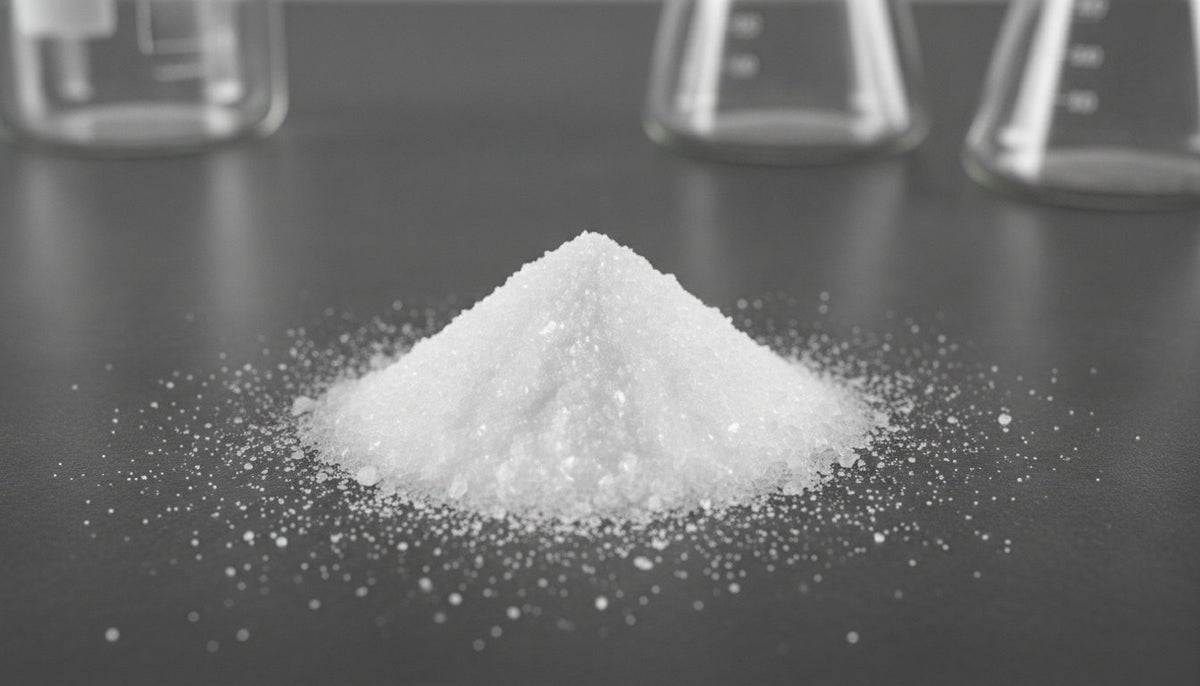
Lab grade mannitol powder is a highly refined polyol, or sugar alcohol, engineered to meet exacting laboratory specifications. Unlike standard industrial versions, this grade undergoes rigorous filtration to ensure it's free from the biological and chemical impurities found in lower tiers. It's defined by its crystalline precision and a total absence of fillers. This level of refinement is essential for applications where even a trace amount of contamination could compromise a final formulation. It isn't just about meeting a label; it's about ensuring the substance is chemically inert and physically consistent.
At its core, the chemical formula C6H14O6 must remain stable and entirely free from unwanted isomers. This molecular stability is vital for consistent results in sensitive clinical environments. To understand the foundational properties of this substance, one might ask, What is Mannitol? and how does it differ from other carbohydrates? It presents as an odorless, white crystalline powder. It's recognized for a distinctive cool, sweet taste and a high level of thermal stability. These characteristics make it a versatile choice for both laboratory research and high-end supplement production.
To better understand the manufacturing standards of high-purity mannitol, watch this overview of certified production processes:
The Role of Mannitol in Modern Science
Precision is the baseline in clinical settings. Scientists utilize lab grade mannitol powder as a diagnostic tool, often for assessing kidney function or as an osmotic diuretic. Its secondary function as a stabilizer in sensitive pharmaceutical formulations is equally critical. Its inert nature prevents interaction with active ingredients, preserving the integrity of complex mixtures. This reliability allows for repeatable outcomes in research and manufacturing. High-purity batches ensure that variables like moisture content and melting point don't fluctuate between production runs; this provides a level of predictability that food-grade alternatives cannot match.
Purity Tiers: From Technical to Super Grade
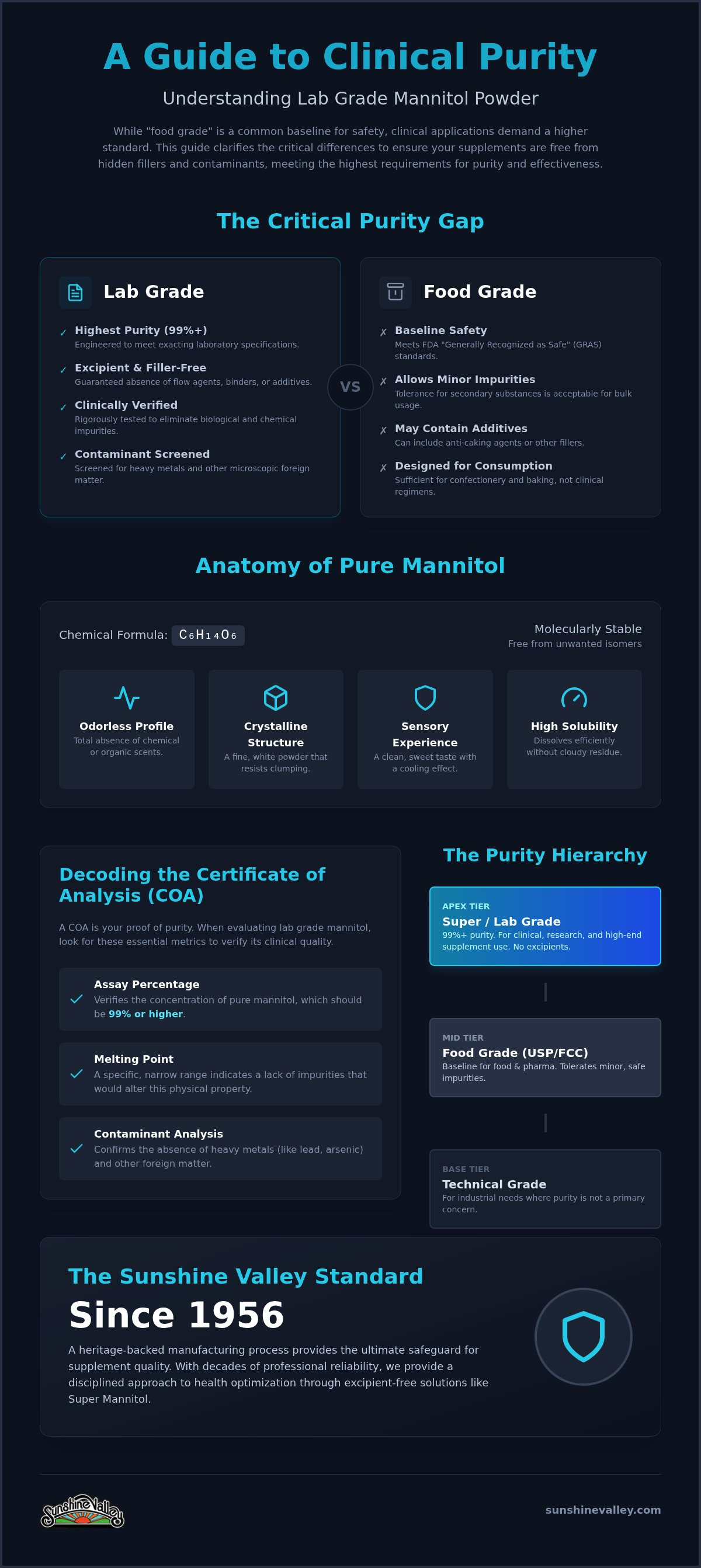
Chemical purity exists on a clear hierarchy. Technical grades serve industrial needs where impurities are tolerable, while USP and FCC grades meet the baseline for food and pharmaceutical requirements. Super Mannitol represents the apex of this progression. Achieving a 99%+ purity rating is not a mere marketing claim; it's a verifiable metric of quality that has been the standard at Sunshine Valley since 1956. For the discerning individual, this tier ensures a supplement free from excipients, flow agents, and metallic contaminants. This prestigious lineage of manufacturing provides a disciplined approach to health optimization.
Physical characteristics of high-tier mannitol include:
- Odorless Profile: Total absence of chemical or organic scents.
- Crystalline Structure: A fine, white powder that resists clumping and maintains uniformity.
- Sensory Experience: A clean, sweet taste with a notable cooling effect on the palate.
- Solubility: Efficient dissolution in aqueous solutions without leaving a cloudy residue.
Lab Grade vs. Food Grade: The Critical Purity Gap
Distinguishing between chemical grades is essential for anyone prioritizing clinical purity in their health regimen. Food grade mannitol is sufficient for the confectionery and baking industries, but it lacks the molecular precision required for high-level wellness applications. The primary difference lies in the tolerance for secondary substances. While FDA regulations for mannitol outline safety parameters for general consumption, these standards are designed for bulk usage where minor impurities are acceptable. Lab grade mannitol powder is manufactured under far more stringent protocols to exclude the microscopic foreign matter that food-grade processing often overlooks.
Many lower-grade powders rely on the "Generally Recognized as Safe" (GRAS) designation. While these substances are deemed safe for the general population, they often include additives that sensitive individuals or those following strict clinical protocols should avoid. Lab-grade standards focus on the absolute absence of these foreign elements. This disciplined approach to manufacturing ensures that you aren't consuming cumulative amounts of heavy metals or industrial byproducts that can bypass standard food-grade testing.
Excipients and Fillers: What’s Hiding in Food Grade?
Standard food-grade powders frequently contain anti-caking agents like silicon dioxide or magnesium stearate. These excipients are added to prevent clumping during high-volume packaging and to speed up production lines. Unfortunately, these bulk fillers dilute the active ingredient and can introduce unwanted variables into your metabolic process. Laboratory-grade crystals offer a distinct "clean label" advantage. You receive the pure molecule without unnecessary synthetic baggage. This level of refinement ensures the body processes the polyol efficiently, without the interference of flow agents that may cause digestive discomfort or allergic reactions in sensitive users.
Manufacturing Environment and Cross-Contamination
The facility where a supplement is produced is as critical as the ingredient itself. Food-grade processing often occurs in high-volume plants that handle a variety of agricultural products. This environment increases the risk of microbial presence and cross-contamination from allergens. Clinical-grade hygienic environments operate under much stricter sterilization protocols. Sunshine Valley maintains a rigorous commitment to hygienic supplement manufacturing, ensuring every batch meets the institutional trust levels we've upheld since 1956. By choosing a product manufactured to these standards, you eliminate the uncertainty associated with commercial food facilities.
Selecting a high-tier option like Super Mannitol provides the peace of mind that comes from verifiable purity. It's the logical choice for those who refuse to compromise on the quality of their intake.
Deciphering the Certificate of Analysis (COA)
A Certificate of Analysis (COA) is the definitive identity card for any batch of lab grade mannitol powder. It isn't a mere formality; it's a non-negotiable document that verifies the substance's chemical profile. Without it, a manufacturer's claims of purity are effectively unsubstantiated. For those seeking clinical-grade excellence, the COA provides the transparency needed to ensure the lab grade mannitol powder is free from undesirable excipients or industrial byproducts.
When you review a COA, you should prioritize three primary metrics to verify quality:
- Assay Percentage: This measures the actual mannitol content. USP standards require an assay between 97.0% and 102.0% on an anhydrous basis.
- Moisture Content: Excessive moisture can lead to clumping and chemical degradation. High-tier powders maintain low moisture levels to ensure long-term stability.
- Melting Point: Mannitol has a specific melting range. Deviations from this range indicate the presence of impurities or different isomers that could alter the product's effectiveness.
Beyond these chemical markers, the COA must document the absence of toxic elements. This includes strict limits on heavy metals such as lead, mercury, arsenic, and cadmium. Microbial testing is equally vital. A professional lab report will explicitly confirm the absence of pathogens like E. coli and Salmonella. This level of detail is what separates a disciplined, high-tier manufacturer from a high-volume commercial supplier.
Understanding USP and NF Standards
The United States Pharmacopeia (USP) mark provides a guarantee of quality, strength, and purity. While "Technical Grade" is often used in industrial settings where purity is less critical, "Pharmacopeia Grade" ensures the substance is safe for clinical use. These mannitol powder quality standards act as a protective barrier for the consumer. They dictate the exact testing methods and acceptable limits for every batch. Since 1956, Sunshine Valley has leveraged these standards to provide Super Mannitol, a product that reflects our prestigious level of reliability.
Verifying the Batch Number
General product testing is insufficient for clinical applications. You must verify that the COA corresponds to the specific batch number on your packaging. Each production run has unique characteristics; batch-specific testing is the only way to ensure current quality. If a provider can't supply a batch-specific COA, it's a significant red flag. Other warning signs include vague testing dates, missing laboratory signatures, or photocopied documents where the batch number appears altered. Requesting this documentation from a premium provider should be a straightforward process. It reflects their commitment to transparency and manufacturing precision.
Practical Applications: How to Use Pure Mannitol Powder
Utilizing lab grade mannitol powder effectively requires a disciplined approach to preparation and storage. In its pure form, mannitol is an osmotic polyol with unique solubility characteristics. It dissolves efficiently in aqueous solutions, though it behaves differently than standard table sugar. While it integrates well with water, it may require gentle agitation in colder liquids. Its taste profile is a significant advantage for those managing metabolic health. It provides a clean, mild sweetness without the rapid glycemic spike associated with traditional carbohydrates.
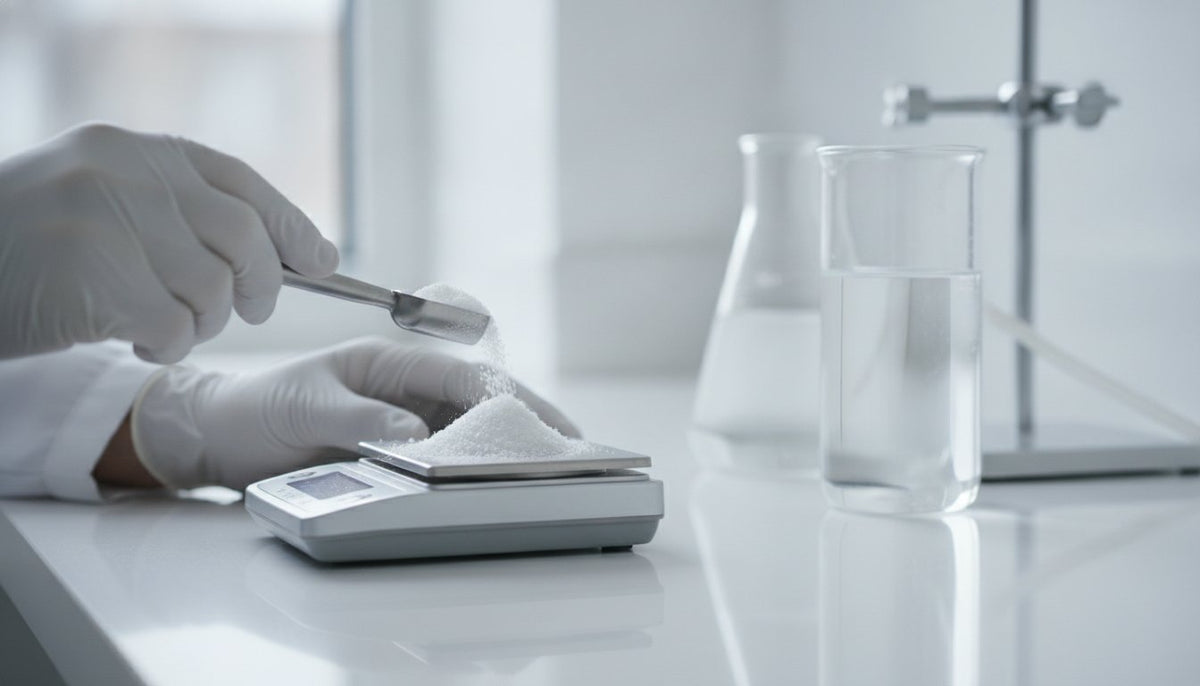
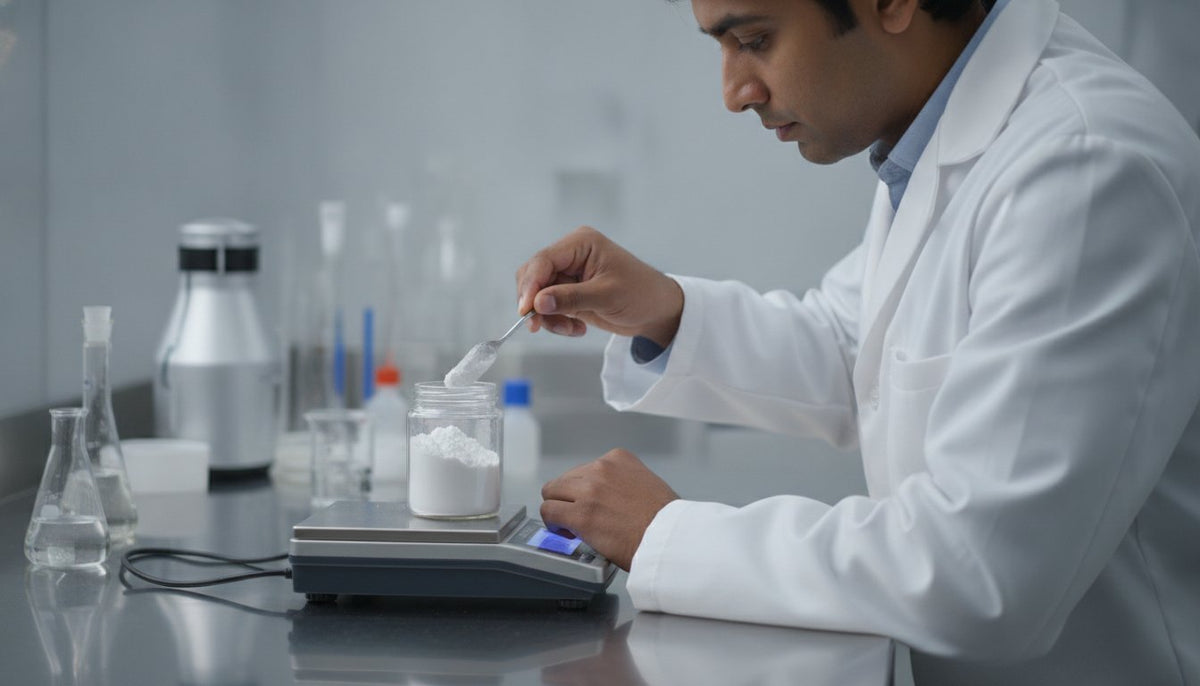
Precision is paramount when handling clinical-grade substances. A standard kitchen teaspoon is an unreliable measurement tool for high-purity powders. Variations in powder density and packing can lead to inconsistent intake. For reliable results, utilize a calibrated digital scale to measure your dosage in milligrams or grams. This ensures your wellness routine remains precise and repeatable, mirroring the standards of the laboratories where the powder was refined.
Storage protocols are equally critical. Because lab grade mannitol powder contains no anti-caking agents or synthetic flow enhancers, it's naturally hygroscopic. It will absorb moisture from the air, leading to clumping if left exposed. Maintain the powder in a cool, dry environment. Always ensure the container is hermetically sealed after each use to preserve the crystalline integrity of the product.
Mixing and Preparation
Optimal dissolution occurs in liquids at room temperature or slightly warmed. It doesn't require boiling water, as extreme heat is unnecessary for this stable molecule. You can effectively combine mannitol with other high-purity offerings to customize your nutritional support. For instance, it pairs seamlessly with Super Niacinamide for a comprehensive wellness stack. Always use non-reactive containers. Glass or high-quality, BPA-free materials are the preferred choice to prevent chemical leaching and maintain the "Super" tier purity of your mixture.
Dosage and Consistency
Establishing a routine is essential for long-term results. Begin with small increments to assess your individual tolerance and metabolic response. Daily consistency allows the body to adapt to the osmotic properties of the polyol. While mannitol is a stable and reliable supplement, you should always consult with a healthcare professional before initiating a specific wellness protocol. This collaborative approach ensures your use of high-purity powders aligns with your broader health objectives.
To experience the difference of a supplement free from industrial fillers, integrate Super Mannitol into your daily health regimen today.
Super Mannitol: The Sunshine Valley Standard Since 1956
Sunshine Valley represents a legacy of clinical-grade excellence that began in 1956. While the supplement industry has seen countless trends rise and fall, our commitment to purity has remained a constant. We don't just supply a product; we provide a disciplined standard of quality that has served as a benchmark for 70 years. Our Super Mannitol is the definitive implementation of lab grade mannitol powder. It's engineered for those who refuse to accept the compromises found in mass-market offerings. This product remains a staple for the most discerning customers who prioritize verifiable results over flashy marketing.
Our "No Fillers" guarantee is the cornerstone of our operation. In practice, 100% purity means the total absence of excipients, flow agents, and synthetic additives. Many commercial manufacturers include these substances to simplify the packaging process. We reject this approach. By marrying traditional reliability with state-of-the-art manufacturing, we ensure that every crystal of our lab grade mannitol powder meets the highest tiers of refinement. It's a marriage of heritage wisdom and modern technological sophistication. This approach guarantees a substance that is chemically stable and biologically clean.
A Heritage of Trust
Our founding in 1956 established a prestigious lineage that continues to guide our operations today. Sunshine Valley originally gained a reputation for excellence by serving a high-profile Hollywood clientele who demanded the absolute best in wellness support. This history informs our modern hygiene protocols. We maintain a single, high-tier product line rather than diluting our focus across hundreds of generic SKUs. This discipline allows us to oversee every aspect of production with clinical precision. It's an "insider" level of quality that was once reserved for the elite, now accessible to any individual who values institutional trust.
The Clinical Advantage
The manufacturing process for Super Mannitol exceeds standard "food grade" requirements at every stage. We operate within clinical-grade hygienic environments to eliminate the risks of cross-contamination common in high-volume food plants. When you buy direct from a heritage manufacturer like Sunshine Valley, you're ensuring the integrity of your supplement. You receive a product that has been handled with the care and expertise that only seven decades of experience can provide. This is the logical choice for those seeking a supplement free from the hidden impurities of industrial-scale manufacturing. Experience the purity of Super Mannitol today and elevate your wellness regimen to a professional standard.
Elevate Your Standards for Pure Wellness
Selecting the right supplement requires a commitment to scientific rigor and an eye for detail. You've learned that food-grade standards focus on bulk safety, while true lab grade mannitol powder demands the absolute absence of foreign matter. By prioritizing batch-specific testing and understanding the metrics within a Certificate of Analysis, you protect your health from cumulative heavy metal exposure and industrial excipients.
Sunshine Valley has served as a disciplined guardian of health since 1956. We don't believe in shortcuts or synthetic flow agents. Our Super Mannitol is defined by its clinical-grade purity and a strict zero fillers guarantee. This approach ensures you receive only the active molecule, processed in a hygienic environment that exceeds standard industry requirements. Trusting a heritage manufacturer means choosing transparency and professional reliability for your daily routine. You deserve a product that mirrors your own commitment to excellence.
Shop Super Mannitol – The Clinical Standard Since 1956
You now have the knowledge to make an informed, health-conscious choice. Start your journey toward a cleaner, more precise wellness protocol today.
Frequently Asked Questions
Is lab grade mannitol powder safe for human consumption?
Lab grade mannitol powder is safe for human consumption when it meets recognized USP or FCC purity standards. The term "lab grade" signifies a level of refinement that exceeds standard industrial applications. It's recognized as safe by the FDA under 21 CFR §180.25. Sunshine Valley has provided these clinical-grade standards since 1956. Always verify that your powder is free from laboratory reagents or non-consumable chemical stabilizers before use in your daily wellness routine.
What is the difference between USP grade and lab grade?
USP grade refers specifically to the United States Pharmacopeia standards, requiring an assay between 97.0% and 102.0%. Lab grade is a general term denoting high-purity chemicals suitable for research. In the context of Super Mannitol, these terms align to ensure a product free from common food-grade contaminants. While USP is a regulatory benchmark, lab grade often implies even more rigorous filtration and testing for foreign matter in a controlled, hygienic environment.
Does pure mannitol powder contain any additives or flow agents?
Premium offerings like Super Mannitol contain zero additives, flow agents, or anti-caking substances. Many commercial food-grade powders include silicon dioxide or magnesium stearate to prevent clumping during high-speed packaging. These excipients can interfere with the purity of a clinical regimen. By choosing a heritage brand that prioritizes 100% purity, you ensure your intake remains free from synthetic baggage. This "clean label" approach is the baseline for professional-grade health optimization and safe consumption.
How should I store my mannitol powder to prevent clumping?
Store your powder in a cool, dry environment and keep the container hermetically sealed. Because pure mannitol is naturally hygroscopic, it absorbs moisture from the air quite easily. Without synthetic anti-caking agents to keep the crystals separate, the powder can clump if exposed to humidity. Using a glass or high-quality BPA-free container helps maintain the product's integrity. Proper storage ensures the crystalline structure remains stable for its typical 24 to 36-month shelf life.
Can I use mannitol powder as a sugar substitute in baking?
You can use it as a sugar substitute, though it's approximately 50% to 70% as sweet as sucrose. It's highly heat-stable, making it suitable for various culinary applications. However, lab grade mannitol powder is typically reserved for clinical or diagnostic purposes rather than bulk baking. It provides a distinct cooling sensation on the palate and a clean sweetness without a significant glycemic spike. Be mindful of its osmotic effects, as high intake might lead to digestive sensitivity.
What should I look for on a Mannitol Certificate of Analysis (COA)?
Focus on the assay percentage, which should fall within the 97.0% to 102.0% range on an anhydrous basis. The document should also confirm the absence of toxic heavy metals like lead, mercury, and arsenic. Verify that microbial testing has cleared the batch of E. coli and Salmonella. Finally, ensure the batch number matches your packaging and a professional laboratory signature is present. These metrics are the baseline for verifying clinical-grade quality.
Why is lab grade mannitol more expensive than food grade?
The higher cost reflects the rigorous refinement processes and specialized testing required to reach clinical purity tiers. Food-grade mannitol is produced in massive quantities for the confectionery industry, where minor impurities are tolerable. Lab-grade production occurs in smaller, highly controlled batches within sterile environments. Every batch undergoes extensive validation to ensure it's free from excipients. This investment in manufacturing precision and institutional trust ensures a superior product that meets the most demanding health standards.
How do I know if my mannitol powder is truly pure?
True purity is confirmed through a batch-specific COA and physical characteristics. Pure mannitol should be an odorless, white crystalline powder with a clean, sweet taste and a notable cooling effect. When dissolved in water, it should create a clear solution without cloudiness or residue. Sunshine Valley’s Super Mannitol has maintained these standards since 1956, providing a verifiable level of excellence. If a product contains flow agents or fillers, you'll often notice a persistent chemical scent.

Leave a comment
This site is protected by hCaptcha and the hCaptcha Privacy Policy and Terms of Service apply.