




Skin elasticity doesn’t depend on one “firming” product. To understand how to improve skin elasticity naturally, focus on daily sun protection, a balanced diet, hydration, movement, and gentle skin care; aging and UV exposure can affect the collagen and elastin that help skin stretch and recoil. Broad-spectrum sunscreen with SPF 30 or higher is a practical daily step to limit ongoing sun damage.
If your skin feels less supple than before, the change can be frustrating. Age, sun exposure, smoking, and weight changes can all play a part. Everyday habits may support skin health, but they cannot reverse every cause of laxity. This guide explains how food, sunscreen, essential oils, and skin care fit into a realistic routine, what these steps can and cannot do, and how to set sensible expectations.
Key Takeaways
- Build skin-supportive meals around varied whole foods, including sources of protein, vitamin C, and healthy fats.
- Make broad-spectrum SPF 30 or higher part of your daily sun-protection routine to help limit UV-related skin damage.
- Use gentle, consistent skin care to support hydration, and introduce active ingredients gradually to reduce irritation.
- Set realistic expectations: daily habits can support skin health, but they may not fully address substantial skin laxity.
- Learn how age, sun exposure, and changes in weight can influence skin elasticity and shape the habits that matter most.
1. How important is diet for minimizing skin laxity?
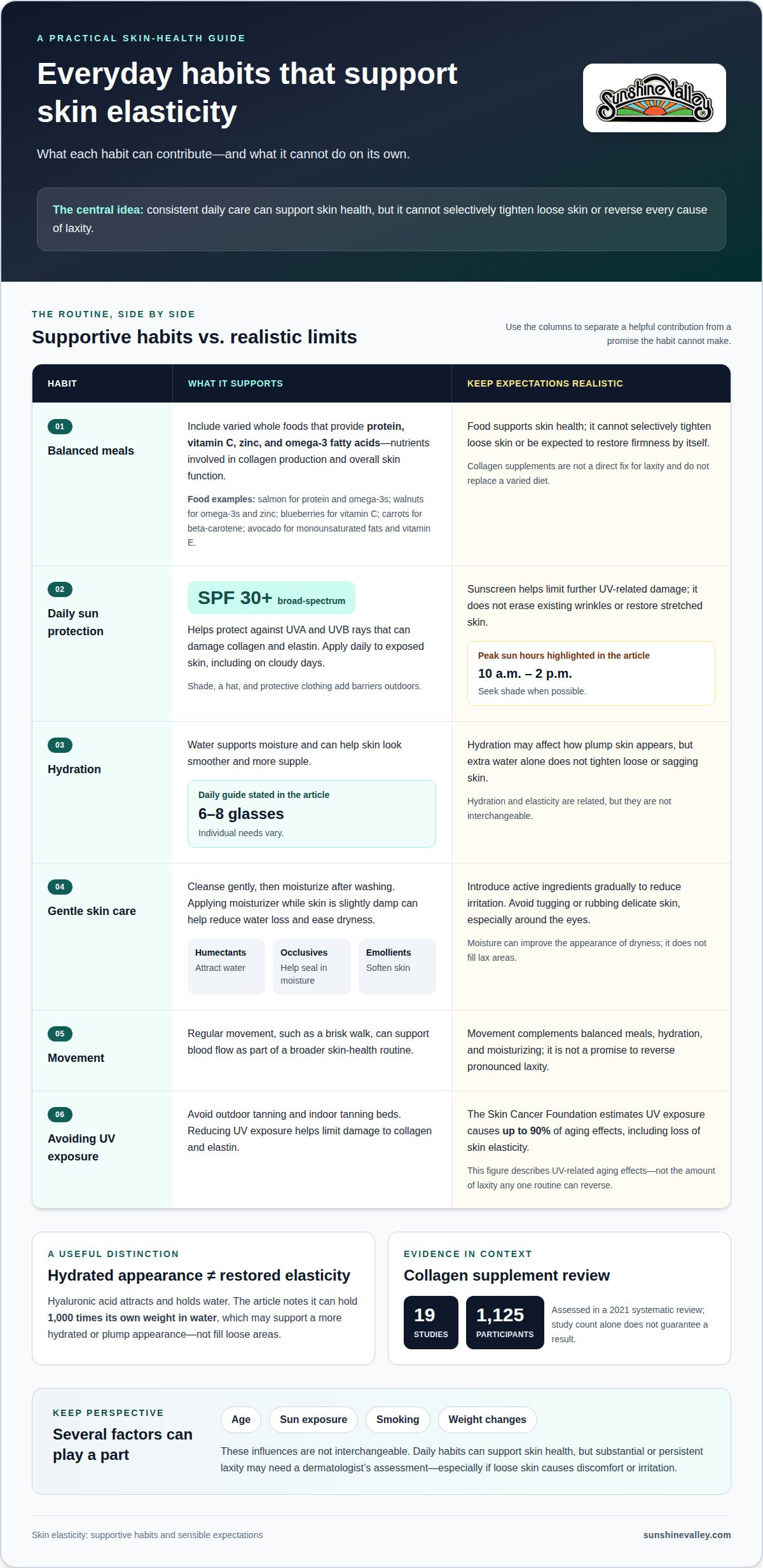
Diet supports skin health by supplying nutrients used to maintain collagen and skin structure. It cannot selectively tighten loose skin, but regular meals can provide protein, vitamin C, zinc, and omega-3 fatty acids. These nutrients support natural collagen production and overall skin function. For example, salmon provides protein and omega-3 fatty acids, while walnuts add omega-3s and zinc. Pairing a protein source with colorful vegetables makes a practical, balanced meal.
Choose a variety of foods instead of relying on one ingredient. Blueberries provide vitamin C and anthocyanins, while carrots contain beta-carotene, which the body converts into vitamin A. Avocado supplies monounsaturated fats and vitamin E. Add blueberries to oatmeal, include carrots with lunch, or combine avocado, leafy greens, and citrus in a salad. These foods contribute useful nutrients, but food alone cannot be expected to restore firmness.
Collagen supplements are another area of interest, but a study count does not establish a guaranteed result. Authors of the 2021 systematic review assessed oral collagen supplements in 19 studies involving 1,125 participants. Collagen provides structure and support, while elastin helps skin stretch and recoil. A supplement cannot replace a varied diet, and collagen intake should not be treated as a direct fix for laxity. Consider the evidence carefully alongside your overall eating pattern.
Omega-3 fatty acids support skin health, and fatty fish such as salmon is one food source. Pair grilled or baked salmon with antioxidant-rich vegetables for a straightforward meal. Hydration also matters: drinking water helps skin retain moisture and remain supple. Yet water is not a direct treatment for sagging or loose skin. Hydration can affect how smooth and plump skin appears, but it does not rebuild stretched tissue.
Hyaluronic acid attracts and holds water, which can support skin hydration. It can hold 1,000 times its own weight in water. That water-binding action may help skin look more hydrated or plump; it does not fill lax areas. This distinction matters when choosing products or supplements. A more hydrated appearance can contribute to a youthful look, but hydration and elasticity are related, not interchangeable.
Keep your nighttime skin care simple and consistent. After cleansing or bathing, apply moisturizer to help reduce water loss and ease dryness. Humectants attract water, occlusives help seal in moisture, and emollients soften skin. For example, choose a moisturizer containing a humectant and apply it while your skin is still slightly damp. Avoid tugging, especially around the eyes, where repeated pulling can strain delicate skin.
Regular movement can support blood flow as part of a broader skin-health routine. A brisk walk or other activity can complement balanced meals, hydration, and nighttime moisturizing. These habits support general wellness and skin care, but they do not promise to reverse pronounced laxity.
See a dermatologist if loose skin causes discomfort or irritation, or if you want an assessment of persistent sagging. A dermatologist can evaluate the affected area and discuss whether lifestyle care is appropriate for your concern.
2. Is broad-spectrum sunscreen good for the skin?
Yes. Broad-spectrum sunscreen with SPF 30 or higher helps protect against UVA and UVB rays. These forms of ultraviolet radiation can damage collagen and elastin, the proteins that support skin structure and recoil. Apply sunscreen every day to exposed skin, even when clouds soften the sunlight. This steady habit helps limit ongoing UV-related loss of elasticity and premature photoaging.
Make sun protection a routine, not a response to a sunny forecast. Add a broad-spectrum SPF 30 or higher product to your morning skin care, then cover exposed areas before spending time outdoors. A hat, shade, and protective clothing offer additional barriers. Avoid outdoor tanning and indoor tanning beds, which can damage skin and raise skin cancer concerns. These steps address exposure that contributes to wrinkles and uneven texture.
Timing can help reduce direct exposure. The guidance in this article identifies 10 a.m. to 2 p.m. as peak sun hours, so seek shade during that period when possible. UV rays can break down collagen fibers and disrupt elastin, gradually affecting firmness. The Skin Cancer Foundation estimates that UV exposure causes up to 90% of aging effects, including loss of skin elasticity. Sun protection helps limit this preventable source of skin damage.
Nutrition supports skin health alongside sunscreen, but it cannot replace it. Protein provides amino acids used to make skin proteins, while vitamin C supports natural collagen production. Include protein and vitamin C sources in a varied eating pattern. Water also supports moisture: the daily guide recommends drinking 6-8 glasses throughout the day. Individual needs vary, and extra water alone won’t tighten loose skin.
Omega-3 fatty acids fit into this broader approach to skin care. Include foods that provide them as part of balanced meals, while treating sun protection as a separate daily priority. Smoking can reduce collagen production and damage elastin fibers. Quitting helps reduce ongoing cigarette-related skin damage. These habits address different influences on skin, rather than acting as interchangeable fixes.
Keep the rest of your routine straightforward: cleanse gently, moisturize after washing, and avoid pulling or rubbing delicate areas. If you use retinol, follow the product directions and maintain daily sun protection. Sunscreen does not erase existing wrinkles or restore stretched skin. Its value lies in consistent prevention: it helps protect collagen and elastin from further UV-related damage.
Think of sunscreen as one part of a practical routine: apply broad-spectrum SPF 30 or higher daily, reduce exposure during peak hours, and use shade or clothing outdoors. Pair these steps with balanced nutrition and smoking cessation where relevant. That combination supports skin health while addressing both UV exposure and everyday factors linked to skin structure.
3. Can essential oils help the skin?
Essential oils can add fragrance to skin care, but they are not the same as ingredients studied for hydration or collagen support. When choosing products for fine lines, sagging, and skin aging, consider what each ingredient is intended to do. Hyaluronic acid attracts water and can make skin look more hydrated or plump. That visible effect is different from restoring stretched skin or rebuilding its supporting fibers.
Topical hyaluronic acid is commonly used in serums and moisturizers. Apply it to clean skin, then follow with moisturizer to help reduce water loss. The other ingredients in the formula matter too: humectants attract water, while occlusives help seal in moisture. Hydrated skin may look smoother, but hyaluronic acid does not fill loose areas or replace collagen and elastin. Think of it as a hydration step, not a lifting treatment.
Vitamin C has a different role in skin care. It is commonly discussed for antioxidant support and its relationship to collagen production. A vitamin C serum can fit into a morning routine beneath moisturizer and sunscreen. Introduce one new product at a time and follow its label directions. If the formula causes persistent discomfort, stop using it rather than adding more active products.
Genistein is a soy isoflavone that may appear in topical formulas. It is not interchangeable with hyaluronic acid: genistein is a distinct plant compound, while hyaluronic acid is valued for binding water. Read the ingredient list and directions to understand what a formula contains. Do not assume that combining genistein and hyaluronic acid will produce a particular change in firmness or sagging.
Essential oils have a limited, careful place in this discussion. Their presence can signal a fragranced formula, not a demonstrated elasticity benefit. A scented oil blend is not a replacement for sunscreen, moisturizer, or a vitamin C product. If you choose a formula containing essential oils, apply it as directed and stop if your skin reacts. Keep the rest of your routine simple so you can identify which product affects your skin.
For a practical routine, use a gentle cleanser, apply one targeted serum, and finish with moisturizer. In the morning, vitamin C can go beneath broad-spectrum sunscreen. At night, topical hyaluronic acid can support hydration under moisturizer. Avoid layering several new products at once, which makes irritation harder to trace. Fine lines partly caused by dryness may look less noticeable when skin is hydrated, but lasting laxity involves deeper structural changes.
Choose ingredients for the role they can serve. Hyaluronic acid supports surface hydration, vitamin C offers antioxidant support, and essential oils mainly add fragrance. None should be presented as a standalone way to reverse sagging or restore damaged fibers. Consistent sun protection and straightforward skin care are more useful foundations than relying on an aromatic blend for elasticity.
4. Skincare routines and topical products
A useful skin-care routine is consistent, gentle, and easy to follow. In the morning, cleanse without scrubbing, apply a targeted product, then use moisturizer and broad-spectrum sunscreen. At night, cleanse again and apply moisturizer after any treatment product. Keeping the same sequence helps you notice how your skin responds and identify products that cause dryness or irritation.
Retinol is one option for people addressing visible signs of aging. Some people use products containing up to 0.3% retinol, which generally causes less irritation than more potent retinoids. Start with retinol two to three nights a week, then gradually increase use to nightly if tolerated. Follow the product directions, and avoid adding several new active ingredients at once. A measured introduction makes changes in skin comfort easier to track.
Peptide-containing products are another topical option. The guidance here recommends using them daily to support skin firmness and health. Check the label for peptides and follow the application directions. A peptide serum can go after cleansing and before moisturizer. It belongs in a consistent routine, not in place of sun protection or gentle cleansing. Focus expectations on supporting skin care, not promising a lifted appearance.
Moisturizer can ease dryness that makes skin feel rough or look less smooth. Look for formulas with ingredients that serve different roles: humectants attract water, occlusives seal in moisture, and emollients soften skin. Apply moisturizer after cleansing or bathing, particularly when your skin feels dry. Collagen-containing topical products are also used in skin care, but their presence alone does not show that a product will restore elasticity.
Common mistakes include applying retinol too often when starting, layering multiple active products, and rubbing skin vigorously while cleansing. Tugging around the eyes can strain delicate skin structure. Use your fingertips and light pressure instead. If a product causes persistent irritation, pause it and return to a simpler routine. Changing one product at a time makes it easier to distinguish a reaction from ordinary dryness.
Antioxidant ingredients such as vitamin C often feature in skin-health routines. Use one product as directed and pair morning application with sunscreen. You do not need to introduce retinol and vitamin C together; adding them separately makes it easier to assess tolerance. Neither product should be treated as an instant way to stimulate collagen production or erase fine lines.
Give your routine time and consistency before deciding how well it fits your day. Note the products you use, how often you apply them, and any changes in comfort or appearance. Moisturizer may ease dryness, while peptides and retinol have different roles in topical care. Daily sunscreen remains important for limiting UV damage. Together, these steps support skin health without promising to reverse substantial laxity.
5. Realistic expectations for improving skin elasticity
Skin can look smoother and more hydrated without becoming tighter. Collagen provides structure, while elastin helps skin stretch and recoil. Their production declines with age, and appearance also reflects genetics, sun exposure, and how long skin has been stretched. These factors help explain why the same lifestyle routine can lead to different visible results for different people.
Collagen supplements have been studied, but study size alone doesn’t establish a reliable dose or a guaranteed change in elasticity. Authors of the 2021 systematic review included 1,125 participants across 19 studies of oral collagen supplements. Those figures describe the evidence base; they don’t identify one dose that suits everyone or prove that supplementation reverses laxity. Collagen supports skin structure, but supplements aren’t a direct skin-tightening treatment.
Some changes are part of aging. Collagen and elastin production starts to decline in the mid-20s, then decreases by approximately 1–2% per year afterward. During the first five years of menopause, women’s skin loses around 30% of its collagen and elastin production. This gradual shift can affect firmness and contribute to fine lines. Daily habits can support skin health, but they can’t stop every age-related change.
Natural skin-tightening remedies have limits. Moisturizer and hyaluronic acid can improve hydration and make skin look plumper, but they do not fill stretched areas. A balanced diet, regular movement, and sunscreen support skin health but cannot remove substantial excess skin. Significant laxity after weight changes may not respond fully to lifestyle habits, especially when skin has been stretched for a long time.
Set goals around maintenance and appearance, not a promise to restore your skin’s former strength. Use consistent sun protection, a gentle routine, and balanced meals. Avoid tugging skin, particularly around the eyes, because repeated pulling can strain its structure. If a topical product irritates your skin, simplify your routine rather than layering on more treatments. These steps can help limit preventable damage and support a healthier-looking surface.
Track changes under consistent conditions: take a clear photo in similar lighting and note your routine. A single glance cannot distinguish hydration from changes in laxity. Skin elasticity is the ability to stretch and return to shape, while hydration affects surface plumpness. Keeping these outcomes separate helps you judge whether a product improves dryness, smoothness, or the appearance of firmness, without mistaking one for lasting tightening.
Sunshine Valley: Super Mannitol
Sunshine Valley® Super Mannitol is a powdered food supplement for people considering an addition to their broader wellness routine. It is not a topical skin-care step or a skin-tightening treatment, so keep expectations grounded in the habits discussed above. Daily sun protection, balanced meals, and gentle skin care remain separate ways to support skin health.
Consider Sunshine Valley® Super Mannitol as an option when reviewing what fits your general wellness routine, not as a solution for loose skin or reduced elasticity. Sunshine Valley® also offers Super Inositol, Super Lactose, and Super Niacinamide. Choose products according to their intended role and your needs; no supplement replaces sunscreen or consistent skin care.
To learn more about Super Mannitol, visit Sunshine Valley.
Make Your Next Skin-Care Choice With Confidence
If you are considering how to improve skin elasticity naturally, choose sustainable habits and judge progress by skin comfort and appearance, not by a promise of complete tightening. Skin changes over time, so a thoughtful routine is more useful than chasing quick fixes. Keep your next step simple: maintain the care that suits your skin, and add wellness products only if they fit your personal routine.
Sunshine Valley® offers Super Mannitol, Super Inositol, and Super Lactose as part of its supplement range. These products are options for general wellness, not substitutes for skin care or treatments for loose skin. Consider what role a supplement would play before adding it to your routine.
For product information, contact Sunshine Valley today. Continue with steady, informed choices, and give your routine room to support your skin’s health over time.
Frequently Asked Questions
Why does skin elasticity change?
Skin elasticity changes as collagen and elastin production declines with age, and other influences can add to the effect. Genetics, cumulative sun exposure, smoking, and the duration of skin stretching during weight changes all matter. Menopause can also accelerate collagen loss. For example, skin stretched for a long time may not fully return after weight changes. These influences help explain why visible changes differ from person to person.
Can essential oils help the skin?
Essential oils may add fragrance to a routine, but they should not be relied on to restore elasticity. A scented blend is not equivalent to a moisturizer designed to ease dryness or a product with a targeted skin-care ingredient. If you use a fragranced product, follow its label and stop if it irritates your skin. For a simpler approach, choose a moisturizer based on your hydration needs rather than expecting essential oils to tighten sagging areas.
Can natural oils and essential oils promote collagen production?
Do not assume that natural oils or essential oils increase collagen production. Their effects depend on the ingredient and formulation, and fragrance or an oily feel does not demonstrate a collagen benefit. For example, an oil may soften dry-feeling skin, which is different from changing the skin’s supporting structure. Look for a clear purpose in a product, and do not treat an aromatic oil blend as a substitute for sun protection or a consistent skin-care routine.
How do amino acids help reduce sagging skin?
Amino acids are building blocks used to make proteins, including proteins that support skin structure. Dietary protein supplies amino acids, so foods such as fish, beans, and eggs can contribute to a balanced eating pattern. That does not mean amino acids directly tighten loose skin. Think of adequate protein as supporting normal body functions, while recognizing that pronounced laxity can reflect age, genetics, sun exposure, or prolonged stretching.
How important is diet for minimizing skin laxity?
For anyone exploring how to improve skin elasticity naturally, a varied diet is one practical part of overall skin care, not a way to selectively tighten loose areas. Include protein sources and foods with vitamin C, such as beans with vegetables or fish alongside fruit. A varied eating pattern provides nutrients involved in skin structure and general health. Avoid relying on a single “skin food” or supplement as a fix; laxity also depends on age and how long skin was stretched.
How important is skin cell turnover?
Skin cell turnover refers to renewal at the skin’s surface, not restoration of stretched supporting tissue. A topical product such as retinol may be used in routines addressing visible signs of aging, but introduce it gradually and follow its directions. Gentle cleansing and moisturizing help keep the surface comfortable. Do not confuse smoother-looking skin with a lasting change in elasticity, which involves deeper structural proteins.
Is broad-spectrum sunscreen good for the skin?
Yes. Broad-spectrum sunscreen with SPF 30 or higher helps protect against UVA and UVB exposure that can damage collagen and elastin. Limiting this exposure is a practical part of how to improve skin elasticity naturally. Apply sunscreen to exposed skin as part of your morning routine, and use shade or protective clothing outdoors. For example, sunscreen on the face alone leaves other exposed areas without the same protection. Consistent coverage helps limit ongoing UV damage, though it won’t reverse existing laxity.
What contributes to loss of elasticity?
Age, genetics, UV exposure, smoking, and weight changes can all contribute to reduced elasticity. How long skin remains stretched also affects how fully it returns afterward. Smoking can damage elastin fibers, while ultraviolet radiation can harm collagen and elastin. These influences may overlap, so skin changes rarely have just one explanation. Sun protection and avoiding smoking address preventable sources of ongoing damage.


Leave a comment
This site is protected by hCaptcha and the hCaptcha Privacy Policy and Terms of Service apply.