




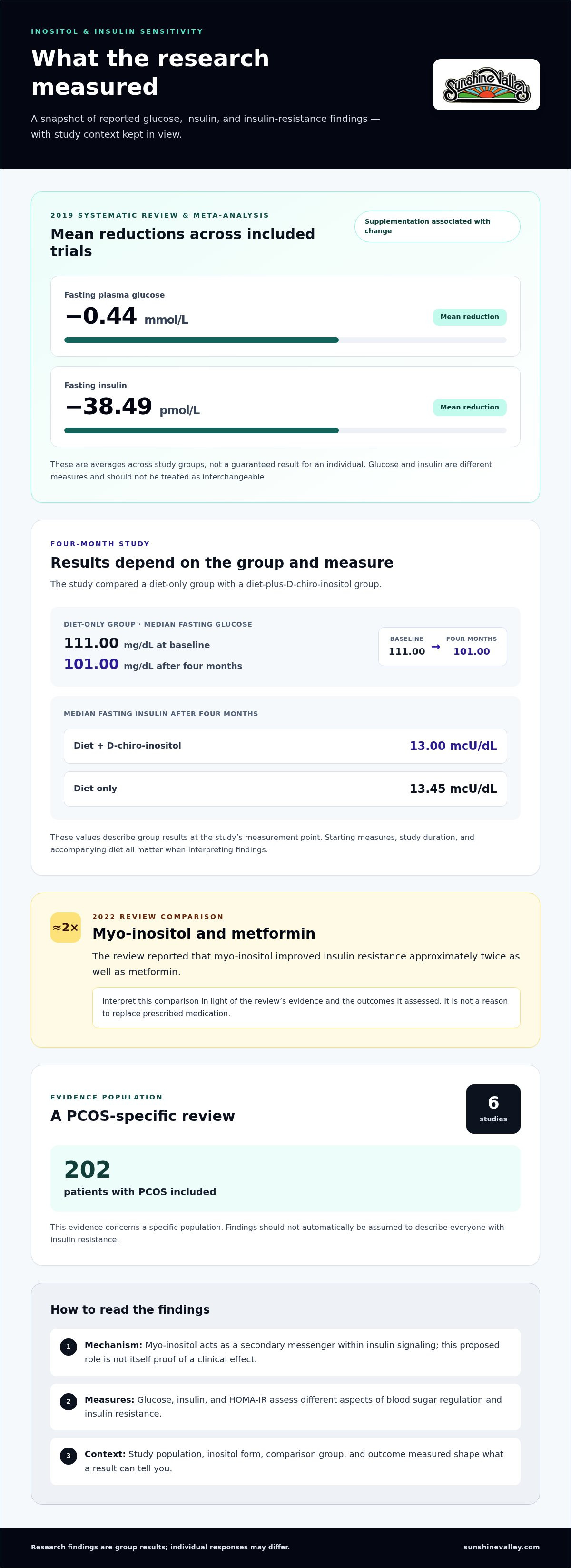
Inositol may support insulin sensitivity by helping insulin signal the body’s cells. In a 2019 systematic review and meta-analysis, the authors found that supplementation was associated with mean reductions of 0.44 mmol/l in fasting plasma glucose and 38.49 pmol/l in fasting insulin. These findings make inositol for improving insulin sensitivity worth understanding, while research is still ongoing.
It’s reasonable to look beyond a single blood sugar reading and ask how the body may be responding to insulin. Inositol is involved in insulin signaling, and researchers have studied its effects on glucose measures and HOMA-IR, an index used to assess insulin resistance.
This article explains how inositol may affect insulin signaling, what research reports about blood sugar and HOMA results, and how to interpret those findings in context. It also covers the evidence’s limits and why supplement use should be considered alongside established care.
Key Takeaways
- Understand how inositol may support insulin signaling and why that mechanism matters for the way cells respond to insulin.
- Learn how researchers use fasting glucose and HOMA-IR results to assess changes in blood sugar regulation and insulin resistance.
- See why glucose changes may be considered separately from weight changes when interpreting inositol study findings.
- Explore what the evidence on glucose tolerance can suggest, and why study results should be read in context.
- Identify how to think about inositol as part of a broader approach to blood sugar health rather than as a standalone solution.
Can inositol help control blood sugar?
Inositol may support insulin sensitivity, which can influence how the body manages glucose. A 2019 analysis found changes in fasting glucose and insulin across trials, but those averages describe study groups, not a guaranteed personal result.
Blood Glucose and Fasting Insulin
Blood glucose measures circulating sugar, while fasting insulin indicates how much insulin is present after not eating overnight. Together, these measures help show how the body is managing glucose, though neither reading alone explains the full metabolic picture. Across included trials, inositol supplementation was associated with a mean fasting plasma glucose reduction of −0.44 mmol/l, according to the Authors of the systematic review and meta-analysis. The same analysis associated supplementation with a mean fasting insulin reduction of −38.49 pmol/l.
Read glucose and insulin values together, but don’t treat them as interchangeable. Glucose measures the amount of sugar in the blood; insulin is a hormone involved in moving glucose into cells. A change in one measure does not mean the other changed by the same amount, or that insulin resistance has resolved.
Nutrition for Blood Sugar Balance
For steadier glucose patterns, choose meals with a deliberate mix of foods. Regular meal intervals and protein at each meal are practical starting points. For example, pair lean protein with high-fiber vegetables and healthy fats, then include lower-glycemic foods such as berries or legumes. This approach makes meal composition more deliberate instead of relying on a supplement alone.
Limit added sugars, refined carbohydrates, and highly processed foods as part of this pattern. Meal composition matters: a meal built around legumes and vegetables differs from one centered on refined carbohydrates. These choices complement research on inositol, but they don’t predict how much an individual’s glucose will change.
Inositol Compared With Metformin and Lifestyle Changes
Inositol is a supplement, metformin is a medication, and nutrition changes address daily habits; they are not interchangeable options. A 2022 review reported that myo-inositol improved insulin resistance approximately twice as well as metformin, but that comparison should be interpreted in light of the review’s evidence and the outcomes it assessed. It isn’t a reason to replace prescribed medication.
Lifestyle steps can include regular meals, protein at each meal, and fiber-rich foods such as legumes. When comparing inositol supplements, review the form, amount per serving, ingredient list, and any available quality-testing details. Since package size and serving information affect cost, compare cost per serving rather than package price alone.
Timing of Effects on Insulin and Blood Sugar
Study results are assessed over time, not inferred from a single meal or reading. In a four-month study, researchers measured fasting insulin and blood glucose in diet-only and diet-plus-D-chiro-inositol groups. After four months, median fasting insulin was 13.00 mcU/dL in the combination group and 13.45 mcU/dL in the diet-only group.
Those figures describe group results at the study’s measurement point, not a timeline that applies to everyone. The diet-only group’s median glucose was 101.00 mg/dL after four months, down from 111.00 mg/dL at baseline. This illustrates why study duration, starting measures, and the accompanying diet all matter when interpreting possible effects.
How myo-inositol may affect insulin signaling
Myo-inositol is involved in insulin signaling as a secondary messenger, helping relay the signal insulin sends inside cells. Insulin binds to receptors on the cell surface; internal signaling then helps coordinate cellular responses, including glucose handling. This role helps explain why researchers study inositol and insulin function together. It does not mean that taking inositol replaces insulin or directly removes glucose from the blood.
Think of insulin signaling as a message passed through several steps: insulin reaches its receptor, intracellular messengers relay the message, and the cell responds. Inositol’s role is within that relay. If signaling works more effectively, cells may respond to insulin more readily, which is the proposed connection between inositol and insulin sensitivity. A proposed mechanism can help explain study findings, but it is not the same as a measured clinical outcome.
Studies have examined inositol-family compounds in different patient groups, including people with polycystic ovary syndrome, or PCOS. A review included six studies involving 202 patients with PCOS. That evidence concerns a specific syndrome and population; it should not be assumed to describe every person with insulin resistance. Ovarian and metabolic features can occur together in PCOS, which is one reason researchers examine insulin-related outcomes in these patients.
Randomized controlled trials provide a structured way to compare a supplement with a control condition, but their conclusions depend on the compound studied, participant characteristics, and outcomes measured. Myo-inositol and D-chiro-inositol are related forms, so findings about one should not automatically be applied to the other. For readers evaluating inositol for improving insulin sensitivity, the signaling mechanism offers context, while glucose, insulin, or insulin-resistance measurements show what happened among study participants.
This distinction matters in practice. A proposed role in insulin signaling is not a diagnosis or treatment plan for PCOS, diabetes, or another metabolic condition. Before applying a result to yourself, consider the study population and the outcome measured. This keeps the biological explanation useful without treating a mechanism as proof of a specific personal effect.
Inositol and weight-independent glucose lowering
Changes in glucose do not always track changes in body weight. A review concluded that inositol supplementation may lower blood glucose through improved insulin sensitivity independently of weight loss. Weight, glucose, and insulin sensitivity are related, but they describe different processes. A lower glucose reading should not automatically be attributed to weight change, especially when a study reports no corresponding difference in body mass index.
The systematic review and meta-analysis included 20 randomized controlled trials involving 1,239 human subjects. Across the analysis, researchers found no difference in BMI, HbA1c, or the percentage of patients requiring insulin treatment. Those findings sit alongside reported glucose changes, suggesting that the measured glucose effect did not depend on a detectable average BMI change in the pooled results. HbA1c reflects longer-term glucose patterns, so it adds a different view from a single fasting measurement.
Weight management remains relevant, but it is a separate outcome. A review of oral inositol supplements found that they can reduce BMI and may be a useful addition to weight-loss efforts. “Addition” is important: this finding does not establish inositol as a stand-alone weight-loss method or explain every cause of weight change. For people with polycystic ovary syndrome, study findings also need to be understood in the context of that condition and the outcomes measured.
A four-month study helps illustrate the difference between glucose-related and body-size outcomes. It enrolled 48 women aged 25 to 40 years, with BMI from 26 to 32, and compared a hypocaloric Mediterranean diet alone with the diet plus D-chiro-inositol. Both groups had significant decreases in body weight during the study. In the diet-only group, median weight was 67.00 kg after four months, down from 70.95 kg at baseline. In the diet-plus-D-chiro-inositol group, median weight was 73.40 kg, down from 77.10 kg.
The supplement group’s median BMI was 28.20 after four months, compared with 29.55 at baseline. These within-group changes show weight loss occurred alongside both approaches; they do not prove that inositol caused the change. Consider which outcome a study measured: glucose, insulin sensitivity, BMI, or body weight. For inositol for improving insulin sensitivity, that separation helps explain why glucose findings and weight findings can tell different parts of the same story.
Insulin resistance measured by HOMA index
The HOMA index estimates insulin resistance using fasting glucose and fasting insulin. HOMA-IR gives researchers a way to compare these measures together, rather than interpreting either result in isolation. Inositol supplementation was associated with a mean HOMA-IR reduction of −1.96 mmol × mUI/l, according to the Authors of the systematic review and meta-analysis. This pooled result summarizes included studies; it is not a personal target or a diagnosis.
One Italian study shows how researchers applied the measure. It enrolled 48 women aged 25 to 40 years with a BMI of 26 to 32. The study defined insulin resistance as a HOMA index of at least 2.5. Participants received a hypocaloric Mediterranean diet, with one group also taking D-chiro-inositol at 2,400 mg per day.
After four months, median HOMA index was 3.25 in the diet-plus-D-chiro-inositol group. In the diet-only group, it was 3.35, down from 4.65 at baseline. These are group medians, and the study’s threshold of 2.5 belonged to its research definition. A reader should not apply that cutoff as a standalone diabetes diagnosis or interpret one HOMA result without its fasting glucose and insulin values.
HOMA-IR has limits as a measure. It estimates a pattern from fasting measurements, while glucose handling can vary throughout the day and after meals. The study’s diet, supplement form, participants, and four-month observation period all shape what its results can tell us. A lower index may indicate improved insulin resistance within a study, but the result needs context alongside other clinical findings.
Daily habits remain relevant to insulin resistance. Resistance training two to three times per week can build insulin-sensitive muscle tissue, which uses glucose for energy. Regular movement is part of a broader metabolic approach, not a substitute for prescribed diabetes treatment. Sleep and stress management also matter to health routines. Consistent habits make comparisons between measurements more meaningful.
When reviewing a HOMA result, note whether both measurements were taken while fasting and, where possible, compare results from the same laboratory context. Record changes in weight, diet, and activity alongside test dates. These details can help distinguish a change in insulin resistance from differences in measurement conditions. HOMA clarifies one part of the picture, but should be read alongside glucose results and the person’s broader health context.
Inositol and insulin sensitivity
Inositol studies assess several metabolic outcomes, including glucose tolerance and insulin sensitivity. Findings vary by population and measurement, so consider who took part in a study before applying its results.
Inositol for Insulin Resistance in PCOS
In people with polycystic ovary syndrome (PCOS), inositol has been studied for insulin-related outcomes. A review of six studies involving 202 patients concluded that evidence for inositol in PCOS was limited and inconclusive. This means current findings don’t establish a dependable treatment effect for insulin resistance across everyone with PCOS. The specific outcome measured and the study population matter.
Insulin Sensitivity Beyond PCOS and Diabetes
Evidence beyond PCOS and diabetes includes studies of people with abnormal glucose homeostasis. A review included seven studies involving 285 subjects in these groups. That supports examining inositol across varied metabolic conditions, but it doesn’t provide a definitive answer for people without PCOS or diabetes specifically. The distinction matters because findings in patients with a diagnosed condition may not apply to people without one.
A systematic review and analysis of randomized controlled trials assessed inositol-family compounds across 20 trials involving 1,239 human subjects. The pooled relative risk of abnormal glucose tolerance in the inositol treatment arm was 0.28, according to the Authors of the systematic review and meta-analysis. Relative risk compares the likelihood between study arms; it doesn’t show an individual’s absolute chance or guarantee a clinical outcome.
The analysis also reported a mean reduction of 0.69 mmol/l in two-hour plasma glucose after a 75 g oral glucose tolerance test. This result describes a measured glucose response after a specific test, not a fasting result or a direct measure of every patient’s insulin sensitivity. Consider the measurement, participant group, and compound together when interpreting the evidence.
Metabolic syndrome is another area of interest. Some research suggests inositol supplements may improve blood sugar, blood pressure, triglycerides, and cholesterol in people with metabolic syndrome, though further research is needed. These outcomes are distinct: a change in glucose alone does not establish that other metabolic markers changed too.
For a practical reading of the clinical evidence, identify whether a study enrolled patients with PCOS, diabetes, or abnormal glucose tolerance, then note its measured outcome. That context helps distinguish a potential treatment effect in a defined group from a conclusion about the wider population. To view the supplement discussed in this article, explore Super Inositol.
Sunshine Valley: Super Mannitol
Sunshine Valley offers Super Mannitol and Super Inositol, with Super Inositol providing a direct option for readers exploring inositol supplements. The research discussed above can help you understand insulin signaling and study outcomes; it doesn’t establish a specific result for an individual product. Consider the form and ingredient information as you decide whether an inositol supplement fits your wellness routine.
For readers focused on inositol, Sunshine Valley’s Super Inositol is the relevant option. Super Mannitol is also in the product range, but it is not an inositol supplement. Keep the distinction in mind when matching a product to the topic and your intended use.
For questions about Sunshine Valley’s offerings, contact Sunshine Valley.
Choose Your Next Step With Care
Use what you’ve learned to guide your next decision: consider your goals, the measures you’re tracking, and how a supplement would fit alongside your existing care. If you’re considering inositol for improving insulin sensitivity, discuss its role with a healthcare professional, especially if you’re using it to support treatment of a condition. Ground the conversation in your own health context rather than assuming a study result predicts your response.
For a product related to this topic, Sunshine Valley offers Super Inositol. The range also includes Super Mannitol and Super Lactose. Product choice is one part of a broader approach to wellness, not a substitute for prescribed care.
Take the next step at your own pace. Contact Sunshine Valley to learn more about its offerings, and continue making informed choices with confidence.
Frequently Asked Questions
What Are the Benefits of Inositol?
Inositol may support insulin signaling and has been studied for effects on glucose regulation and insulin sensitivity. Researchers have also examined glucose tolerance and body weight, but these are separate outcomes, not a single guaranteed benefit. When comparing supplements, for example, check which form of inositol was studied and whether the research measured fasting glucose, insulin, or another outcome relevant to your goal.
Is inositol safe?
Inositol is generally considered safe at low doses for up to 10 weeks, according to the available safety information. That does not establish safety for every dose or duration. People with a health condition, those who are pregnant, or those considering supplements as part of treatment should discuss use with a healthcare professional. In the United States, dietary supplements are not evaluated like prescription medicines for treating a condition.
What does research say about inositol for improving insulin sensitivity?
Research suggests inositol may affect insulin sensitivity and glucose regulation, but study results do not guarantee a personal response. Studies involve different compounds, participant groups, and measures, so a result may not apply to every reader. For a useful comparison, note whether a study measured fasting glucose, fasting insulin, or glucose tolerance, and whether its participants shared your relevant health context.
Which types of inositol, such as myo-inositol and D-chiro-inositol, have been studied for insulin sensitivity?
Myo-inositol and D-chiro-inositol are both forms studied in relation to insulin sensitivity. Research also examines related compounds, so match findings to the specific form studied rather than treating the forms as interchangeable. A study using D-chiro-inositol, for example, does not by itself establish the same result for myo-inositol. Check the form named in a study when comparing it with a supplement label.
What dose and ratio of myo-inositol to D-chiro-inositol have clinical studies used?
Reported regimens include 4 grams of myo-inositol per day and a combination of 2 grams of myo-inositol plus 50 milligrams of D-chiro-inositol, taken twice daily. The combination reflects a 40:1 ratio. These are regimens described in research materials, not individualized directions. If you’re considering inositol to support treatment of a condition, discuss the dose and product with a healthcare professional.
What are the side effects and risks of taking inositol supplements?
Reported mild side effects include diarrhea, nausea, abdominal pain, fatigue, headache, and dizziness. Adverse-event information appeared in 13 articles reviewed, with no serious events noted in those reports. That evidence is limited to the reports described; it cannot rule out side effects for every person or use pattern. Pay attention to how you feel after starting a supplement, and raise concerns with a healthcare professional.
Can inositol interact with diabetes medications or other supplements?
If you take diabetes medication, discuss inositol with a healthcare professional before adding it, especially if you’re using the supplement to support treatment. Share the product name, serving directions, and details of any other supplements you take. This gives the professional a clear picture of your regimen and helps guide safe use. Don’t change or stop prescribed medication based on supplement information alone.
How much do inositol supplements cost in the United States, and how can you choose a quality product?
Since package size and serving information affect cost, compare cost per serving rather than package price alone. Check the inositol form, amount per serving, ingredient list, and any available quality-testing details.



Leave a comment
This site is protected by hCaptcha and the hCaptcha Privacy Policy and Terms of Service apply.