



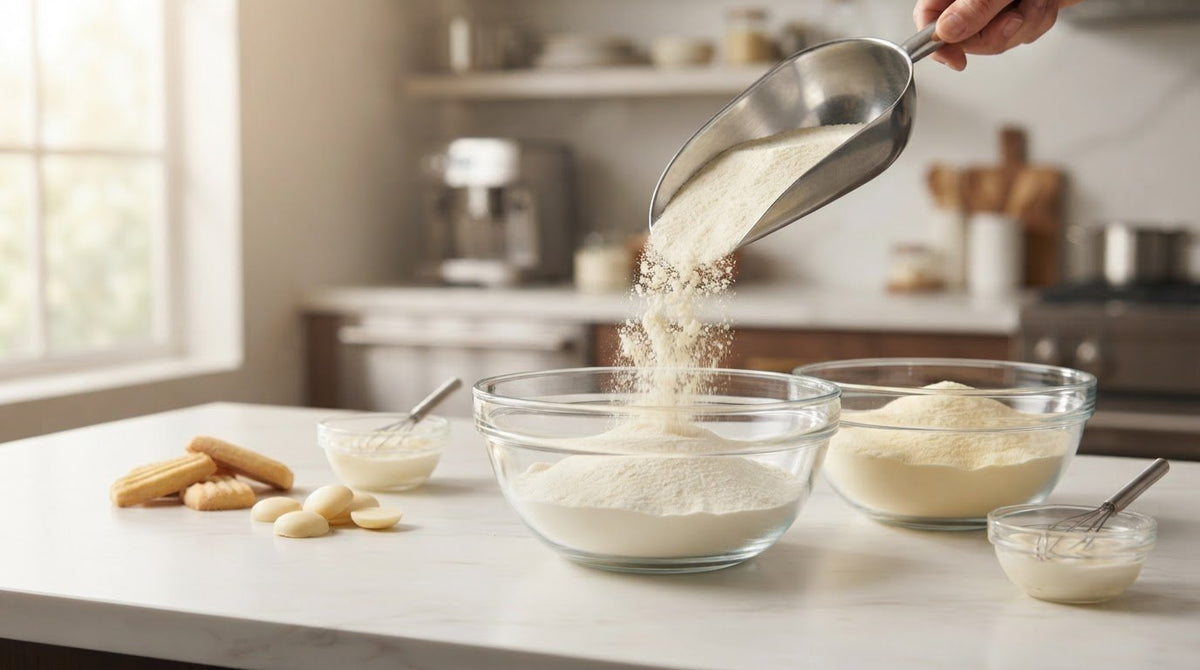
The name on a bag alone won’t tell you how lactose will behave in a recipe. Lactose powder for food use can contribute solids, influence browning and texture, or carry flavors, but it isn’t interchangeable with milk powder, which contains other milk components. Before choosing an ingredient, consider the job it needs to do and how its properties fit the recipe.
This guide explains lactose’s basic properties and how they may matter in baking, confectionery, dairy, and other food applications. It also outlines what to review in product information, such as intended use and specifications, because suitability depends on the particular product as well as the recipe.
You’ll also find practical handling and storage guidance, a comparison with milk powder, and dietary and labeling points to consider. Lactose is derived from milk, so it may not suit everyone. Reviewing ingredient information is an important step in making an informed choice.
Key Takeaways
- Consider how lactose’s sweetness, solubility, and browning behavior may affect your recipe.
- Match the product’s stated intended use and specifications to your food application.
- Remember that lactose powder is not the same as powdered milk, which contains other milk components.
- Before handling, review the product label for measuring, allergen, storage, shelf-life, and handling guidance.
- Use the checklist to assess recipe fit, and read the related article for more on grade and purity considerations.
What Is Lactose Powder for Food Use?
Lactose is the naturally occurring sugar in milk. Lactose powder for food use is a powdered ingredient made from lactose and intended for food applications described in its product information. The ingredient’s identity alone does not establish whether a particular product suits a particular recipe.
Lactose is a sugar composed of glucose and galactose. In powdered form, it can be used in food formulations, but it is not another name for powdered milk. For a broader overview of its characteristics and uses, see Lactose: Properties and Uses.
This video demonstrates a separate topic, preparing lactose-free milk. It isn’t a guide to selecting lactose powder as a food ingredient.
How Is Lactose Powder Different from Milk Powder?
Milk powder is made by removing water from milk. It contains more than lactose, including milk proteins and other components; depending on the product, it may also retain milk fat and minerals. Lactose powder is a distinct ingredient, so the two shouldn’t be treated as nutritionally or functionally interchangeable. Their exact composition depends on each product’s specifications.
This distinction matters in a recipe. Replacing milk powder with lactose powder, or the reverse, changes which ingredients the formulation receives. Check the recipe’s specified ingredient and the product information rather than relying on appearance or a similar name.
What Does “Food Use” Mean for an Ingredient?
Product information should identify the intended application and relevant specifications. Ingredient identity alone does not establish a product’s grade, certification, or regulatory status. Those claims require appropriate documentation, so don’t infer them from the word “lactose” or from the fact that it is a powder.
Sunshine Valley offers powdered lactose products, including Super Lactose and Super Lactose Dry. Compare the information for the specific product with your intended application. For a closer look at purity and standards, read the food-grade lactose purity and standards guide.
How Lactose Powder Behaves in Food and Recipes
Lactose contributes sweetness, but it is less sweet than sucrose and is not a direct replacement. It is also less soluble than some other sugars, and its solubility can be affected by temperature and surrounding ingredients. These properties matter during recipe development, but they do not predict the finished result on their own.
Lactose can contribute to browning during heating, but the degree of color development depends on the recipe and process. As a reducing sugar, lactose can react with amino compounds in heat-driven browning reactions. The outcome varies with ingredients, moisture, temperature, and cooking time. For an overview of food functions, see the U.S. Dairy Export Council’s Applications of Lactose in the Food Industry.
Can Lactose Affect Sweetness, Texture, or Browning?
It can. Lactose may contribute sweetness and browning, while its behavior in a mixture can influence how a recipe develops. It does not guarantee a particular color, flavor, or texture. The structure of a baked item, for example, also depends on its other ingredients and baking conditions. Treat lactose as one part of the formulation, not as a standalone way to change a recipe.
Texture effects are especially recipe-dependent. The amount used, how it is dispersed, and the presence of other sugars, proteins, fats, and liquids all influence the final product. Check application-specific information and test the ingredient in the intended recipe.
Why Recipe Formulation Matters
Changes to a formulation can alter sweetness, browning, and texture. Processing matters too: heating conditions and moisture levels affect how ingredients interact. Select and measure lactose powder for food use according to the recipe and product information, rather than assuming it can be substituted by volume or weight.
Start with a tested recipe or product-specific directions. If you make a controlled adjustment, change one factor at a time and assess the result under the same preparation conditions. A one-to-one swap for sucrose or milk powder may change more than sweetness because these ingredients have different compositions and functions. Use current product specifications when assessing technical details and intended applications.
Sunshine Valley offers powdered lactose products, including Super Lactose and Super Lactose Dry. Explore these options at Sunshine Valley lactose powders.
Which Food Applications May Suit Lactose Powder?
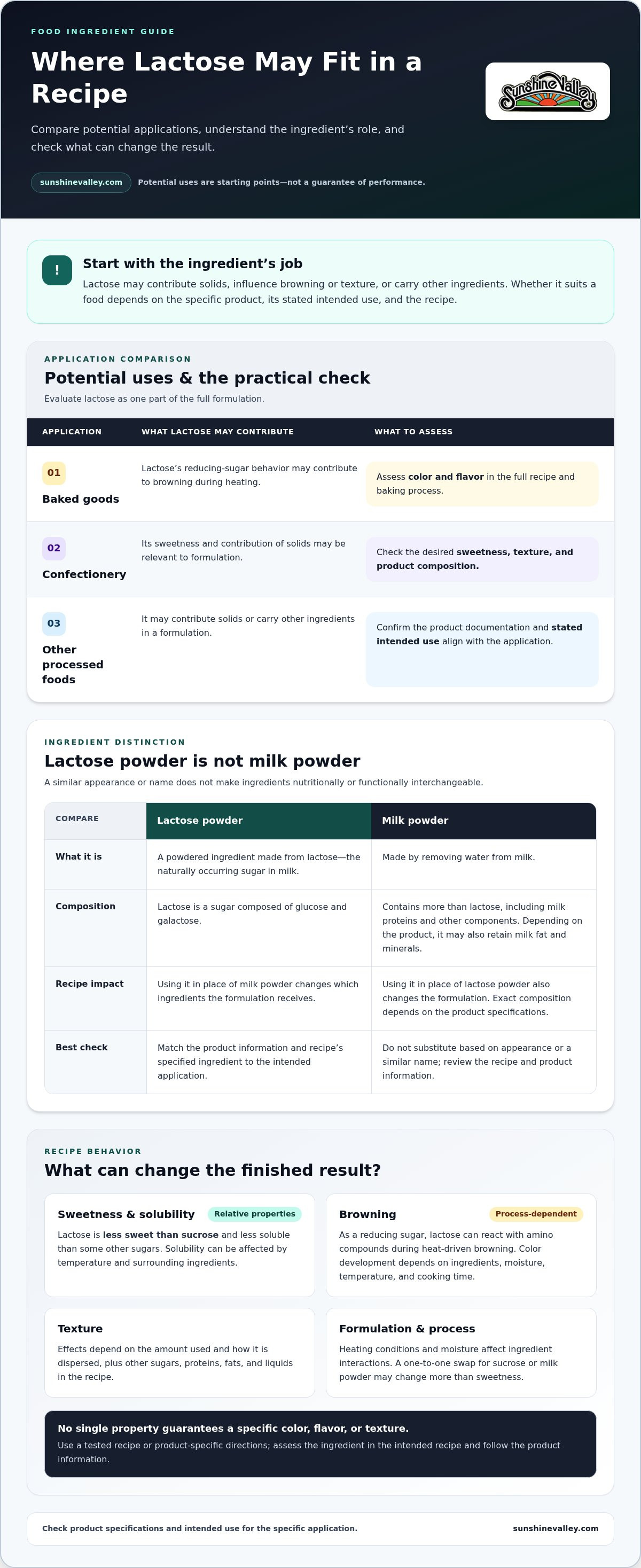
Potential applications depend on the ingredient’s role, product specifications, and recipe. Lactose may be considered in some baked goods, confectionery, and processed foods. These are starting points for evaluation, not a guarantee that a particular powder will suit an application or produce a specific result.
| Possible application | Property to consider | Practical check |
|---|---|---|
| Baked goods | Lactose’s reducing-sugar behavior may contribute to browning during heating. | Assess color and flavor in the full recipe and baking process. |
| Confectionery | Its sweetness and contribution of solids may be relevant to formulation. | Check the desired sweetness, texture, and product composition. |
| Other processed foods | It may serve a formulation role such as contributing solids or carrying other ingredients. | Confirm that the product documentation and intended use align with the application. |
These are candidate uses, not blanket recommendations. Whether lactose powder suits a food application depends on the specific product and recipe. Don’t automatically substitute lactose for sucrose or another sugar: differences in sweetness and functional behavior can affect the finished food. The U.S. Dairy Export Council describes lactose’s functions across food applications, but a general use case does not establish that every product is suitable for it.
How Should You Match an Ingredient to a Recipe?
Start with the ingredient’s intended role. Is it there to add sweetness, support browning, or contribute solids? Check whether the recipe specifically calls for lactose or allows substitutions. If a change is appropriate, make a controlled adjustment and evaluate the result. Don’t assume a one-to-one swap will preserve flavor, color, or texture.
What Should Food Makers Verify Before Use?
Review the product’s stated intended use, composition, and handling information. Confirm that the documented product matches the recipe’s requirements, and consider applicable ingredient and allergen-labeling requirements in the relevant jurisdiction. These checks distinguish general ingredient behavior from claims about a particular powder.
For more context on specifications and purity, see the lactose purity and standards guide. Base application decisions on current product information and recipe testing.
How to Handle Lactose Powder Safely and Responsibly
Good handling starts with the product label. Specifications and directions can vary, so use the information for the specific powder instead of relying on general assumptions about storage, shelf life, or suitability. A consistent routine helps with preparation and reduces the risk of unintended ingredient contact.
- Read the product information. Review the stated intended use, composition, handling details, and cautions before adding the powder to a recipe.
- Measure for the recipe. Use clean, dry utensils and follow the recipe or documented product directions. Avoid estimating amounts when precision matters.
- Prevent cross-contact. Keep the powder and utensils separate from ingredients that must be excluded from the preparation, and clean work surfaces and equipment as appropriate.
- Follow the label for storage. Use the stated storage conditions and shelf-life guidance. Protect the product from moisture or contamination when the label’s directions support this.
How Should Lactose Powder Be Stored and Measured?
Follow the package directions rather than general storage advice. Close and store the product as instructed, and use the label’s shelf-life information instead of assuming a standard period applies. For measuring, use a clean, dry utensil and the quantity specified by the recipe or product directions. These steps support consistent handling without assuming all lactose powders have identical requirements.
Is Lactose Suitable for People Avoiding Dairy?
Lactose is the sugar associated with milk, so it may not be appropriate for a dairy-free diet. Lactose intolerance differs from an allergy to milk proteins: intolerance concerns digesting lactose, while a milk allergy involves an immune response to milk proteins. The terms are not interchangeable.
Review ingredient and allergen information, especially when preparing food for someone avoiding milk or dairy. For personal health concerns about consuming lactose or milk-derived ingredients, seek guidance from a qualified medical professional. This information is general and does not determine an individual’s dietary needs.
For product-specific handling and intended-use details, follow the current label for the lactose powder you’re using. Explore Sunshine Valley’s powdered lactose products at Sunshine Valley lactose powders.
Choosing Lactose Powder for Food Use with Confidence
Start with the intended recipe, then review the product information. The name “lactose” identifies the ingredient, but doesn’t establish whether a particular powder fits your application or which specifications it meets. Use this checklist to assess practical fit before selecting lactose powder for food use.
A Five-Point Checklist Before Buying
- Identify the purpose. Define the recipe or food-making application and the role the ingredient needs to perform.
- Review product information. Read the documentation for composition, intended use, handling directions, and allergen details.
- Assess recipe fit. Consider whether the documented ingredient properties match the recipe’s requirements. Don’t assume lactose can replace another sugar or ingredient without affecting the result.
- Check storage directions. Note the label’s storage and shelf-life instructions so you can handle the powder as specified.
- Look beyond the product name. When specifications matter, base your decision on product information, not the name alone.
This checklist covers application and handling. Questions about grade, purity, and standards require a closer look at detailed specifications, covered in the related guide. Keep these topics distinct: a product’s identity or name alone does not establish its grade, certification, or suitability for a particular use.
Sunshine Valley’s Lactose Powder Offering
Sunshine Valley offers two powdered lactose products: Super Lactose and Super Lactose Dry. Compare the current product information with your intended application and recipe requirements. Don’t assume the products have identical specifications or uses based on their names.
Sunshine Valley’s history dates to 1956. That heritage provides company context, but it is not evidence of a particular product certification or specification. For food-use decisions, refer to the information for the specific product.
After identifying your recipe needs and reviewing the relevant product information, explore Sunshine Valley’s lactose powder.
Make a Confident Choice for Your Recipe
Choosing lactose powder for food use starts with the role you need the ingredient to perform and the product information. Lactose may contribute sweetness or browning, but recipe proportions and processing affect the result. Don’t assume it will behave like another sugar or like milk powder. Review intended use, composition, allergen details, and label directions before use.
Sunshine Valley offers Super Lactose and Super Lactose Dry. Founded in 1956, the company emphasizes in-house manufacturing and strict hygiene standards. These details provide context about the company; product-specific information remains the guide to intended use and specifications.
Ready to explore Sunshine Valley’s lactose powders? Explore Sunshine Valley lactose powder and take the next step toward an informed ingredient choice. Start with your recipe requirements, then compare them with the product information.
Frequently Asked Questions
What is lactose powder used for in food?
Lactose powder can contribute sweetness and solids to food formulations, and its reducing-sugar properties may contribute to browning during heating. Its role depends on the product and recipe. It may be considered for baked goods, confectionery, or processed foods, but these are possibilities rather than universal recommendations. Review the product’s intended use and specifications, then assess whether its properties suit the formulation.
Can lactose powder be used in baking?
It may suit some baking applications when the product information and recipe support its use. Lactose can contribute to browning during heating, but the degree of color development depends on the full formulation and baking conditions, including ingredients, moisture, temperature, and time. Follow a tested recipe or product-specific directions. Don’t assume that adding or substituting lactose will produce a particular texture, flavor, or color.
Is lactose powder the same as powdered milk?
No. Lactose powder is a distinct ingredient, while powdered milk is made by removing water from milk and contains more than lactose, including milk proteins and other milk components. Their composition and recipe functions differ, so they shouldn’t be treated as interchangeable. Exact composition varies by product. Check the ingredient specification and recipe instructions before choosing one, especially if the recipe depends on the proteins or other components in milk powder.
Is lactose powder suitable for someone with lactose intolerance?
It may not be suitable, and individual tolerance can vary. Lactose powder contains lactose, so someone managing lactose intolerance should review the ingredient information and consider their own dietary guidance. Lactose intolerance and milk allergy are different concerns: intolerance relates to digesting lactose, while a milk allergy involves an immune response to milk proteins. For personal health questions or allergy concerns, seek guidance from a qualified medical professional.
Can lactose powder replace sugar in a recipe?
Don’t assume lactose powder can replace sugar one-for-one. Although lactose contributes sweetness, its sweetness and functional behavior differ from other sugars, and it may affect browning and other recipe outcomes. Results depend on ingredient proportions and processing conditions. Check whether the recipe allows substitutions and follow product-specific directions. If a change is appropriate, make a controlled adjustment and assess the finished food rather than expecting the original result.
How should lactose powder be stored?
Follow the storage instructions on the specific product label. Conditions and shelf-life guidance can vary, so don’t rely on a generic timeframe or assumption. Use clean, dry utensils when measuring, and protect the powder from moisture or contamination where the label’s directions support this. Keep the package closed and stored as instructed, and refer to the product information for handling details before use.
What should I check before buying lactose powder for food use?
Start with your intended application and review the product information for composition, stated use, handling, and allergen details. Check that the ingredient’s properties suit the recipe, and note the label’s storage directions. Don’t select on the product name alone when specifications matter. Detailed grade and purity questions require a specification-focused review. Sunshine Valley offers Super Lactose and Super Lactose Dry; compare each product’s information with your food-making needs.



Leave a comment
This site is protected by hCaptcha and the hCaptcha Privacy Policy and Terms of Service apply.