



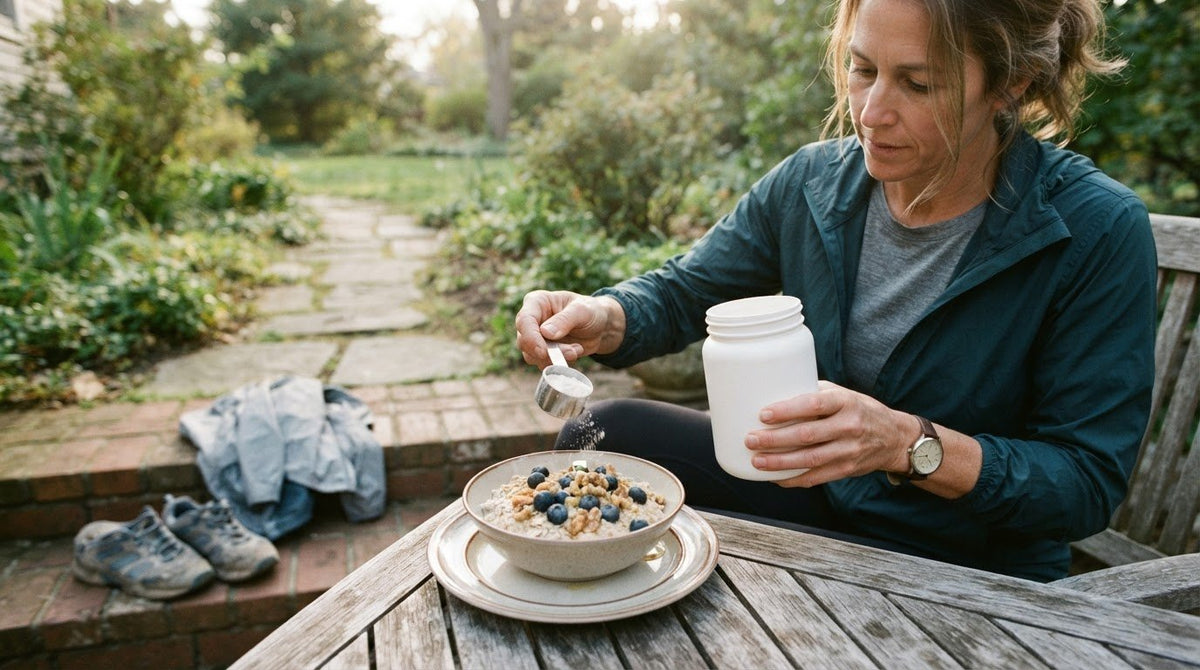
Most serotonin in the body is produced in the gut: according to the National Institutes of Health, about 95% is made there. The brain also produces serotonin, including in an area in the center of the brainstem. Natural ways to support serotonin levels include regular exercise, daylight exposure, and foods that provide omega-3 fatty acids.
It makes sense to consider daily habits when thinking about mood and well-being. Serotonin helps brain cells communicate and is involved in functions such as sleep and digestion. Food and lifestyle changes are not substitutes for care when symptoms are persistent or severe.
This guide explains where serotonin is produced and what it does, then looks at how movement, light, and omega-3 foods may support serotonin levels. You’ll also see how these habits fit into a balanced approach, without treating any single food or routine as a guaranteed fix.
Key Takeaways
- Tryptophan from foods such as eggs, salmon, nuts, and seeds gives the body a building block for serotonin. Pairing protein with carbohydrates may help support its availability to the brain.
- Regular movement can be part of a mood-supportive routine. The Centers for Disease Control and Prevention recommends 30 minutes of aerobic exercise five times a week.
- Daylight, especially in the morning, may support serotonin production and circadian timing. The article explains how outdoor light and light therapy differ.
- Salmon, trout, mackerel, walnuts, flaxseeds, chia seeds, and soybeans provide omega-3 fatty acids to consider in a varied eating pattern.
- Serotonin is involved in more than mood, including sleep and digestion. Learn how its different roles can help put daily wellness habits in context.
Where is serotonin produced?
The body makes serotonin in the gut and brain using tryptophan from food. Serotonin acts as a chemical messenger that helps brain cells communicate.
Food can provide tryptophan, but it does not directly determine how much serotonin reaches the brain. The type of meal and the body’s processes both matter.
Tryptophan-Rich Foods and Serotonin Production
Tryptophan is an essential amino acid, which means the body must obtain it from food. The body uses tryptophan to make serotonin, so foods containing it provide a necessary building block.
Examples include turkey, salmon, eggs, milk, cheese, nuts, seeds, and tofu. These foods provide tryptophan as part of varied meals, but eating turkey alone does not reliably increase serotonin in the brain. The body’s conversion is not highly efficient, and other amino acids compete with tryptophan to cross the blood-brain barrier.
Carbohydrates and Tryptophan Absorption
Carbohydrates may affect how much tryptophan reaches the brain after a meal. Insulin prompts muscles to take in other amino acids, which may leave tryptophan with less competition at the blood-brain barrier.
Complex carbohydrates include vegetables, fruits, legumes, and whole grains. Pairing one with a moderate protein source is a practical way to combine carbohydrates and tryptophan-containing foods. For example, beans with whole grains or eggs with vegetables bring both into a meal. This combination supports the conditions for tryptophan transport, but does not guarantee an immediate mood change.
Gut Health and Brain Serotonin
Gut health matters, but serotonin produced in the gut should not be treated as a direct measure of brain serotonin. About 95% of the serotonin in the human body is produced in the gut, according to the National Institutes of Health.
Kefir, kombucha, and kimchi are examples of probiotic foods or beverages that can support beneficial gut bacteria. They can be part of a varied eating pattern, but including them in a meal does not establish that brain serotonin will increase. Gut serotonin and serotonin’s role in the brain are related, but they are not interchangeable measures.
Supplements and Medication Interactions
Tryptophan is a building block for serotonin, but taking tryptophan or 5-HTP supplements isn’t a dependable substitute for care. Combining either supplement with prescription antidepressants, including selective serotonin reuptake inhibitors (SSRIs), may cause serotonin syndrome. SSRIs are reuptake inhibitors: they block serotonin reabsorption, leaving more active in the body. People taking SSRIs should not take supplements intended to boost serotonin.
Serotonin syndrome can involve diarrhea and shivering, and may progress to fever, muscle rigidity, or seizures. St. John’s wort can also interact with oral contraceptive pills. These examples show why combining serotonin-related supplements with medication requires particular caution.
Exercise and serotonin
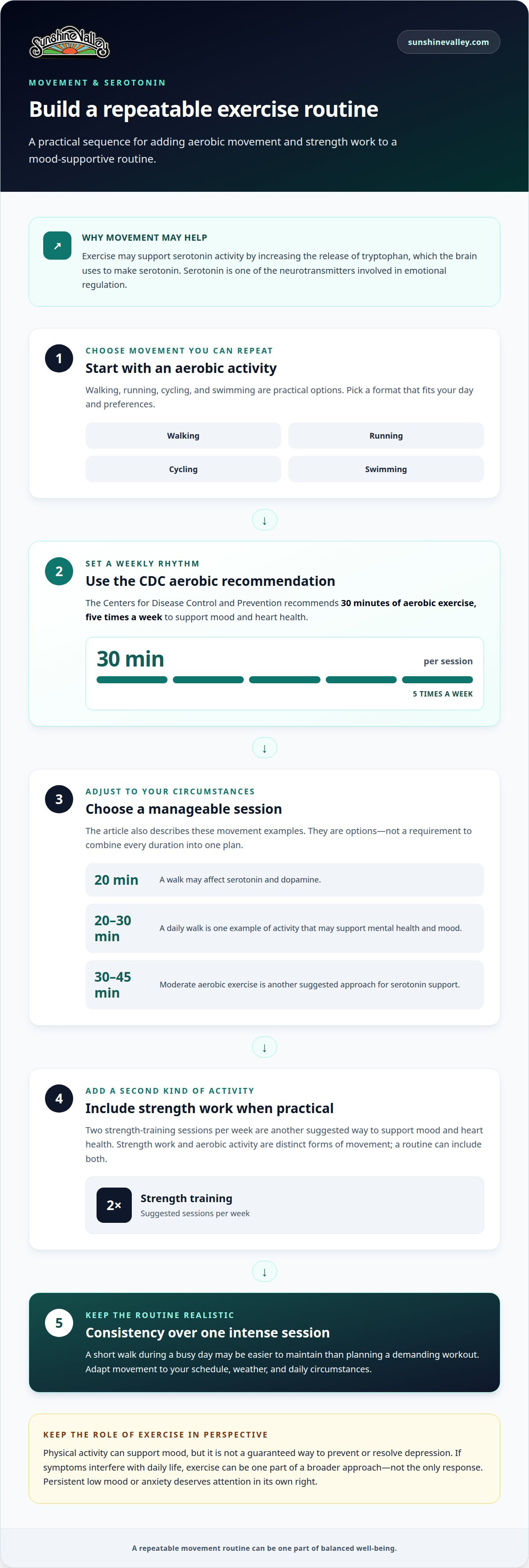
Walking, running, cycling, and swimming are aerobic activities that can fit into a regular routine. The Centers for Disease Control and Prevention recommends 30 minutes of aerobic exercise five times a week to support mood and heart health.
Exercise and Neurotransmitter Health
Exercise may support serotonin activity by increasing the release of tryptophan, which the brain uses to make serotonin. Serotonin is one of the neurotransmitters involved in emotional regulation.
Walking, running, cycling, and swimming are practical aerobic options. A 20-minute walk may affect serotonin and dopamine, another neurotransmitter involved in emotional regulation. Regular activity can therefore contribute to neurotransmitter health without relying on one specific workout or sport.
Consistency offers a useful framework. The Centers for Disease Control and Prevention’s aerobic exercise recommendation is 30 minutes five times a week. Separately, two strength-training sessions per week are another suggested way to support mood and heart health. These are distinct forms of activity, and a routine can include both.
Intensity and duration can shape the experience. Moderate aerobic exercise for 30-45 minutes is another suggested approach for serotonin support. A brisk walk or steady bike ride can provide a moderate option; running or swimming may suit other preferences. The best fit is an activity that can be repeated as part of everyday life.
Exercise for Stress Reduction
Exercise can be a structured way to make room for movement during stressful periods. A daily walk lasting 20 to 30 minutes is one example of regular physical activity that may support mental health and mood.
Choose an activity that fits your day. Walking outdoors, cycling, or swimming can provide aerobic movement, while strength training offers another format. A short walk during a busy day may be easier to maintain than planning a demanding workout. Aim for regular participation, not a single intense session.
Physical activity supports mood, but it is not a guaranteed way to prevent or resolve depression. If symptoms interfere with daily life, exercise can be one part of a broader approach, rather than the only response. Persistent low mood or anxiety deserves attention in its own right.
You can adapt movement to your daily circumstances. A walk around the neighborhood, a cycle ride, or indoor swimming offers options when the weather or your schedule changes. Starting with a manageable session and choosing an activity you can repeat can help establish a routine without making exercise another source of stress.
For a balanced plan, combine aerobic movement with strength work when practical. The CDC’s aerobic guidance and its suggested strength-training sessions offer separate reference points. You do not need to do the same activity every day. Walking on some days and strength training on others can add variety.
Serotonin’s roles in mood, sleep, digestion, and health
Serotonin is a chemical messenger with roles throughout the brain and body. Its effects include mood, sleep, digestion, and several other functions.
Serotonin’s Roles in Mood, Sleep, and Digestion
In the brain, serotonin helps regulate mood and plays a role in sleep, fear, and the stress response. In the digestive system, it contributes to digestion. These roles explain why serotonin is discussed in relation to mental health and physical functions, not mood alone.
Anxiety or low mood cannot be diagnosed by measuring serotonin through a single feeling or symptom. Depression is linked with low serotonin, but that does not mean every mood change reflects a serotonin deficiency. A broader view of symptoms and daily functioning matters.
Serotonin in the Brain and Body
Serotonin acts as a neurotransmitter, helping the brain communicate with other nervous system cells. About 95% of the serotonin in the human body is produced in the gut, according to the National Institutes of Health. Serotonin made in the gut and brain has different roles; gut production doesn’t mean that serotonin simply travels into the brain.
Serotonin is also involved in memory, sexuality, breathing, body temperature, and addiction. These examples show why attempts to boost serotonin should not be understood as affecting mood alone. Effects depend on where serotonin acts and which body function is involved.
Sleep quality and circadian rhythms connect with serotonin’s role in sleep and the body’s timing. Daylight, especially in the morning, supports serotonin production and circadian timing, so sleep habits and light exposure belong in the same picture of daily health.
Persistent low mood, anxiety, or depressive symptoms that interfere with daily life for more than two weeks are a reason to consider additional options, according to the National Institute of Mental Health. The duration and effect on everyday activities matter; symptoms that disrupt work, relationships, or routine deserve attention.
Serotonin’s effects are not confined to one system. The gut produces most of the body’s serotonin, while serotonin in the brain acts as a messenger between nervous system cells. This distinction helps explain why a food or supplement associated with serotonin does not automatically change mental health or sleep.
Serotonin also plays a role in the stress response and body temperature regulation. Changes in sleep, digestion, and mood can involve different serotonin-related processes. No single symptom identifies the cause, so patterns in daily functioning provide more context than an isolated change.
Sunlight exposure and light therapy
Daylight and bright light designed to replicate it may support serotonin production. Morning exposure also helps reinforce circadian timing, linking light habits with the body’s sleep-wake rhythm.
Sunlight and Morning Light Exposure
Morning sunlight provides bright-light exposure early in the day, when daylight can help support serotonin production and circadian timing. A suggested starting point is 10 to 15 minutes of morning sunlight.
Other guidance suggests 10 to 15 minutes of sunlight each day. A separate approach starts with 5 to 15 minutes, two to three times per week. These are different suggested routines, not a single required dose. Outdoor conditions, season, and access to daylight affect how practical each approach is.
Outdoor time can fit naturally into a daily activity, such as walking to work or eating breakfast near a bright window. Window light and outdoor sunlight are not identical exposures, so the setting matters. Sunlight may support vitamin D levels as well as serotonin, but nutrition from food, including protein sources, remains a separate part of a balanced routine. Supplements do not replace daylight exposure.
Consistency is the useful principle. Morning light at a similar time each day can support circadian timing, while seasonal changes in daylight may alter outdoor exposure. A brief outdoor walk is one practical way to add daylight without making light exposure a separate task.
Bright-Light Therapy for Seasonal Mood Changes
Bright-light therapy uses a specialized lamp to provide light that replicates sunlight. It is one of the main treatments for seasonal affective disorder (SAD), a pattern of seasonal mood changes.
Suggested light-therapy use involves a 10,000-lux lamp for 20 to 30 minutes each morning. The brightness and timing distinguish this approach from simply spending time in a well-lit room. Mood improvement is described as potentially occurring within one to two weeks, though the response is not immediate for everyone.
Bright-light therapy may be relevant when seasonal changes or limited access to sunlight make outdoor exposure difficult. Spending more time outdoors is another way to receive bright light. A specialized lamp and natural sunlight are related options, but they are not the same routine.
Light is one part of a broader daily pattern that can include exercise, sleep habits, and balanced nutrition. Neither a protein-rich meal nor supplements provide the bright-light exposure used in light therapy. For people considering a lamp for seasonal mood changes, the 10,000-lux specification and morning timing are key details in the described approach.
Omega-3 fatty acids and food sources
Salmon, trout, mackerel, walnuts, flaxseeds, chia seeds, and soybeans are natural sources of omega-3 fatty acids. These foods may support serotonin levels as part of a varied eating pattern. They are one option among natural ways to support serotonin levels, not a stand-alone solution or a guaranteed way to change mood.
Fish and plant foods offer different ways to include omega-3 sources in meals. A salmon dinner, walnuts with breakfast, or chia seeds stirred into oatmeal are practical examples. Choosing from several sources can add variety without relying on one food. These examples are meal ideas, not a treatment plan or a promise of a particular health outcome.
One recommendation is to eat two portions of salmon a week to help keep serotonin levels within the normal range. That suggestion specifically concerns salmon, not every omega-3 food. Trout and mackerel offer other fish choices, while walnuts, flaxseeds, chia seeds, and soybeans provide plant-based options. Meal preferences can help determine which sources fit naturally into a regular eating pattern.
Omega-3 sources are not interchangeable with every other food associated with serotonin production. Salmon, for example, is also a food containing tryptophan, while walnuts and seeds contribute different nutrients. Combining a fish or plant source with vegetables or whole grains can make a varied meal, but the combination doesn’t guarantee a measurable increase in serotonin levels.
Serotonin is one of several neurotransmitters involved in body functions, and nutrition is only one part of overall health. Omega-3 foods can contribute to a balanced eating pattern, but they aren’t a treatment for persistent mood symptoms. A meal with salmon or a handful of walnuts cannot diagnose or resolve depression, and food choices should not replace appropriate care.
Supplements also differ from food sources. The examples covered here include salmon, trout, mackerel, walnuts, flaxseeds, chia seeds, and soybeans; this list does not establish that a supplement will produce the same effects. Omega-3 foods should also not be confused with selective serotonin reuptake inhibitors, which affect serotonin reuptake through a different mechanism.
For a practical takeaway, choose fish or plant sources that fit meals you already enjoy. Salmon can be planned around the suggestion of two portions a week, while walnuts, flaxseeds, chia seeds, or soybeans offer alternatives. Viewed this way, omega-3 foods are one component of natural ways to support serotonin levels, alongside other daily habits rather than a guaranteed fix.
Sunshine Valley
Sunshine Valley offers natural food supplements for readers considering how supplements fit into a broader wellness routine. Daily habits such as balanced meals, movement, and daylight remain central to the approaches discussed here. No supplement should be treated as a guaranteed way to change serotonin levels.
The range includes Super Mannitol, Super Inositol, Super Lactose, and Super Niacinamide. These supplements are not substitutes for treatment or medical care when persistent symptoms affect daily life. If you are exploring supplements alongside healthy routines, consider how they fit your needs and existing care.
Contact Sunshine Valley to learn more about its offerings.
Build a Routine You Can Sustain
Choose one daily habit to make more consistent, then notice how it fits with meals, activity, light exposure, and sleep. A simple routine can make it easier to identify which changes feel practical and worth maintaining. The natural ways to support serotonin levels discussed here are lifestyle considerations, not substitutes for appropriate care or promises of a specific outcome.
If you’re considering supplements as part of your broader wellness approach, take time to understand how they fit with your existing routines and needs. Sunshine Valley offers a range of supplements, including options introduced in this guide. Contact Sunshine Valley today to learn more about its offerings.
Keep your next step manageable and consistent. Thoughtful daily choices can help you build a wellness routine that feels considered and sustainable.
Frequently Asked Questions
How can I use food to keep my mood stable?
Build meals around variety and regular nourishment rather than relying on one “mood food.” For example, combine eggs or tofu with oats, beans, or vegetables, and include foods such as salmon, walnuts, or fruit across meals. This pattern includes different nutrients and food sources discussed in relation to serotonin support. Food choices can contribute to well-being, but mood changes can have many causes and are not proof of a serotonin imbalance.
How do I tell if my serotonin is low?
You cannot reliably identify low serotonin from symptoms alone. Low mood, anxiety, sleep changes, and digestive symptoms can have different causes, so a symptom list cannot confirm a serotonin level. Instead, consider how long symptoms last and whether they disrupt daily routines, relationships, or work. The National Institute of Mental Health advises considering additional options when persistent low mood, anxiety, or depressive symptoms interfere with life for more than two weeks.
What does serotonin do in my body?
Serotonin helps regulate several body functions, including mood, sleep, digestion, memory, and the stress response. Its activity differs according to where it acts, so gut serotonin is not a simple measure of serotonin activity in the brain. Digestive changes and poor sleep, for example, may occur alongside mood concerns, but neither symptom alone shows that serotonin is responsible. Consider patterns and effects on daily life rather than interpreting one symptom as a diagnosis.
What drinks boost serotonin?
No drink can be relied on to directly boost serotonin in the brain. Kefir and kombucha are fermented options that may support beneficial gut bacteria, but that doesn’t establish a direct serotonin increase. Choose beverages as part of an overall eating pattern, not as a stand-alone mood treatment. If you take antidepressants, avoid adding serotonin-targeting supplements such as 5-HTP or tryptophan without medical guidance, because combinations may cause serotonin syndrome.
What is serotonin, and why does it matter?
Serotonin is a chemical messenger that helps nerve cells communicate. Its roles extend beyond mood to functions such as sleep, digestion, and the stress response. The body makes serotonin using tryptophan, an essential amino acid obtained from food. This connection explains why nutrition is part of the discussion, but a particular meal cannot reliably control mood or replace care for ongoing symptoms.
What foods support serotonin production, and how strong is the evidence?
Foods containing tryptophan include eggs, turkey, salmon, nuts, seeds, milk, tofu, and cheese. They supply a building block the body uses to make serotonin, but eating them does not guarantee higher brain serotonin or a predictable mood change. A useful meal example is eggs with whole-grain oats or tofu with vegetables. The evidence supports tryptophan’s biological role, not a promise that any single food treats depression.
How does sunlight exposure affect serotonin levels, and how much is recommended?
Daylight, particularly morning light, may support serotonin production and circadian timing. One suggested routine is 10 to 15 minutes of sunlight each day, though weather, season, and personal circumstances affect outdoor exposure. Light therapy is a separate option used for seasonal affective disorder; the described approach uses a 10,000-lux lamp for 20 to 30 minutes each morning. Persistent seasonal mood symptoms warrant attention beyond light exposure alone.
Does regular exercise increase serotonin, and what types or amounts are most studied?
Regular exercise may support mood, including through a possible increase in serotonin. Walking, running, cycling, and swimming are aerobic choices; the Centers for Disease Control and Prevention recommends 30 minutes of aerobic exercise five times a week to support mood and heart health. A manageable routine could include brisk walks on several days and strength work on others. Exercise can complement care, but it isn’t a guaranteed treatment for depression.



Leave a comment
This site is protected by hCaptcha and the hCaptcha Privacy Policy and Terms of Service apply.