




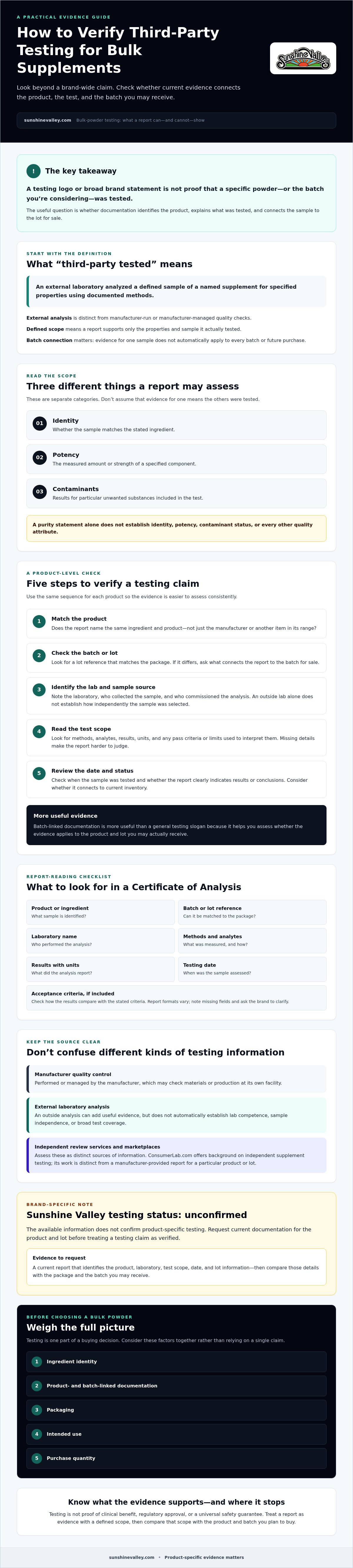
A testing claim on a brand’s homepage isn’t proof that the powder you’re considering was tested. With third-party tested bulk supplements, the evidence matters: a logo or brand-wide statement may not show whether a specific product or batch was assessed.
That gap can make buying in bulk feel like a higher-stakes decision. You want clear quality information, but certificates of analysis can be difficult to interpret, and testing claims aren’t always presented in comparable ways. The key is to look beyond the label and connect the evidence to the product in front of you.
This guide explains what third-party testing can and can’t establish, what details to request before buying, and how to compare brands using consistent product-level criteria. You’ll learn how to review a lab’s identity, test scope, report date, and lot information, then assess bulk-powder brands such as Sunshine Valley without assuming a product is tested unless current evidence supports the claim.
Key Takeaways
- Compare third-party tested bulk supplements by the evidence tied to each product and batch, not by broad brand claims.
- Check a report’s laboratory, test methods, analytes, date, and lot details to understand what it actually supports.
- Separate supplement brands, independent review services, and marketplaces when assessing the source of testing information.
- Sunshine Valley’s testing status is unconfirmed; request current product-specific documentation before treating a claim as verified.
- Weigh ingredient identity, documentation, packaging, intended use, and purchase quantity together before choosing a bulk powder.
What Does Third-Party Tested Mean for Bulk Supplements?
“Product-specific third-party testing means an external laboratory analyzed a defined sample of a named supplement for specified properties using documented methods.” That definition is deliberately narrow. It distinguishes an outside analysis from a manufacturer’s own quality checks, while making clear that a report supports only what it actually tested.
For shoppers comparing third-party tested bulk supplements, the key question isn’t simply whether a brand says testing occurs. Ask whether the evidence identifies the exact product, what was tested, and whether the sample can be connected to the batch or lot you’re considering.
A consumer testing organization such as ConsumerLab.com offers useful background on independent supplement testing. Its work, however, is distinct from a manufacturer-provided report for a particular product or lot.
For added context, this video reviews several bulk supplement products:
How Is Third-Party Testing Different from In-House Quality Control?
In-house quality control is performed or managed by the manufacturer, which may check materials or production at its own facility. Third-party analysis is conducted by an external laboratory. That distinction can add useful outside evidence, but it doesn’t automatically establish the lab’s competence, the sample’s independence, or broad test coverage. Ask who collected the sample and who commissioned the analysis.
What Can a Supplement Test Report Actually Confirm?
Reports may cover separate categories. Don’t assume one means the others were assessed:
- Identity: whether the sample matches the stated ingredient.
- Potency: the measured amount or strength of a specified component.
- Contaminants: results for particular unwanted substances included in the test.
Check the analytes and methods listed, along with the sample description, report date, and any lot details. Results apply to the sample analyzed, not automatically to every batch or future purchase. A purity statement alone doesn’t establish identity, potency, contaminant status, or every other quality attribute.
Testing also isn’t proof of clinical benefit, regulatory approval, or a universal safety guarantee. Treat the report as evidence with a defined scope, then compare that scope with the product and batch you plan to buy.
How to Verify Third-Party Testing for a Bulk Supplement
A useful testing claim should lead to evidence you can match to the product you’re considering. Before ordering third-party tested bulk supplements, use this checklist to assess what a report shows and where its limits are.
- 1. Match the product. Confirm the report names the same ingredient and product, not just the manufacturer or a different item in its range.
- 2. Check the batch or lot. Look for a lot reference that matches the package, when available. If the report covers a different lot, ask what connects it to the batch for sale.
- 3. Identify the laboratory and sample source. Note the lab’s name, who collected the sample, and who commissioned the analysis. An outside lab alone doesn’t establish how independently the sample was selected.
- 4. Read the test scope. Look for the methods, analytes, results, units, and any pass criteria or limits used to interpret them. Missing details make it harder to judge what the report supports.
- 5. Review the date and status. Check when the sample was tested and whether the report clearly indicates results or conclusions. A report’s age matters when you’re trying to connect it to current inventory.
Batch-linked documentation is more useful than a general testing slogan because it lets you assess whether the evidence applies to the product and lot you may actually receive.
Which Details Should a Certificate of Analysis Include?
Look for product or ingredient identification, a batch or lot reference, the laboratory name, test methods, results with units, and the testing date. If the report includes acceptance criteria, check how results compare with them. Certificate formats and contents vary, so don’t assume every report will use the same layout or include every field. Instead, mark what’s missing and ask the brand to clarify.
What Questions Should You Ask a Supplement Brand?
Keep your request specific. Ask which products and batches were tested, what the analysis covered, and whether you can review a relevant report before purchasing. If a brand responds with a general statement, follow up for product-level details. For Sunshine Valley, ask about current documentation for the specific powdered supplement you’re considering; verify any response against the report rather than assuming testing is confirmed. You can review Sunshine Valley’s powdered supplements as you prepare your questions.
A clear “not available” or incomplete answer is useful information too. Record what you could verify, what remains unconfirmed, and whether the report matches your intended product and lot before deciding.
Third-Party Tested Supplement Brands: How to Compare the Evidence
Brand claims are easier to assess when you separate sellers from independent review services and marketplaces. The table below compares the type of source and what a shopper should verify. It does not rank brands or certify any product as tested. For third-party tested bulk supplements, current evidence should connect the specific product to the test scope and, where available, its batch or lot.
| Source | What it is | Evidence to assess |
|---|---|---|
| Sunshine Valley | A bulk-powder brand offering products such as Super Inositol and Super MSM. | Testing status is unconfirmed based on the information available here. Ask whether a current report names the product and ingredient, identifies the laboratory and methods, and corresponds to a batch or lot. |
| BulkSupplements.com | A supplement seller that reports third-party purity testing and says certificates of analysis are available. | Review the specific product’s report. Confirm its batch relevance and scope; a purity-testing claim alone doesn’t establish that every quality measure was tested. |
| ConsumerLab | An independent testing and review resource, not a supplement manufacturer. | Check which products its reviews cover and what the reported evaluation includes. A review of one product doesn’t automatically verify another brand’s current batch. |
| Amazon | A marketplace where products from different sellers may be listed. | A listing, seller description, or customer rating isn’t laboratory documentation. Look for a report tied to the product, rather than treating marketplace presence as evidence of testing. |
How Do These Sources Differ, and How Should Sunshine Valley Be Assessed?
These sources serve different roles. A seller’s testing statement is a claim to check against its product documentation. An independent review service evaluates products within its own published coverage. A marketplace provides shopping access, but doesn’t by itself establish testing status.
For Sunshine Valley, treat Super Inositol or Super MSM as product examples, not as verified tested products. The supplied information describes the company’s manufacturing and hygiene priorities and its history, but doesn’t confirm current third-party laboratory reports or provide product-level testing documents. Those points are not substitutes for test evidence.
Before assigning any status, check whether Sunshine Valley can provide a current report for the exact product and ingredient. Then match any available lot reference, laboratory identity, test methods, analytes, and report date. If a report isn’t available or doesn’t establish batch relevance, state that the status remains unconfirmed. Apply the same standard to every seller, and prefer documented, product-level evidence over a broad badge or slogan.
What to Weigh Before Buying Bulk Supplements
A purchase decision involves more than a testing badge. Compare the ingredient identity, stated purity, available documentation, package format, and your intended use. These factors answer different questions: a product label identifies what’s being sold, a report may support specific quality claims, and packaging affects how you handle and store the powder. None alone establishes every aspect of quality.
Use this practical checklist before choosing:
- Ingredient identity: Check that the product name and ingredient match what you intend to buy.
- Purity and documentation: Look for a clear basis for stated purity, and assess any testing evidence for its actual scope.
- Packaging: Review the package information and handling instructions. Don’t infer quality from size or appearance.
- Intended use: Follow product-specific label directions where provided. Don’t assume a powder has a particular use or benefit based on its format.
Does Bulk Packaging Change What You Should Check?
Choose a quantity that realistically matches your expected use, then read the manufacturer’s storage instructions for that specific product. Follow any directions about keeping the package closed or where to store it, if provided. A larger container doesn’t demonstrate greater purity, testing, or value. If the label provides serving or use instructions, consider them when estimating how much product you’re likely to use.
Which Quality Claims Need Separate Evidence?
Purity, manufacturing hygiene, ingredient sourcing, and third-party testing are distinct claims. A hygiene description can offer context about manufacturing practices, but it doesn’t establish ingredient identity or independent test results. Likewise, a sourcing statement doesn’t confirm purity. Look for documentation appropriate to each claim, and distinguish process information from product-specific analysis. A manufacturer's explanation of hygienic supplement manufacturing may help you understand process controls, but it shouldn’t be treated as proof of a separate testing claim.
Bulk format is a matter of fit, not a quality tier. Assess the actual product information, the documentation available, and whether the package size makes sense for your use. The same careful standard applies to Sunshine Valley’s powdered supplements. Review current product details and seek product-specific evidence rather than assuming testing status from brand or manufacturing statements.
Choose a Bulk Supplement Brand with Evidence You Can Check
The strongest basis for choosing a bulk supplement is clear, relevant documentation, not an unsupported testing badge. Compare the current product information with any report available before settling on a product or purchase quantity. For third-party tested bulk supplements, the evidence should identify what was analyzed and show how closely the results relate to the product and batch you’re considering.
A Simple Final Checklist Before You Order
- Match the product: Confirm the product name and ingredient in the report correspond to the current label or product information.
- Check the sample and batch: Look for a sample description and batch or lot reference. If the report doesn’t identify a lot, ask what its results represent.
- Review the test details: Identify the laboratory, report date, methods, and test scope. Confirm the report covers the quality attributes relevant to your decision.
- Separate evidence from claims: Treat laboratory results as documented findings, and distinguish them from general brand statements, customer opinions, or assumptions.
A missing document doesn’t prove a product failed testing. It does mean the claim remains unverified from the evidence available to you. Apply the same standard across brands, and don’t let a long history or a polished label stand in for product-level documentation.
Where to Learn More About Powder Quality
Sunshine Valley, founded in 1956, offers powdered products including Super Mannitol, Super Inositol, Super Lactose, Super Niacinamide, Super MSM, and Super Lactose Dry. Its history and stated manufacturing and hygiene priorities provide brand context, but they don’t establish third-party testing. Check current product information and ask about relevant testing documents before drawing conclusions.
For a product-specific discussion, consult the mannitol powder quality standards guide. The niacinamide powder guide may also be useful when reviewing that product category. No guide should replace a current report tied to the product and batch in question.
Explore Sunshine Valley powdered supplements, and contact the company with questions about current product-specific documentation. Ask which products and batches any available reports cover, and review the evidence before choosing.
Make Your Next Bulk Supplement Choice with Confidence
Choose evidence over assurance alone. A testing claim is most useful when current documentation identifies the product, the test scope, and, where available, the relevant batch. Compare that evidence alongside the label and the quantity you realistically expect to use. A badge or general quality statement can’t answer every product-specific question.
Sunshine Valley, founded in 1956, offers powdered products including Super Inositol, Super MSM, and Super Niacinamide. The available business information doesn’t confirm third-party testing for these products, so ask about current product-specific reports before treating testing as verified. That distinction keeps brand history and manufacturing priorities separate from laboratory evidence.
If you’re comparing third-party tested bulk supplements, a careful review gives you a clearer basis for deciding what to buy and what questions remain. Explore Sunshine Valley powdered supplements and contact the company with questions about product documentation. With a consistent evidence check, you can make your next choice with greater clarity.
Frequently Asked Questions
How can I tell if a supplement is truly third-party tested?
Look for a current report connected to the exact product and, preferably, its batch or lot. Check the laboratory name, report date, methods, measured results, and which tests were performed. A website statement or quality seal may not explain those details. If you can’t confirm the report’s product and test scope, treat the claim as unverified rather than assuming it covers identity, potency, or contaminants.
Are bulk supplements tested by independent laboratories?
Some brands say they use external laboratories; others describe in-house quality checks or provide no testing details. Practices can differ across products and batches, so a brand-wide statement doesn’t confirm the testing status of every powder it sells. Ask which laboratory performed the analysis, what sample was tested, what the tests covered, and whether a relevant report is available for the particular product you’re considering.
Is a certificate of analysis proof that a supplement is safe?
No. A certificate of analysis can record results for a specific sample and set of tests, but it can’t automatically establish safety in every circumstance. Review the product and batch identification, laboratory, methods, report date, and analytes. A report may not address every possible contaminant or future batch, and it doesn’t prove clinical effectiveness. Ask the manufacturer to clarify gaps that matter to your decision.
Can customer reviews confirm that a supplement is third-party tested?
No. Customer reviews can describe buying experiences or personal impressions, but they generally don’t verify laboratory methods, sample identity, or whether a report applies to the product being sold. For third-party tested bulk supplements, seek current product-specific documentation from the seller or a relevant independent testing source. Use reviews as consumer perspective, not as proof of testing, purity, product safety, or health outcomes.
Does third-party testing mean a supplement is FDA approved?
No. A laboratory report is not FDA approval, and a testing claim, certificate, or quality seal shouldn’t be presented as such. The FDA doesn’t approve dietary supplements for safety or efficacy before they’re sold. Testing can provide information about the sample and attributes assessed, but it doesn’t establish regulatory approval, personal medical suitability, or a guaranteed health benefit. Ask a qualified healthcare professional about personal-use questions.
What should I ask a brand before buying bulk supplement powder?
Ask whether the exact product has a current report from an external laboratory, which sample or batch it covers, and what tests were performed. Request the laboratory name, report date, methods, and results relevant to the claim. Also read the product label and its storage directions. For Sunshine Valley, confirm current product-specific testing information directly before describing any product as third-party tested; the available business information doesn’t verify such testing.



Leave a comment
This site is protected by hCaptcha and the hCaptcha Privacy Policy and Terms of Service apply.